There is no airport on Formentera. No runway, no terminal, no arrivals hall. In an archipelago where Ibiza and Mallorca each take millions of people a year through a gate in the sky, the smallest of the Pitiusas has never built one, and everybody who has ever set foot on it — Phoenician, Catalan, hippy, hotelier, you — came in off the water.
Hold on to that. It is not a quirk. It is the mechanism behind almost everything people like about the island.
Leaving Ibiza town
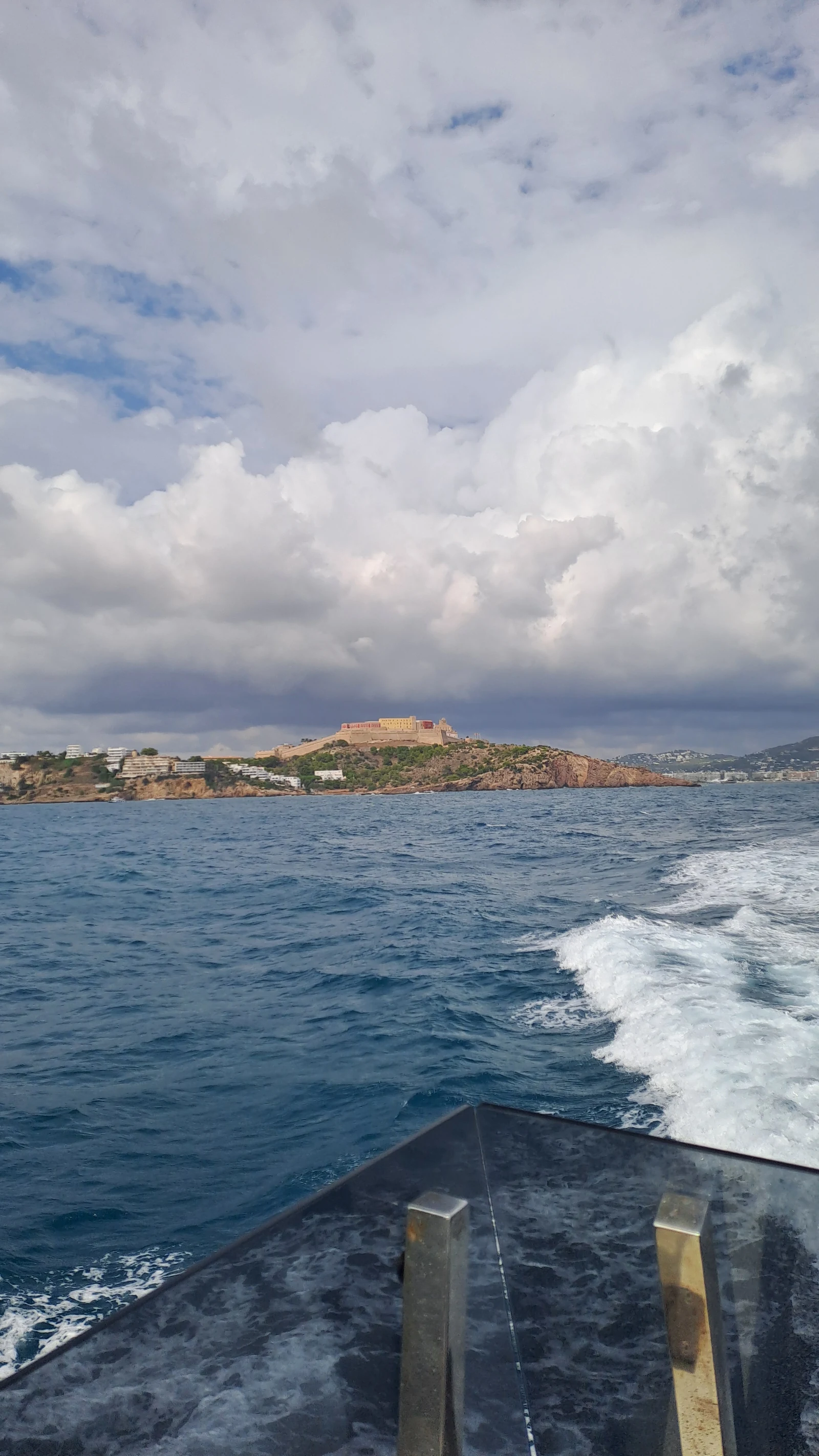
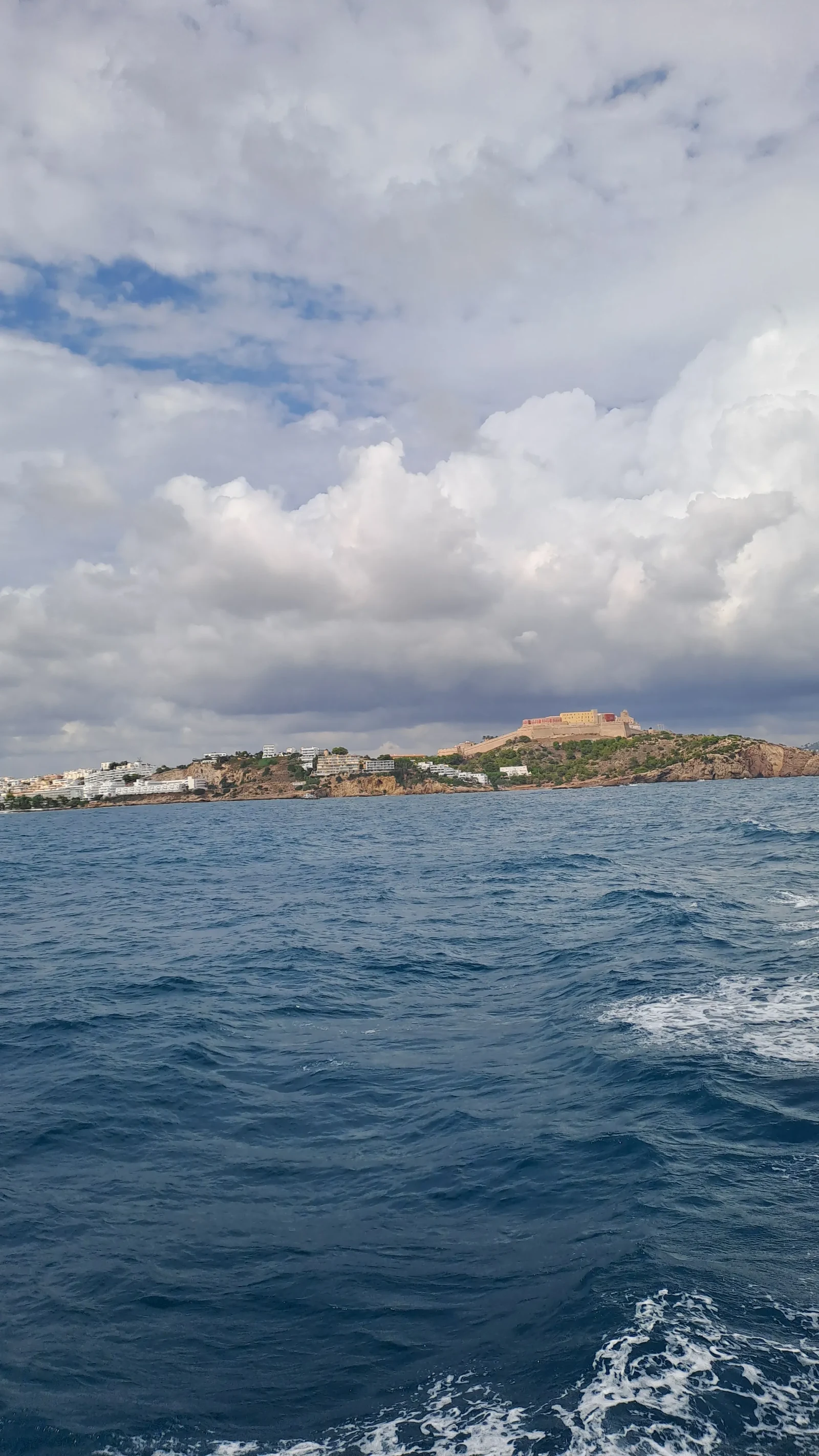
The crossing starts in the port at Eivissa, under the walls. You buy a ticket at a kiosk on the quay or on your phone, you walk down a gangway, and within a few minutes of casting off the whole of Dalt Vila swings into view off the stern — the fortified upper town on its rock, the cathedral and the castle on the summit, the curtain wall stepping down towards the sea.
It is the best view of Ibiza there is. Go to the back of the boat for the first five minutes. The town gets smaller and better the whole time, and your children will remember a castle on a cliff rather than a seat back.
Dalt Vila, incidentally, is part of the same UNESCO inscription as the seagrass you are about to cross: a mixed site called Ibiza, Biodiversity and Culture, listed in 1999 for both natural and cultural reasons. The town on the rock and the meadow under the keel are, officially, one thing.
Which boat, and what we will not tell you
Several operators run the Ibiza town to La Savina route through the season, among them Trasmapi, and vessels of different sizes and speeds work it through the day. We are not going to print a crossing time, a frequency or a fare, because we did not verify them against current timetables and a travel article that quotes last year’s schedule is worse than one that says nothing. Take the times and the prices from the operators on the day you book.
Two things we will say.
First, a disclosure that belongs in any piece about this route. Trasmapi is owned by the same Ibiza family that owns the Insotel hotel group, including the hotel we stayed in on Migjorn. Grupo Empresas Alonso Marí, an Ibiza family company, runs both a hotel arm and a marine arm. Book the hotel, then book that ferry, and you are paying one family twice. Nobody is hiding it and nobody mentions it either.
Second: there is more than one route. Boats also run from Ibiza’s airport-side resorts and there is a seasonal link to the Spanish mainland from La Savina. Check which port your boat actually leaves from before you book a taxi, because “Ibiza” is not one departure point.
With small children: three decisions
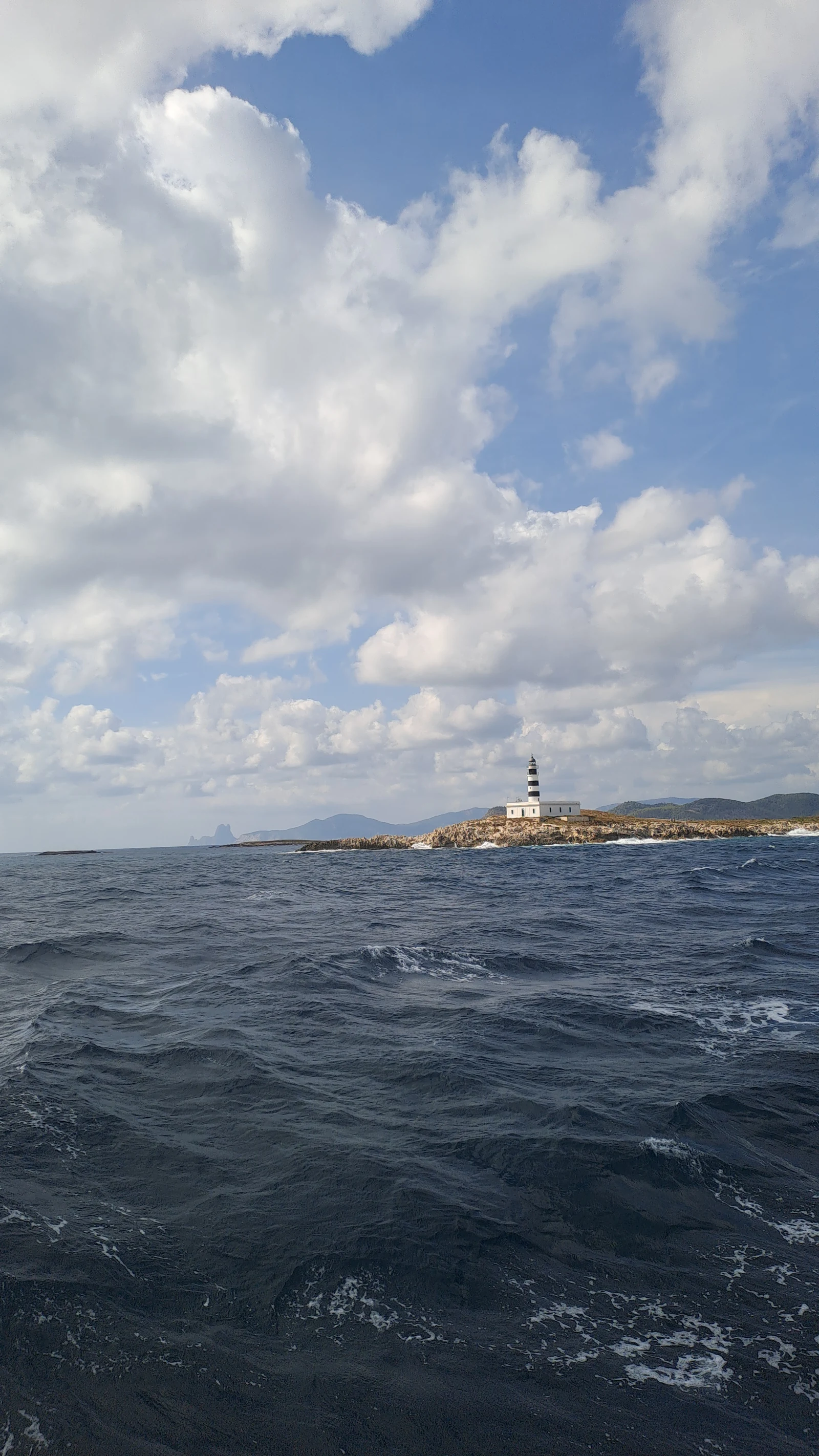
The Freus — the channel between the islands — is shallow, open at both ends and funnels wind. On a calm morning it is a millpond. On a windy afternoon it is short, hard, confused water, and a fast ferry crossing it will slam. Our crossing had whitecaps the whole way. Both of those are normal. Plan for the second and enjoy the first.
One: deck. Most of these boats have an enclosed cabin below and open seating above. Below is warmer, quieter and out of the sun, but it is where motion sickness lives, because you cannot see the horizon. Above is windy, loud and bright, and far better for a queasy child. If the sea looks lively and you have a child who has ever been sick in a car, go up.
Two: where you sit. Lowest deck you are willing to use, as near the middle of the boat as you can get, facing forward, with a view out. The stern is fine for the first five minutes of castle-watching, then move. The bow is the worst seat on a choppy day by a wide margin.
Three: when you eat. Feed them before you board and not during. Water, not juice. Something plain and small on the quay beats anything at all mid-channel.
The crossing is short enough that a bad one is over quickly, and long enough that a good one is the best part of the day.
The rest is ordinary and easily forgotten. There is no shade on the top deck and a lot of reflected glare, so hats and sunscreen go on before you board, not after. Pushchairs usually have to be folded and go in a luggage rack by the door, so carry anything you will need in the twenty minutes before and after — not in the bag that disappears. Hold hands on the gangway at both ends; it moves, and it is the only genuinely risky two metres of the trip. And expect everybody to stand up at once before the boat has docked, which is both pointless and unavoidable: wait, let the scrum clear, and walk off last with everyone accounted for.
What you pass
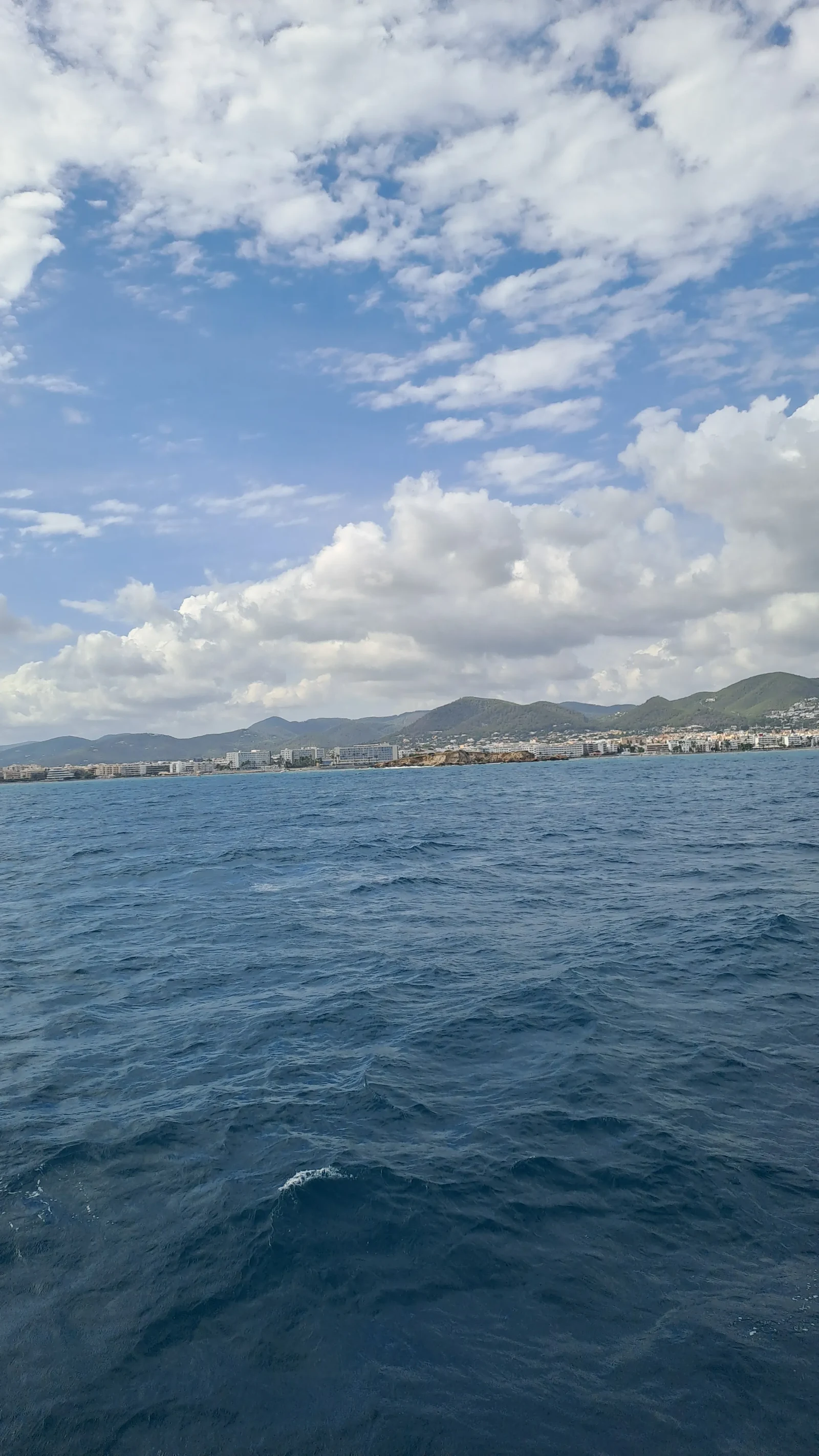
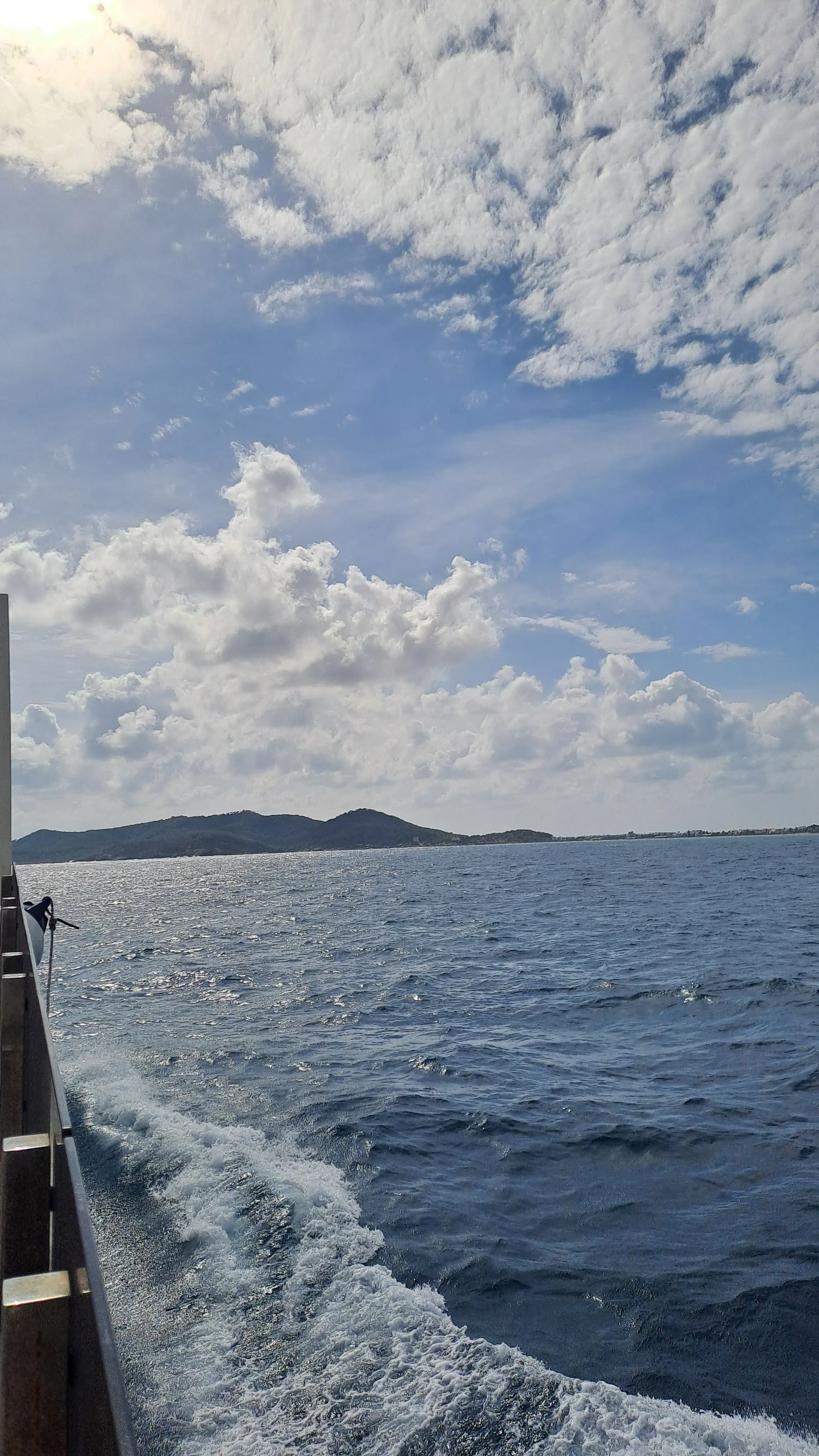
Out of the port the boat turns south along the Ibiza coast — low hills, white blocks stacked along the shoreline, the last of the built-up edge — and then the land runs out and the channel opens.
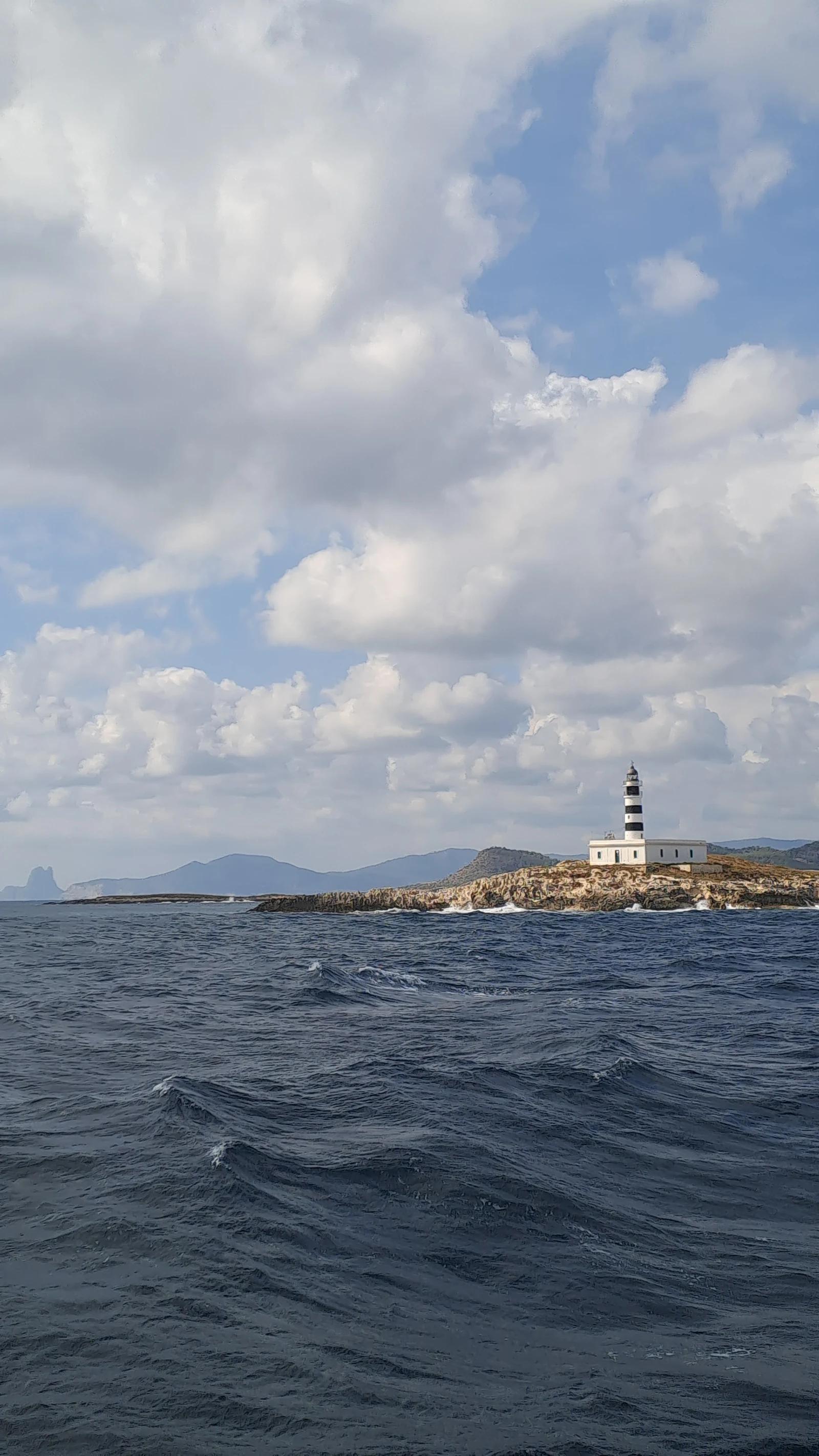
Es Freus is a scatter of small uninhabited islets and reefs between the two islands, with a black-and-white banded lighthouse standing on one of them, visible from a long way off. By its position on the route it is the light on Illa des Penjats; we are naming it from where we saw it rather than from a chart, so treat that as our reading. In the right conditions you can see, far off to the west beyond it, the pointed silhouette of Es Vedrà standing out of the sea — and the sight of a working light on a bare rock with that behind it is worth getting out of your seat for.
And underneath all of it, invisible, is the meadow. This channel is where the Posidonia oceanica grows that makes the water on both islands the colour it is. You cross over a UNESCO-listed ecosystem at thirty knots and never see a leaf of it. We rather like that; it is a useful corrective to the idea that the remarkable things are the ones you can photograph.
Arriving at La Savina
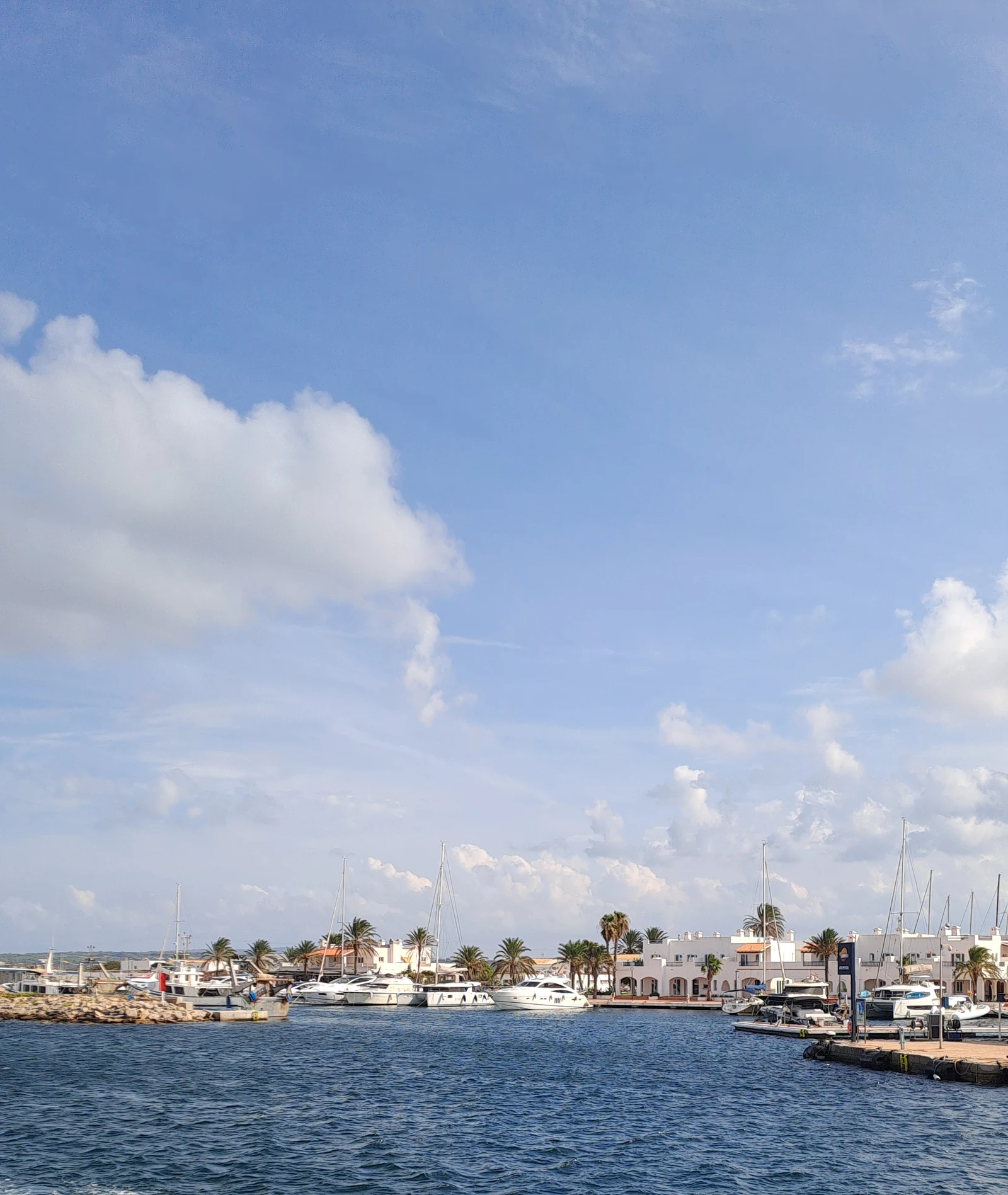
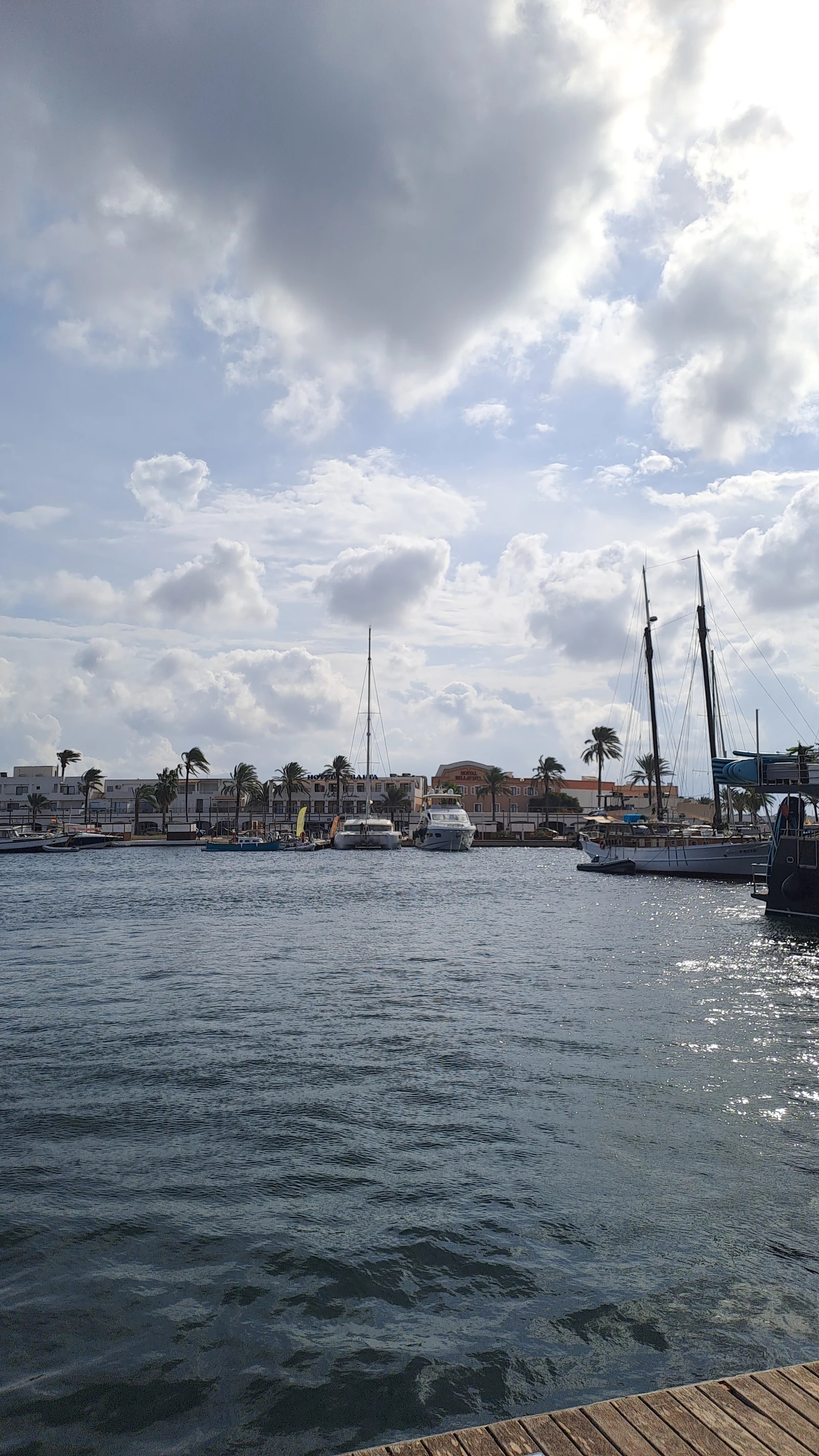
La Savina is a small working port with a marina, a line of white buildings, palms along the quay and almost no ceremony about it at all. You step off, you walk about forty metres, and you are in the island.
What happens next is where Formentera starts being different.
If you brought a car, you are in the Formentera.eco scheme. Since 2019, under a Balearic law on Formentera’s environmental protection, the island has capped the number of visitor vehicles allowed in between 1 June and 30 September. For 2025 that meant 1,732 visitor cars and 122 motorcycles a day, at nine euros a day with a five-day minimum, inside an overall ceiling of 10,287 vehicles circulating at once — hire fleets included. You register in advance. In July 2025 the quota was used up on most days of the month.
If you did not bring a car, which we would suggest, bus line 2 leaves the port and runs the length of the island to the lighthouse at La Mola, roughly hourly, stopping at Sant Francesc, Sant Ferran, the Migjorn hotels, es Caló and El Pilar de la Mola. There are bicycles for hire at the port and 32 signed green routes across the island; the Consell’s own publications give the total length as either more than a hundred kilometres or a hundred and thirty, depending which page you read.
A family can land at La Savina, get on a bus with the suitcases, and be on the beach within the hour, having spent nothing on a car and nine euros on nobody.
Why it is quieter — and the part that is not true
People call Formentera undiscovered. It is not, and saying so does the island no favours.
Formentera had 11,690 residents in 2025. In 2024 it took 391,741 tourists who named it as their main destination — roughly thirty-three visitors per resident — and that number excludes every day-tripper who comes over from Ibiza, which is a great many. Its daily population swings from about 9,200 at the end of December to 40,994 at the peak. Visitors spend more per day here than on any other Balearic island, and in 2024 it was the fastest-growing island in the archipelago for arrivals. That is not an undiscovered place. That is a very small place under heavy and growing load.
So why does it feel calmer than Ibiza or Mallorca? Four reasons, and all four are structural rather than mystical.
No airport. Nobody arrives in ninety seconds from a gate. Every single visitor has to want it enough to get on a boat, and that filter — mild as it is — removes the stag weekend that would have come if it were easy.
A vehicle cap. Imperfect, unproven as a reduction, filled most days in July — and still the difference between a road you can cycle on and one you cannot.
Low building and protected ground. Migjorn and the Tramuntana coast sit inside a designated natural area of special interest. Ses Salines, the salt lagoons shared with Ibiza, have been a natural park since 2001 and are also a Ramsar wetland and a bird protection area. There is nowhere for a resort strip to go.
Scale. The island is about twenty kilometres end to end with one main road. There is no second economy of clubs and superyacht terminals pulling in a different crowd. Ibiza has two industries that barely speak to each other; Formentera has one.
What you get from all that is an island where the loudest thing on an autumn evening is the wind in the cane. What you should not take from it is the idea that it is a secret, or that it can absorb whatever we bring. The Consell’s own actions — the vehicle cap, the tourist-tax money going into the water plant — are the island telling us, fairly politely, that it is at its limit.
Come in June or September. Leave the car in Ibiza. Get the bus. Buy the island’s own wine, of which there were 133 hectolitres in the whole of 2024. That is roughly the entire etiquette of the place, and it costs nothing.
What we actually know
- Formentera has no airport. All arrivals are by sea; the nearest airport is Ibiza.
- Dalt Vila and the posidonia meadow are both part of the UNESCO mixed World Heritage site “Ibiza, Biodiversity and Culture”, inscribed in 1999 under both natural and cultural criteria.
- Trasmapi, one of the operators on the Ibiza–Formentera route, belongs to Insotel Marine Group, part of Grupo Empresas Alonso Marí, S.A. of Ibiza — the same family company that owns Insotel Hotel Group, including the hotel on Platja de Migjorn we stayed in.
- Vehicle quota (“Formentera.eco”) under Llei 7/2019, run by the Consell Insular de Formentera since 2019 and applying 1 June to 30 September. 2025 caps, approved by the Consell on 20 February 2025: 1,732 visitor cars and 122 motorcycles a day, plus 235 cars and 50 motorcycles for Ibiza residents, within a ceiling of 10,287 vehicles circulating at once including hire fleets. €9 a day in high season, five-day minimum. No reduction figure has been published; the quota was reported as used up on most days of July 2025.
- Bus line 2 runs La Savina port to the Far de la Mola about every 60 minutes, stopping at Sant Francesc, Sant Ferran, es Ca Marí, es Caló / ses Platgetes, es Copinar and el Pilar de la Mola (Consell de Formentera mobility update, 15 April 2025; operator Autocares Paya).
- Thirty-two signed green routes. The Consell’s press release on the expansion from 12 to 32 routes gives 130 km; its current tourism site says “more than 100 km”.
- Parc Natural de ses Salines d’Eivissa i Formentera declared by Llei 17/2001, de 19 de desembre; also a Ramsar wetland, a ZEPA bird protection area and part of Natura 2000. Platja de Migjorn and the Tramuntana coast lie within a designated Área Natural de Especial Interés.
- Population 11,690 (INE 2025). 391,741 tourists with Formentera as main destination in 2024 (AETIB, from IBESTAT/INE FRONTUR data), excluding Ibiza day-trippers. Daily population 9,208 on 31 December 2024, peak 40,994. Tourist spending in 2024: €452 million, €222 per person per day against a Balearic average of €187; the fastest growth in main-destination visitors of any Balearic island (CES).
- Vi de la Terra Formentera: 133 hectolitres from 12.4 hectares across two wineries in 2024, down 43.2 per cent on the year (Fora Vila).
We have deliberately not printed crossing times, frequencies or fares: we did not verify them against current timetables, and a stale schedule is worse than none. We identified the banded lighthouse in Es Freus as the light on Illa des Penjats from its position on the route rather than from a chart. The Consell’s own figures for the total length of the green routes disagree with each other and we have given both.
This story is not sponsored, not affiliated and not a paid placement. The stay was found, booked and paid for at our own cost, and nobody at the hotel knew we were writing. Every figure below is attributed to a named source, and where a claim rests only on the hotel’s own word we say so in the same sentence. We write about a place only when it meets the criteria this site was built on — mindful travel, family-friendliness, real sustainability practice rather than the word, places with a soul, immersive cultural travel, a connection to nature, and experiences worth the journey. Meeting them is not the same as being flawless, and the flaws are in here too.