The lizard comes first. A long rust-coloured silhouette is fixed to a white wall along a shaded path, its tail curled into a loop, and the light falls through the perforated sails overhead in small coins on the stone.
It is the sargantana, the wall lizard that lives on Ibiza and Formentera and nowhere else on earth. The real ones are on every warm wall nearby, and the hotel has named its main restaurant after them. A building that wants you to know which island you are on has understood something.
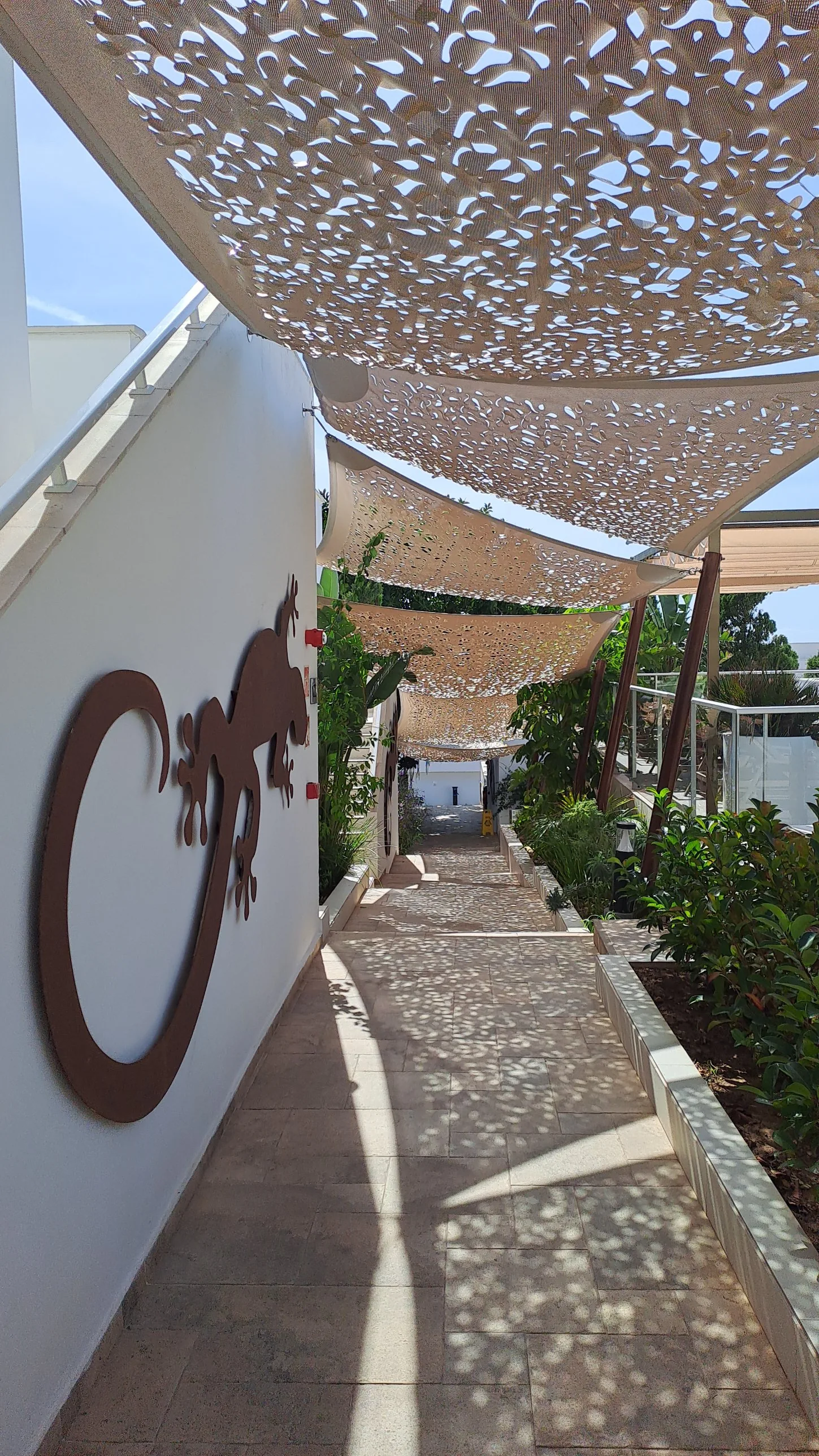
The animal on the wall is in trouble
The lizard deserves more than decoration. Snakes that never lived on these islands arrived in the early 2000s, hidden in the trunks of olive trees imported for gardens. On Ibiza they have emptied whole areas of lizards. On Formentera, the Balearic government’s trapping campaign caught 893 snakes in 2025, most of them on La Mola, the plateau that gives this end of the island its name.
So the sargantana on the wall is a quiet reminder: the island’s smallest native inhabitant needs people who notice it. Children notice it first. Let them.
People who are good at what they do
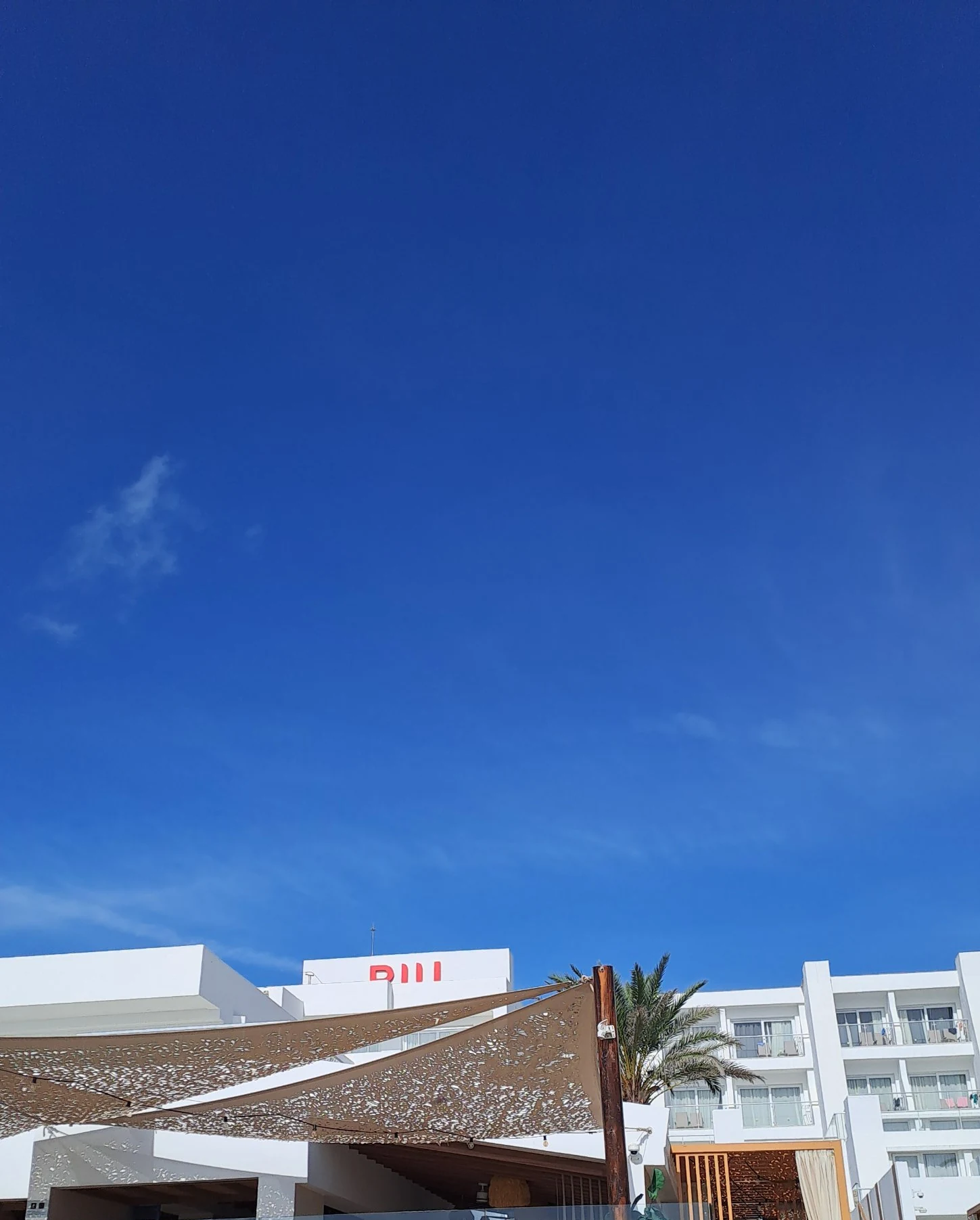
The hotel belongs to RIU, a Mallorcan family company now in its fourth generation, and it reopened in 2025 after a full rebuild. Much of what usually happens at a desk now happens on a phone. What that leaves is people with time for guests, and the people were the best part of the stay.
The service was consistently good. The animation team was a real pleasure. Everyone carried themselves like people who are trusted, respected and good at their work: confident, unhurried, proud of it. You cannot see a payslip from a sun lounger, but you can see how people treat each other at work. Here it showed, and it is what the human connection of a stay is made of.
The food was excellent. The kitchen works on a kilometre-zero idea, local ingredients first. Formentera has fewer than twelve thousand residents and very little farmland, so the honest reading is some of the island on the plate rather than all of it. It is still a choice, and it tasted like one.
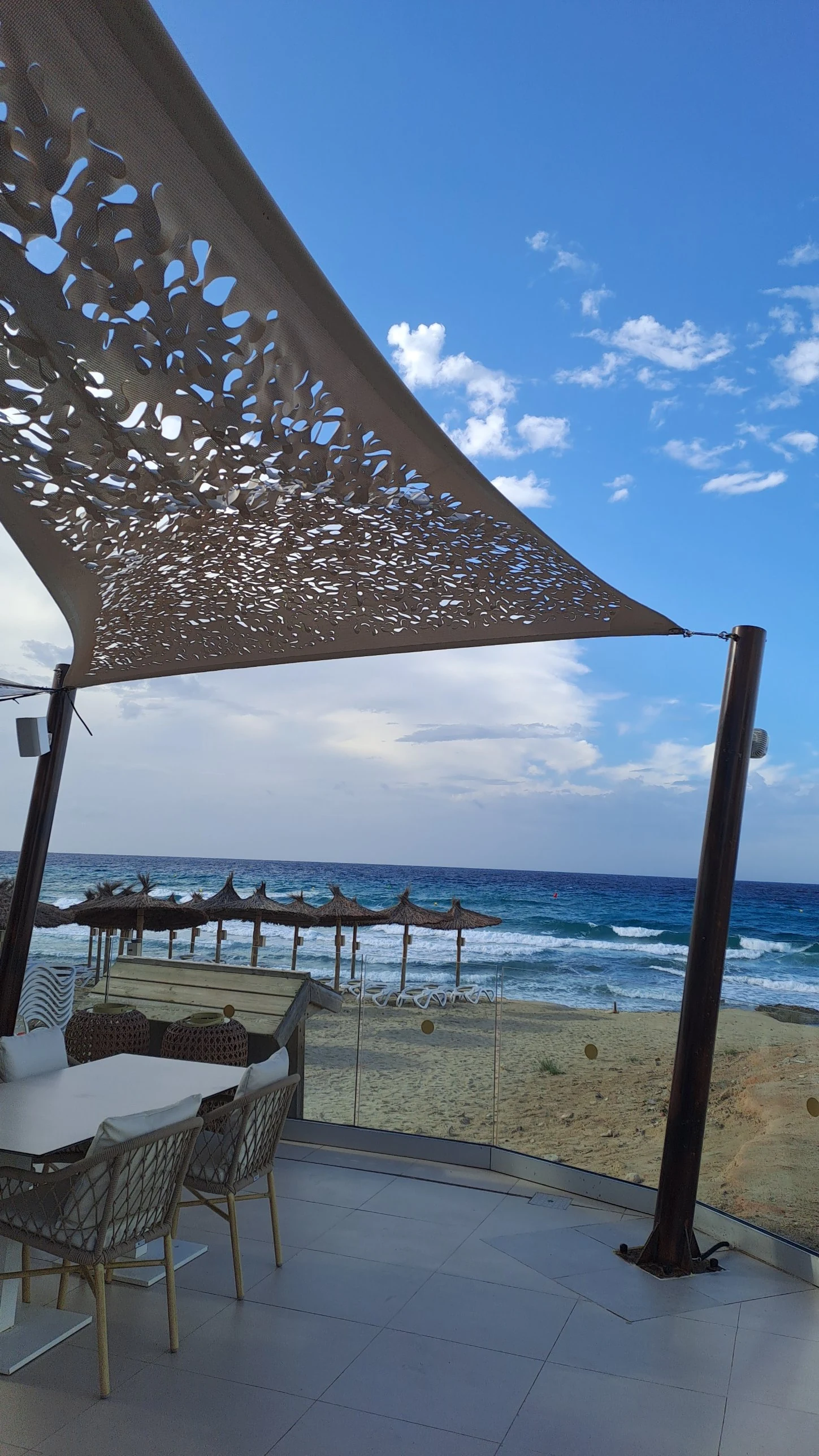
Where you feel the island
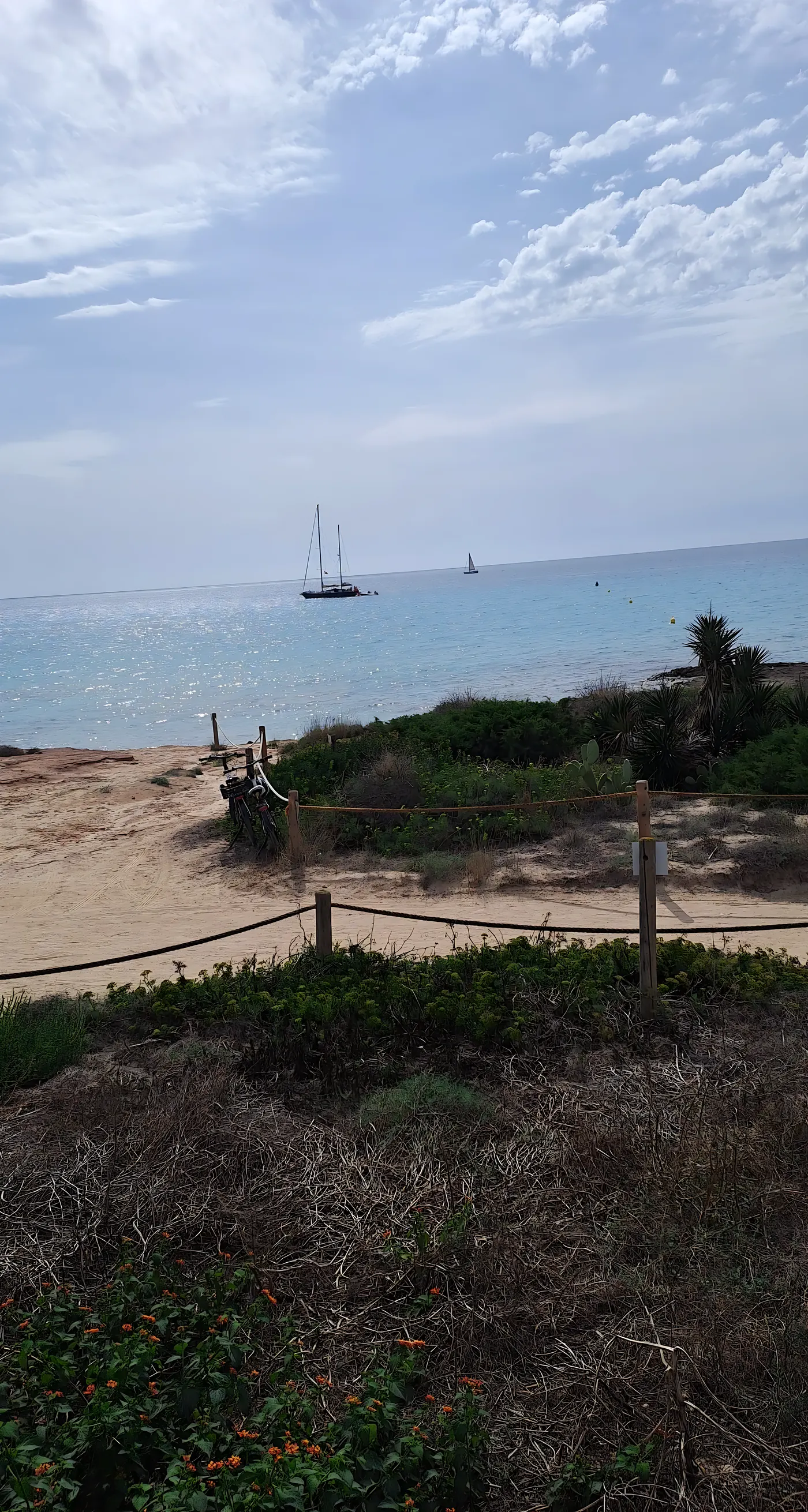
Walk out past the hotel and the dunes are roped off, the plants behind the rope left to hold the sand together. Two bicycles lean against a post. Sailing boats ride at anchor in water so clear that the seagrass shows dark beneath it: the posidonia meadow that makes this coast the colour it is.
In the evening the sun goes down across the water towards a long low headland. That hour is Formentera. A good hotel here gets out of its way, and this one does.
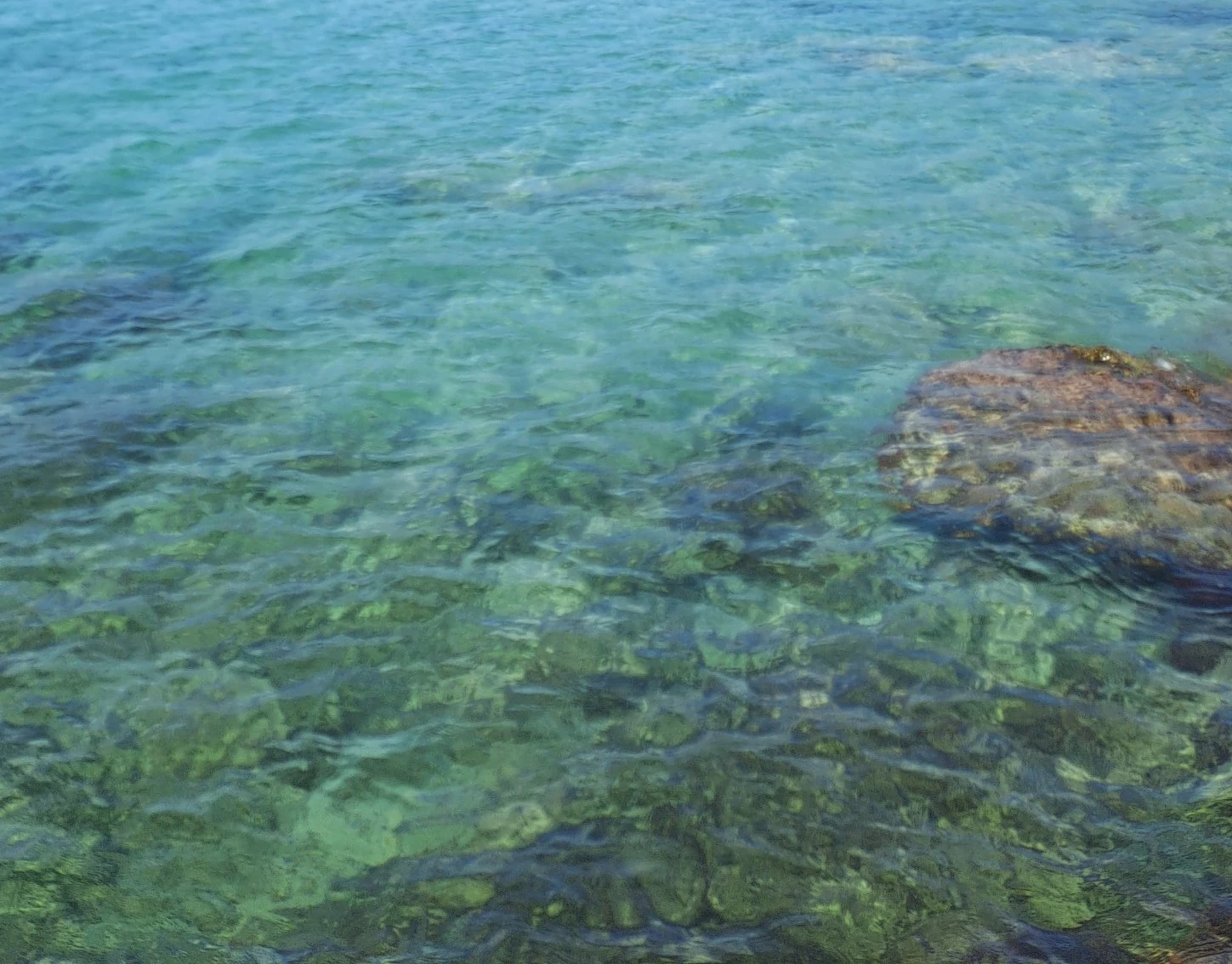
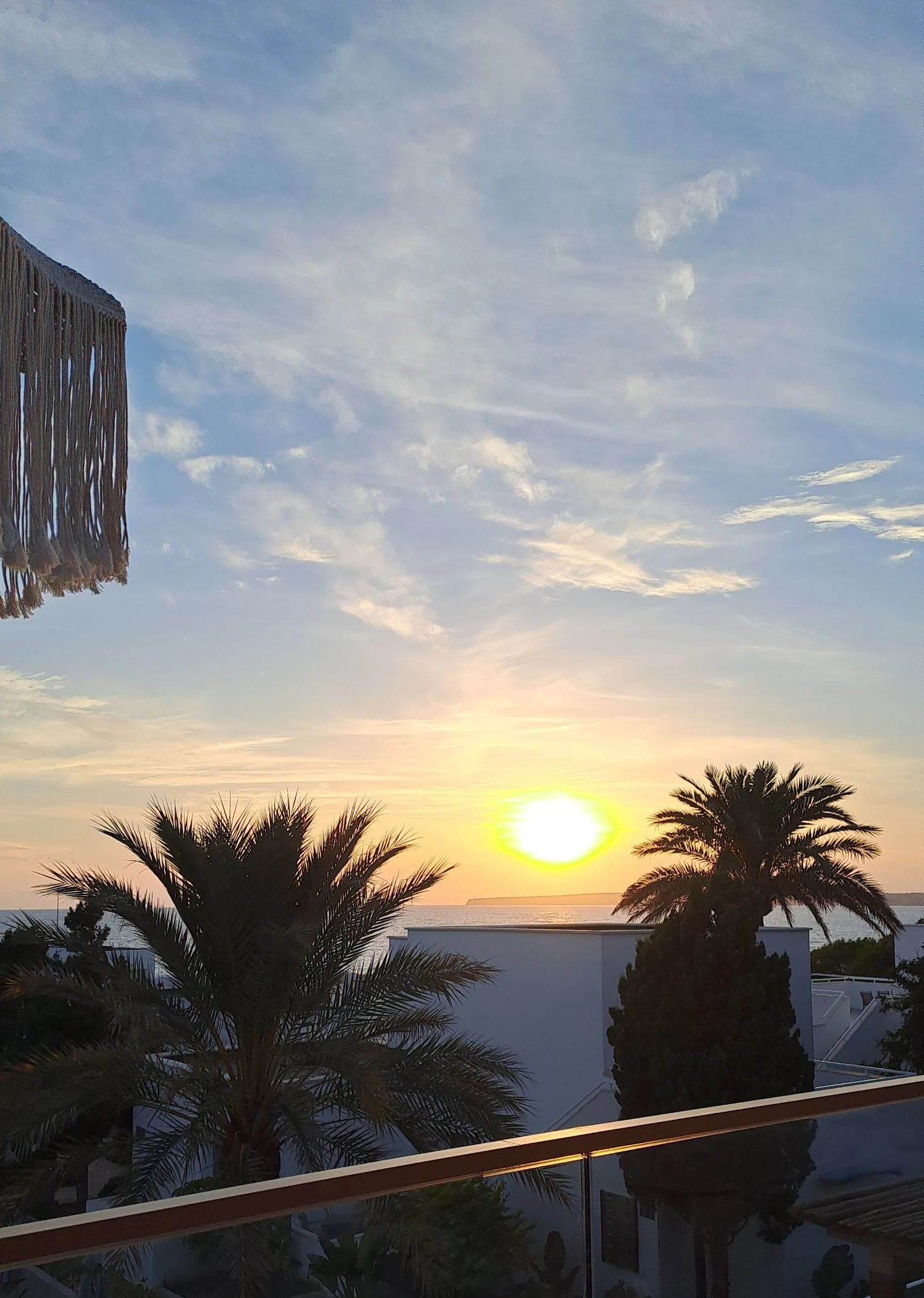
What stays is not the room. It is the island, and the people who made it easy to notice.
What we actually know
- RIU is a Mallorcan family company run by its fourth generation. The hotel reopened on 28 April 2025 after a full renovation (RIU).
- Stated by RIU: solar panels and geothermal climate control in the renovation, and Ecostars certification across its eligible hotels. The renovation plan won a Re Think Hotel award in January 2025, in a category for projects not yet built, so the award recognised a plan rather than results.
- The Ibiza wall lizard (Podarcis pityusensis) is endemic to the Pityusic Islands. Invasive snakes arrived around 2003 inside imported olive trunks (Montes et al., Current Zoology, 2021). 893 snakes were caught on Formentera in 2025, mostly ladder snakes on La Mola (Govern de les Illes Balears, via Periódico de Ibiza, April 2026).
- Formentera had 11,690 residents on 1 January 2025 (INE).
- On 31 March 2025, during the works, the Guardia Civil sealed an area of the public coastal strip beside the hotel and the coastal authority opened a file. RIU said it held its building permit and that the seal concerned a public access street where materials had been left (La Voz de Ibiza; IB3). We found no published outcome.
Photographed in early October 2026. Kilometre-zero cooking, the service and the dunes are what we saw and ate. RIU publishes no list of local suppliers, so we cannot say what share of the food comes from the island.
Independent and self-funded. Atlántis is not sponsored by design: not affiliated, not a paid placement, and nobody we write about knew in advance. The stay was found, booked and paid for at our own cost. The views are our own, judged against the Atlántis values: sustainability, cultural immersion, eco travel, real experiences, family-friendliness, and car-free travel or the deep past, depending on the place. No person appears in any photograph or clip on this page, and every clip is silent.