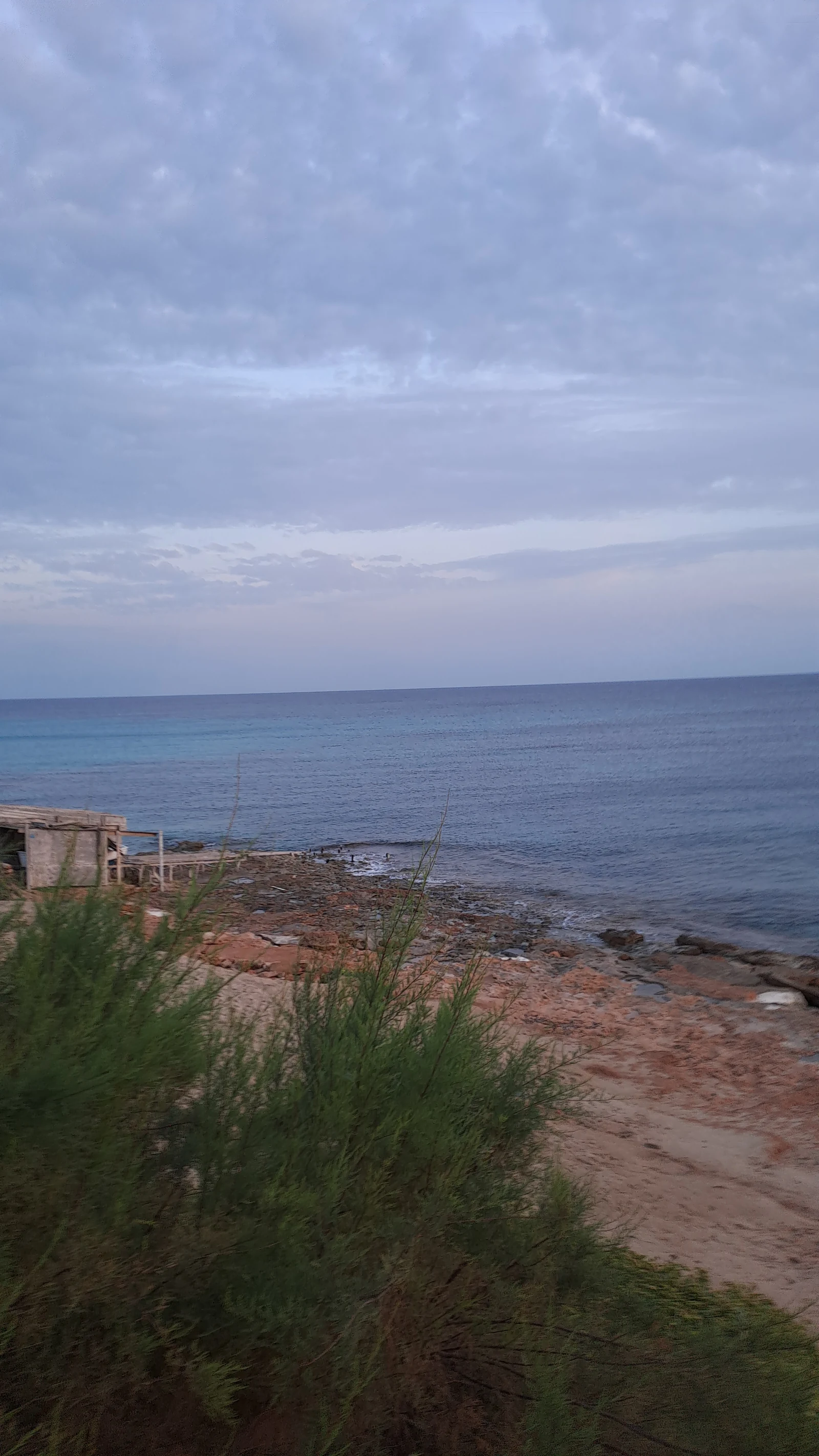
The water off this beach is the colour people mean when they say Caribbean. Pale jade close in, then a band of deep blue where the bottom drops. It is the first thing anyone photographs and the last thing anyone explains.
So here is the explanation, and it changes how the place looks.
The clarity is a plant
Under the channel between Ibiza and Formentera lies a meadow of Posidonia oceanica — a flowering marine plant, not a seaweed, with roots, leaves and fruit. It filters the water column, it holds the seabed together, and the calcareous skeletons of the small organisms that live on its leaves end up as the white sand you are standing on. UNESCO’s own inscription puts it plainly: the quality of the coastal water here depends largely on the functioning of the posidonia ecosystem.
Two corrections, because this is where travel writing usually goes wrong.
The meadow is not a UNESCO site in its own right. It is part of a mixed site called Ibiza, Biodiversity and Culture, inscribed in 1999, which also covers Dalt Vila, the Phoenician settlement at Sa Caleta and the Puig des Molins necropolis. The natural criteria it was listed under are the ones now numbered (ix) and (x).
And the age. You will read that a single clone here is a hundred thousand years old and the oldest living thing on earth. That figure came from a press release. The peer-reviewed paper behind it — Arnaud-Haond, Duarte and colleagues in PLoS ONE, February 2012 — says in its abstract that the large clones are “hundreds to thousands of years old”, and its own growth model gives roughly ten thousand to several tens of thousands of years for clones spanning one to fifteen kilometres. Nobody measured it. It was modelled, from an assumed growth rate of four centimetres a year.
Thousands of years old, possibly tens of thousands, and modelled rather than measured. That is still extraordinary. It did not need the extra zero.
Protected on paper
Anchoring on posidonia has been banned in the Balearics since Decret 25/2018, in force from 29 July 2018. The decree also bans trawling and the dumping of dredged material over the meadows, and it created a surveillance service of nineteen boats. Fines run into six figures under the state and regional nature laws.
Then the enforcement. Reviewing the first year, the Balearic environmental group GOB counted forty-two sanction proceedings — 0.8 per cent of the anchorings its monitors confirmed on posidonia. The decree has also been challenged in court, with petitioners arguing that it punishes a boat’s anchor while saying nothing about sewage outfalls or desalination brine.
Which brings us to the thing behind the dunes.
Every glass of water on this island is made on this beach
Formentera has no river and no usable natural supply of fresh water. Its aquifer is officially described by the Balearic government as overexploited and salinising. All of the island’s mains water is made by reverse osmosis at a single desalination plant, built in 1995, and that plant stands at Es Ca Marí — which is a section of Platja de Migjorn, a few minutes’ walk from where the sun loungers are.
The Consell Insular calls it the only option for producing drinking water on the island. Published capacity figures disagree: the regional government’s note after the 2015–16 expansion gives seven thousand cubic metres a day in total but five thousand as the maximum simultaneous output, while the distributor, Aqualia, states five thousand. Storage is 17,500 cubic metres. A project funded by the tourist tax raised the third production line from two thousand to two and a half thousand cubic metres a day.
What that means for a guest is simple and worth sitting with. Every shower, every pool top-up and every ice cube on this coast was pushed through a membrane using electricity, on an island whose population swings from about nine thousand in winter to over forty thousand at the August peak. We asked ourselves what the hotel’s water use per guest-night is. We do not know. It is not published, by this hotel or by its group, and if you are choosing between places on the strength of their environmental claims, that is the question worth sending by email before you book.
About that sunset, honestly
Migjorn is the Catalan for south, or midday, and the beach is named for the direction it faces. It is a south-facing crescent on the underside of the island, running between Cap de Barbaria in the west and La Mola in the east, about three and a half kilometres of sand by the regional government’s measure and roughly forty metres wide. Guides that tell you it is five, six or eight kilometres long are measuring the whole south coast, not the beach.
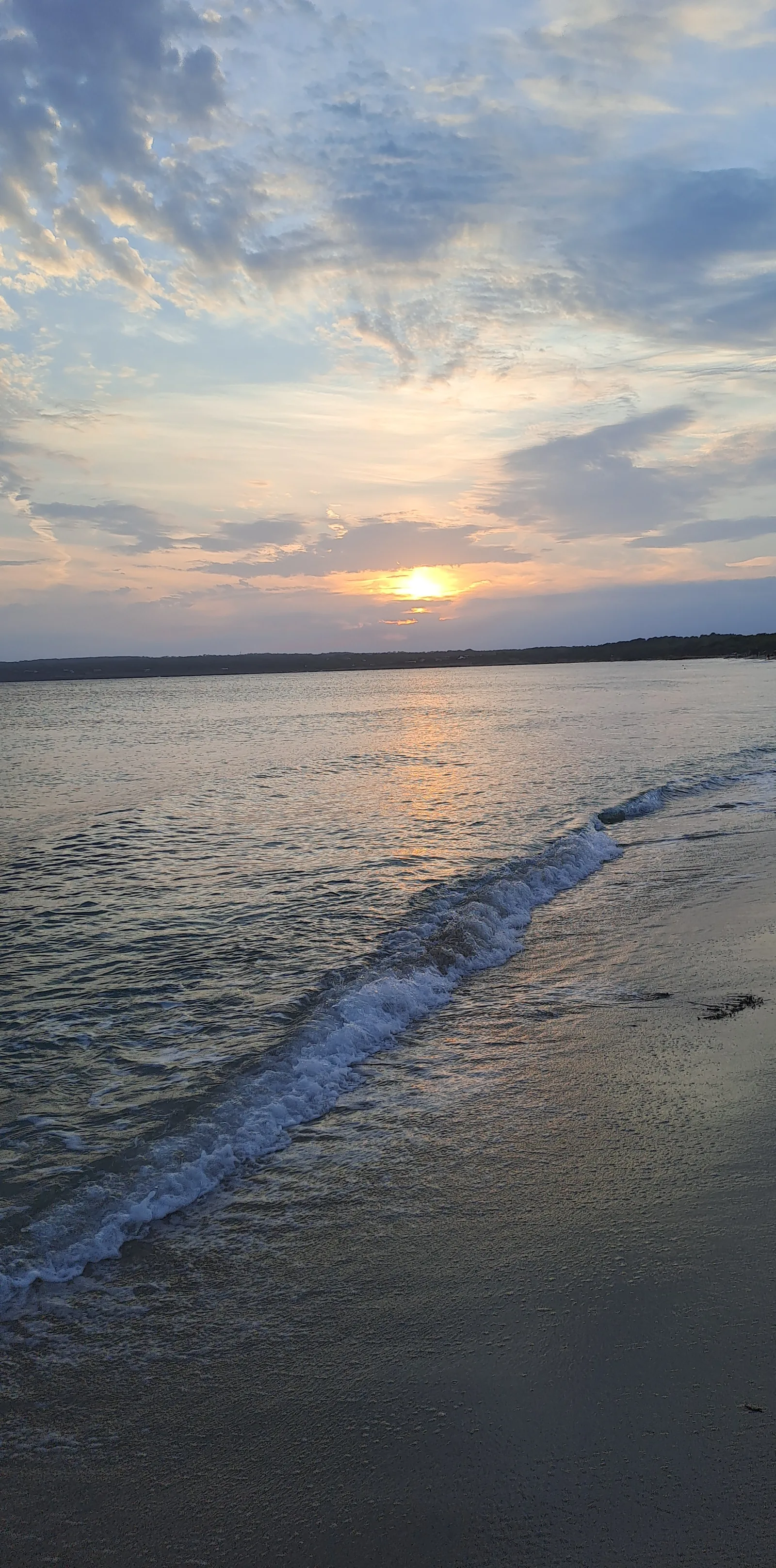
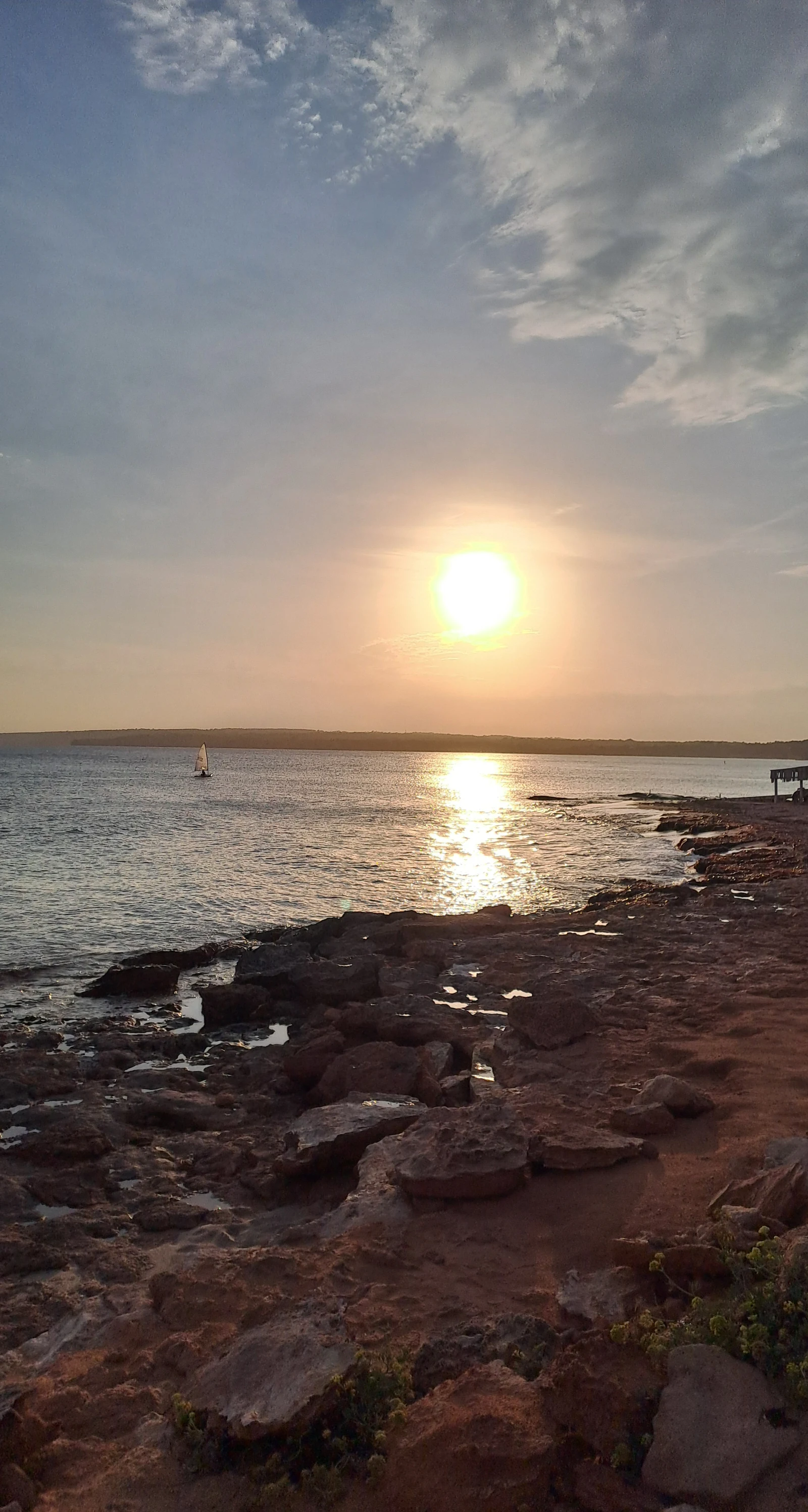
Because it faces south, the sun does not drop into open sea in front of you for most of the year. In high summer it sets well to the west-northwest, which from Migjorn means behind the island’s own low ground and the Barbaria plateau. What you get instead — and the photograph below is ours, not a stock picture — is a long slow burn: the sun sitting on a dark headland, a lit road of gold laid across the water towards you, and forty minutes of colour afterwards rather than a single dramatic minute.
We prefer it, and we would rather tell you what it is than sell you a disc of fire sinking into the Mediterranean that you will not see. If that is what you want, the island has it — from the west-facing ground at Cap de Barbaria, which is twenty minutes away and is worth a separate evening.
The hotel, and a disclosure
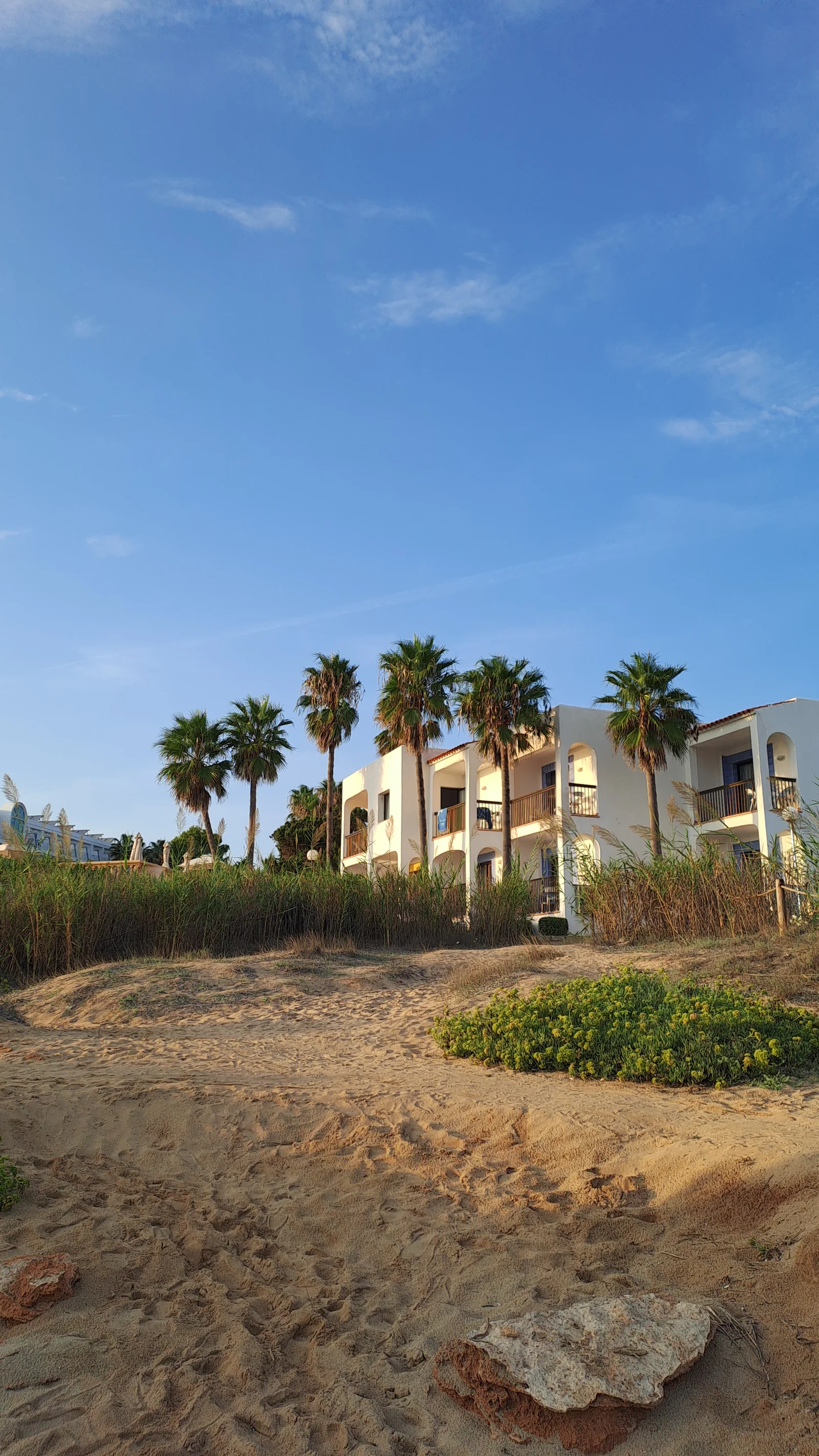
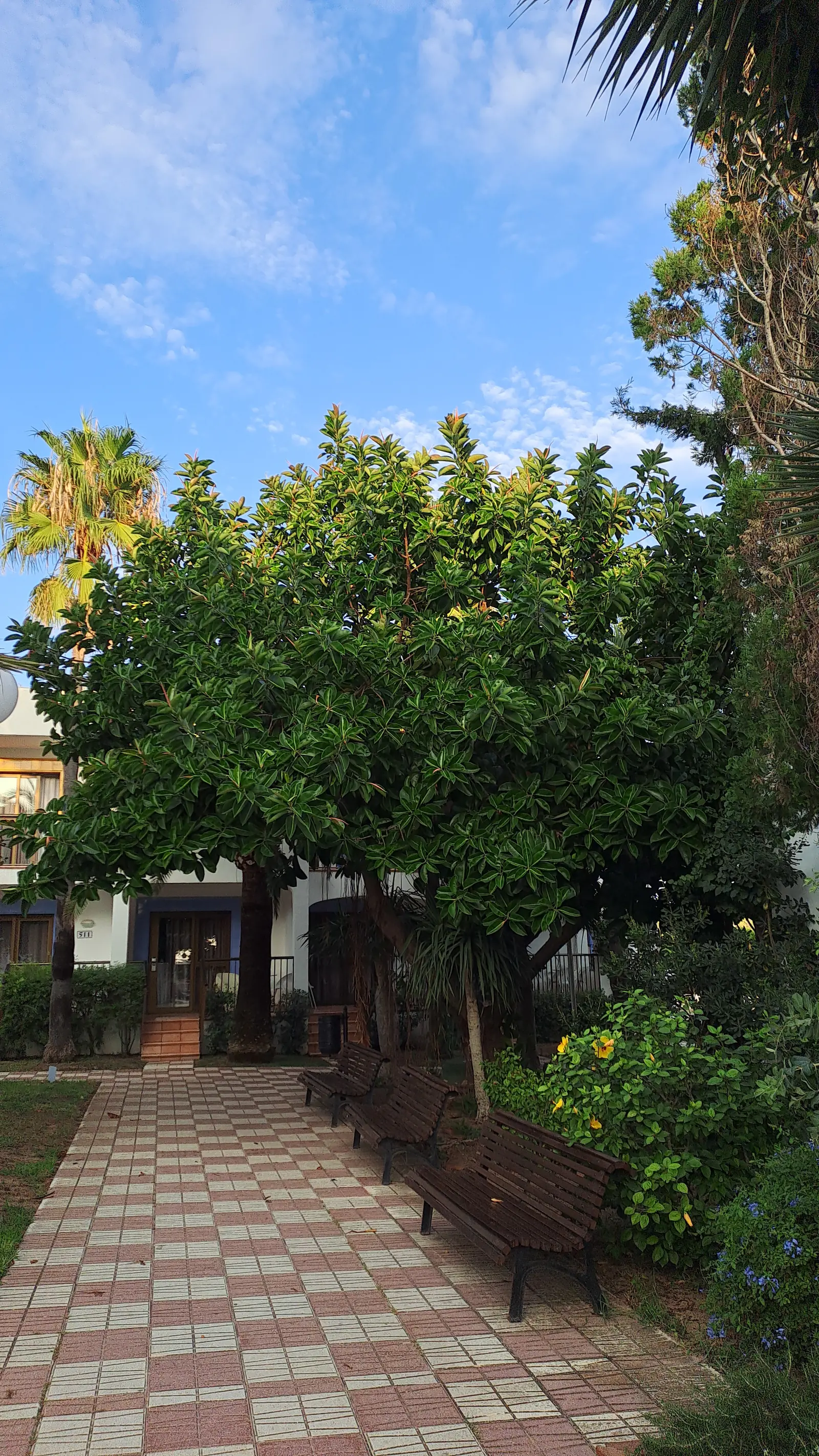
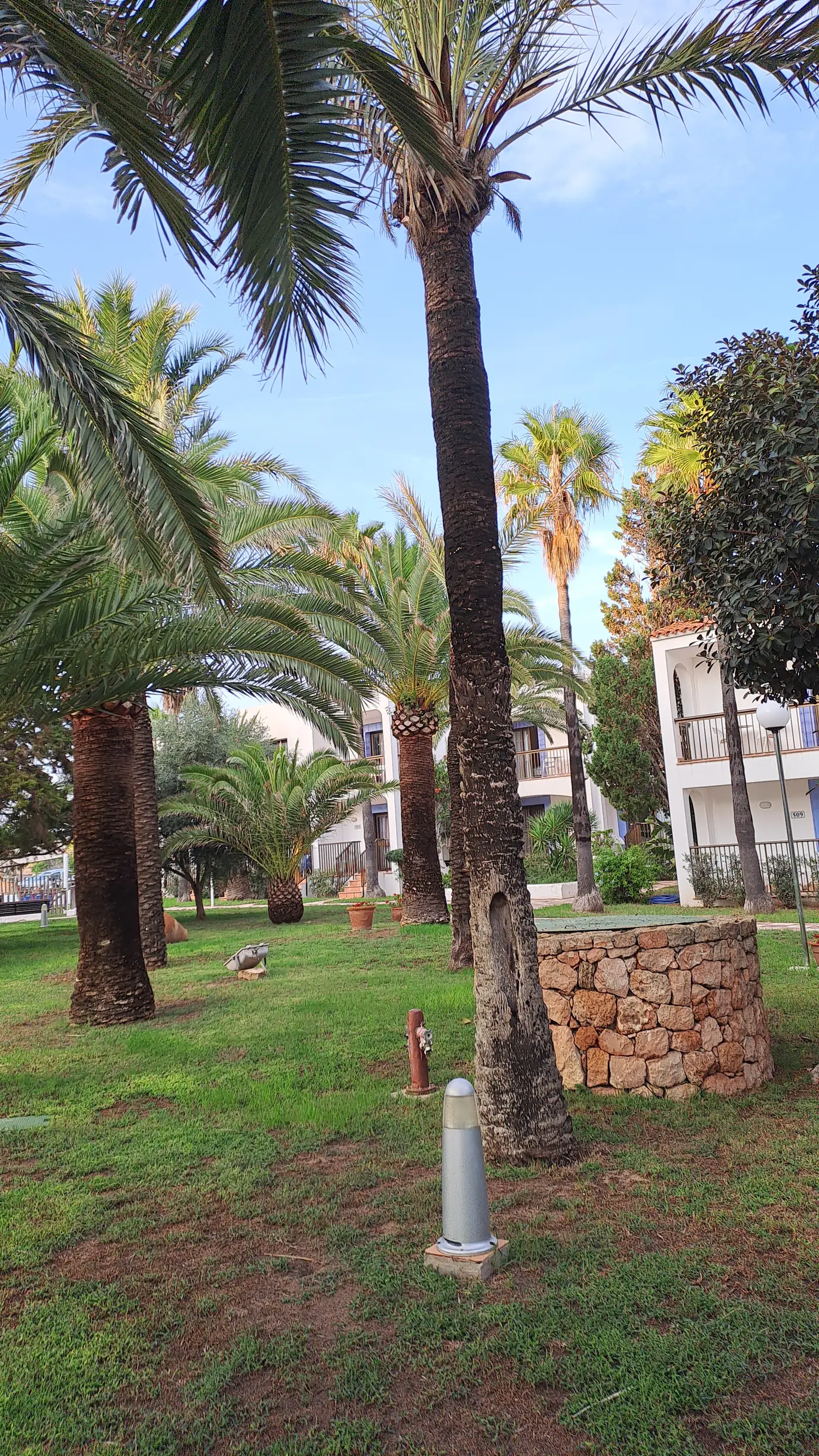
Insotel Hotel Formentera Playa sits directly on the beach at Es Ca Marí: a main building and two separate blocks of studios, four stars, 333 rooms by the operator’s own count, tourist licence H-PM-2218. Two outdoor pools and one indoor. Nine kilometres from the port at La Savina, six from the island capital at Sant Francesc Xavier. One aggregator gives a different room count; we have used the operator’s.
The owner is Grupo Empresas Alonso Marí, S.A., an Ibiza family company trading as Insotel Hotel Group. Its own 2018 non-financial report describes a family tourism group founded in the 1960s by Alonso Marí Calbet, with a five-person board made up of the founder and his four children. Alonso Marí Calbet — a senator for Ibiza and Formentera, and a Balearic MP — died on 9 April 2019 at seventy-nine. Company filings name Javier Marí Washbourne as president and chief executive. His brother Marcos heads the group’s marine arm.
And here is the part that belongs at the top of any honest piece about this hotel. That same marine arm owns Trasmapi, one of the ferry lines that carries people from Ibiza to Formentera. If you book the hotel and then book a Trasmapi crossing, you are paying the same family twice. There is nothing improper about it. But nobody tells you, and you should know.
“La calidad y la sostenibilidad no se poseen, se practican.” — Javier Marí, in the group’s 2018 non-financial report
Quality and sustainability are not possessed, they are practised. It is a good line, and the fair way to treat it is to go looking for the practice. Insotel states that all its properties hold Travelife Gold certification. Booking.com lists Travelife for Accommodation against this property. We could not confirm this specific hotel in Travelife’s own public register, and a claim repeated by a booking site is not a certification. Until we can look it up and give you the date we looked, we are not describing this hotel as eco-certified. If you want to check before you book, the register is at travelifecollection.com and it takes about a minute.
What families actually get
The children’s club is called Insi Club, for ages four to twelve, with up to two seventy-five-minute sessions organised each day, by prior registration and subject to availability. Opening months are not published. There is a children’s pool and a playground, and cots are free for children under three on request. Whether the club itself is free is not stated by the hotel; one booking site lists it as free, which is not the same as the hotel saying so.
On accessibility, the hotel publishes no count of adapted rooms. What is published, and genuinely useful, is the island’s own provision: the Consell Insular’s beach service keeps an amphibious chair for people with reduced mobility at Es Arenals, at kilometre 11, beside the restaurant there, available between noon and five and only under a green flag. Es Arenals also has adapted bathrooms and reserved parking. That is a different section of Migjorn from the hotel, so plan the day around it rather than hoping.
The best thing for families here is not a facility. It is that bus line 2 runs from the port at La Savina to the lighthouse at La Mola roughly every hour and stops at es Ca Marí / Hotel Formentera Playa — at the hotel itself. On an island with a vehicle quota and a bicycle culture, a family can land, get on a bus with the luggage and never hire a car.
What to do with the rest of the island
Three things are worth more than the beach.
Ca na Costa, near Estany Pudent: a megalithic burial of upright slabs inside three concentric paved rings, with twenty-two radial stones and an entrance corridor. Discovered in 1974, excavated to 1977, carbon-dated to roughly 2000–1600 BC, and protected as a Bé d’Interès Cultural since 1994. It is the oldest megalithic site in the Balearic Islands. Before it was found, people believed Formentera was first settled by the Phoenicians, more than a thousand years later. One small excavation moved the island’s whole history.
Far de la Mola, the lighthouse on the eastern plateau, inaugurated on 30 November 1861. There is a monument near it to Jules Verne, placed at the autumn equinox of 1977. Verne set part of Hector Servadac (1877) on a fragment of Formentera carried off by a comet — he drew on the French astronomers Arago and Biot, who set up an observatory on La Mola in 1807–08. He never came here. And he did not call it the lighthouse at the end of the world; that is a different novel, set off Tierra del Fuego, and the claim is repeated everywhere without a source.
The island’s wine. Vi de la Terra Formentera was regulated in 2004 and approved as a protected geographical indication in March 2013. In 2024 the whole island made 133 hectolitres from 12.4 hectares across two wineries — down more than forty per cent on the year, blamed on drought and wood pigeons. It is real, it is protected, and there is almost none of it. Drink it here, because it will not reach you at home.
The thing nobody puts in the brochure
Formentera had 11,690 residents in 2025. In 2024 it received 391,741 tourists who gave it as their main destination — about thirty-three for every resident — and that figure leaves out everyone who comes over from Ibiza for the day. The island’s daily population runs from around 9,200 at the end of December to a peak of 40,994. Visitors here spend more per day than anywhere else in the Balearics, and in 2024 Formentera was the fastest-growing island in the archipelago for main-destination arrivals.
Since 2019 the island has capped the number of visitor vehicles allowed in between 1 June and 30 September. In 2025 that meant 1,732 cars and 122 motorcycles a day for visitors, at nine euros a day with a five-day minimum. The cap works as a cap. It is not a proven reduction — no figure has been published — and in July 2025 the quota was used up on most days of the month.
So: a beautiful, strictly limited island that is extremely popular and knows it, trying to hold a line. Going in late May, June or September rather than August is the single most useful thing a visitor can do about that, and it is also, by some distance, the better holiday.
What we actually know
- UNESCO World Heritage site “Ibiza, Biodiversity and Culture”, inscribed 1999; the posidonia meadow is part of that mixed site, under the natural criteria now numbered (ix) and (x).
- Arnaud-Haond, Duarte et al., PLoS ONE 7(2): e30454, 1 February 2012. Abstract: large clones “hundreds to thousands of years old”. The paper’s own model gives about 10,000 to several tens of thousands of years for clones spanning 1–15 km, assuming 4 cm of rhizome growth a year. The widely repeated figure of 100,000 years comes from press coverage, not the paper.
- Decret 25/2018, de 27 de juliol (BOIB 93), in force 29 July 2018: anchoring on posidonia banned as a general rule; 19-boat surveillance service. GOB’s first-year review counted 42 sanction proceedings, 0.8 per cent of confirmed anchorings on posidonia.
- Formentera’s desalination plant at Es Ca Marí was built in 1995. Capacity is published inconsistently: 7,000 m³/day total with 5,000 m³/day maximum simultaneous output (Govern balear), 5,000 m³/day (Aqualia). Storage 17,500 m³. The island’s aquifer is officially described as overexploited and salinising.
- Platja de Migjorn: about 3.5 km long, average 40 m wide, within the Área Natural de Especial Interés de Platja de Migjorn-Costa de Tramuntana (Govern balear, illesbalears.travel). Sections west to east: Es Mal Pas, Es Ca Marí, Racó Fondo, Còdol Foradat, Es Valencians, Es Arenals, Es Copinar.
- Insotel Hotel Formentera Playa: 4-star, 333 rooms, tourist licence H-PM-2218, two outdoor pools and one indoor — all stated by the operator. Owner: Grupo Empresas Alonso Marí, S.A., Ibiza. Founder Alonso Marí Calbet died 9 April 2019. Javier Marí Washbourne listed as president and CEO in company-registry filings; Marcos Marí heads Insotel Marine Group, which owns the Trasmapi ferry line.
- Insi Club: ages 4–12, up to two 75-minute sessions a day, prior registration, subject to availability; cots free for under-3s on request (Insotel). Amphibious beach chair at Es Arenals (km 11) and Es Pujols, 12:00–17:00, green flag only; adapted bathrooms and reserved parking at Es Arenals (Consell Insular de Formentera / formentera.es).
- Ca na Costa: discovered 1974, excavated 1974–77, in use c. 2000–1600 BC, declared Bé d’Interès Cultural in 1994; the oldest megalithic site in the Balearic Islands.
- Far de la Mola inaugurated 30 November 1861. Jules Verne set part of Hector Servadac (1877) on Formentera; he never visited. The Verne monument dates from the autumn equinox of 1977.
- Vi de la Terra Formentera: regulated by order of 3 August 2004, approved as a protected geographical indication on 11 March 2013. 2024 production: 133 hl from 12.4 ha across two wineries, down 43.2 per cent (Fora Vila).
- Population 11,690 (INE 2025). 391,741 tourists with Formentera as main destination in 2024 (AETIB, from IBESTAT/INE FRONTUR data), excluding day visitors from Ibiza. Daily population 9,208 on 31 December 2024, peaking at 40,994. Vehicle quota under Llei 7/2019, 1 June–30 September; 2025 caps 1,732 visitor cars and 122 motorcycles a day at €9 a day, five-day minimum.
Not established and therefore not printed: the hotel’s opening year, its last renovation year, whether the Insi Club is free, its number of adapted rooms, and any water or energy figure for the property or the group. We could not confirm this hotel in Travelife’s public register and have not called it certified. We also found no reported controversy, legal issue or safety incident concerning this hotel or Insotel Hotel Group — which is an accurate statement about what we found, not a clean bill of health.
This story is not sponsored, not affiliated and not a paid placement. The stay was found, booked and paid for at our own cost, and nobody at the hotel knew we were writing. Every figure below is attributed to a named source, and where a claim rests only on the hotel’s own word we say so in the same sentence. We write about a place only when it meets the criteria this site was built on — mindful travel, family-friendliness, real sustainability practice rather than the word, places with a soul, immersive cultural travel, a connection to nature, and experiences worth the journey. Meeting them is not the same as being flawless, and the flaws are in here too.