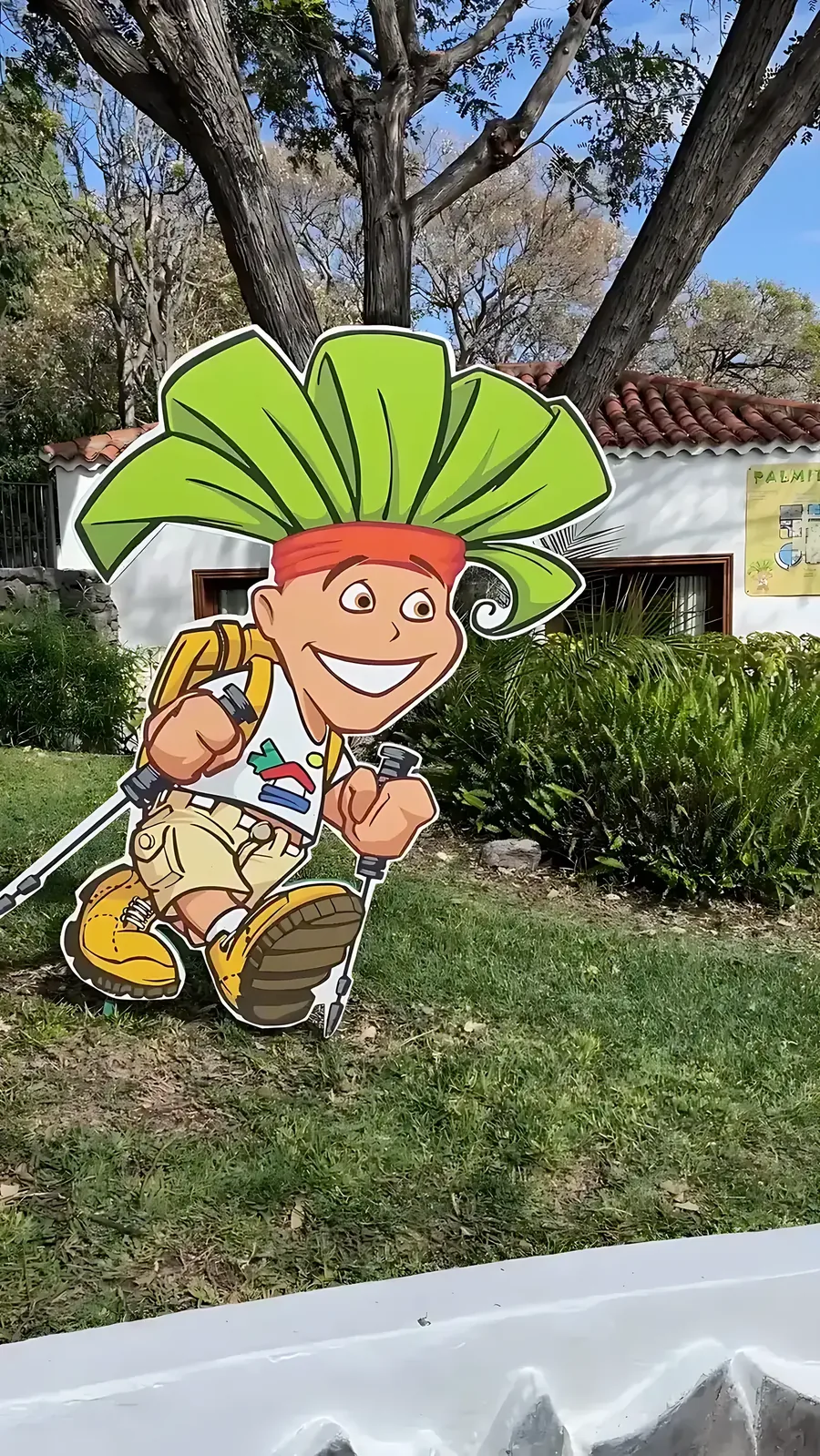
The first person to meet your children here is made of painted board. He stands on the lawn beside the lane with a walking pole in each hand and a rucksack on his back, grinning under a hat made of palm fronds, and he is pointed very clearly towards a low white building under the trees. His name is Palmito. A palmito is the heart of a palm, which is either the joke or the point, and by the second morning every child on this hillside knows exactly where he is leading them.
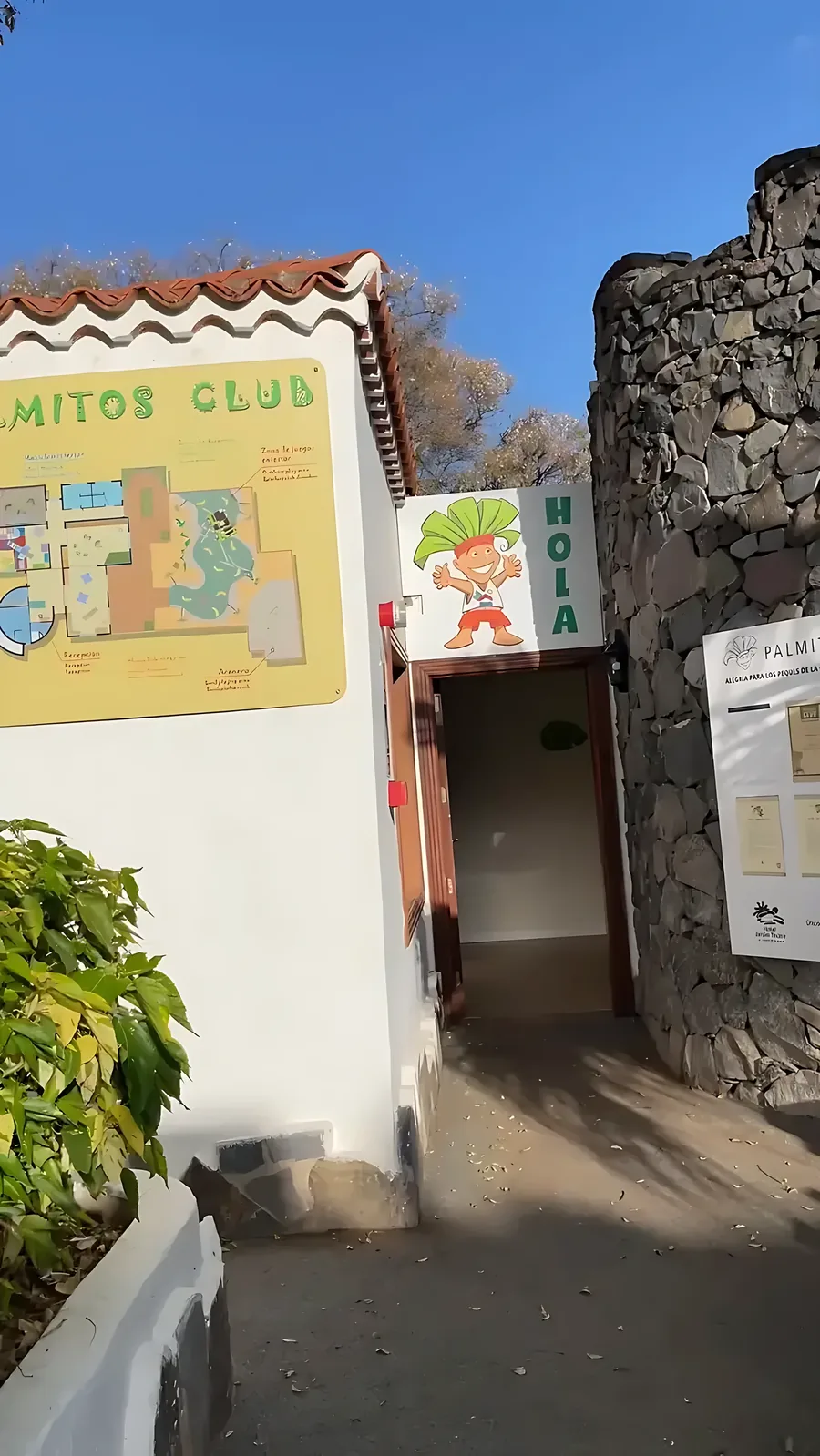
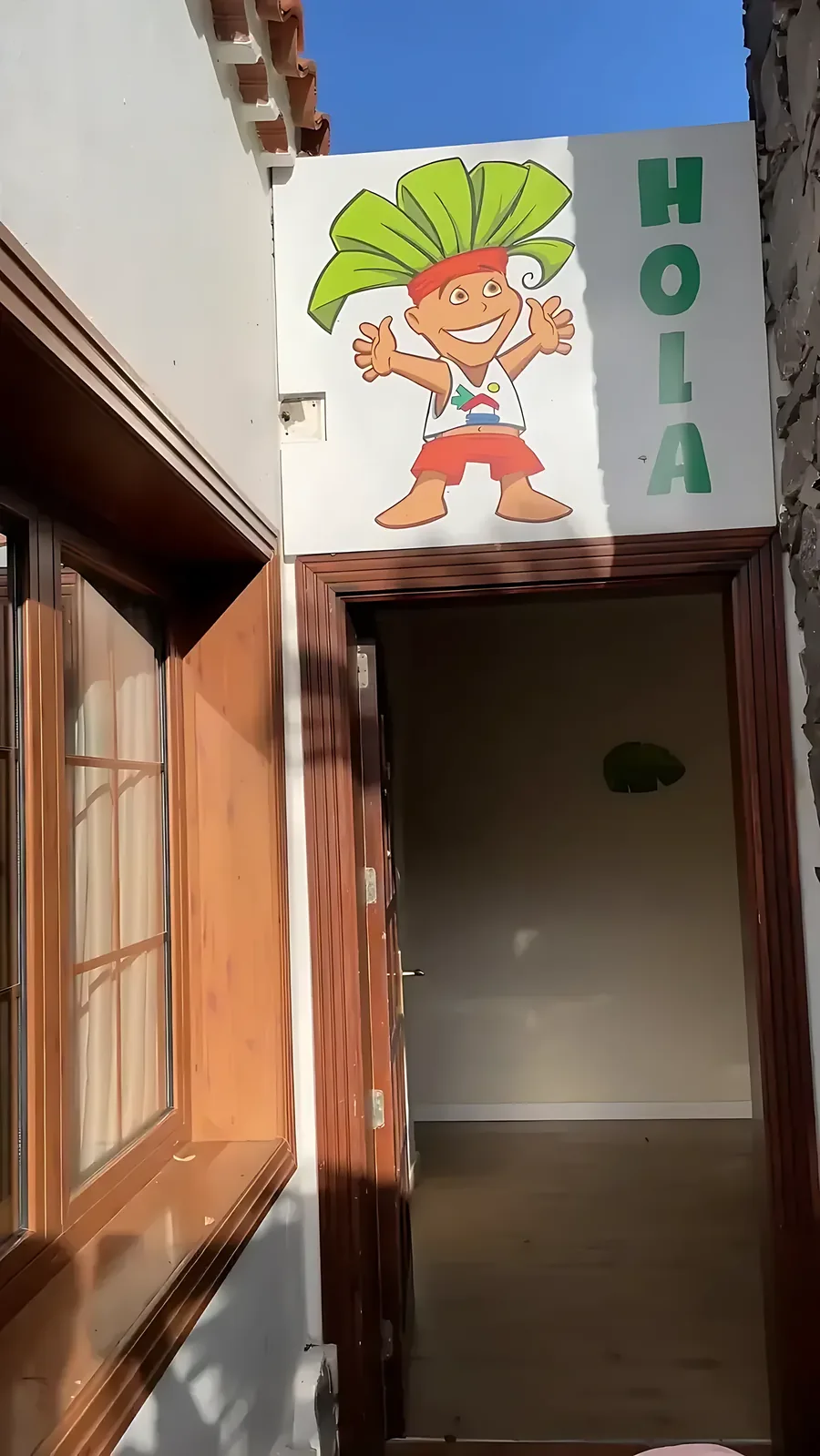
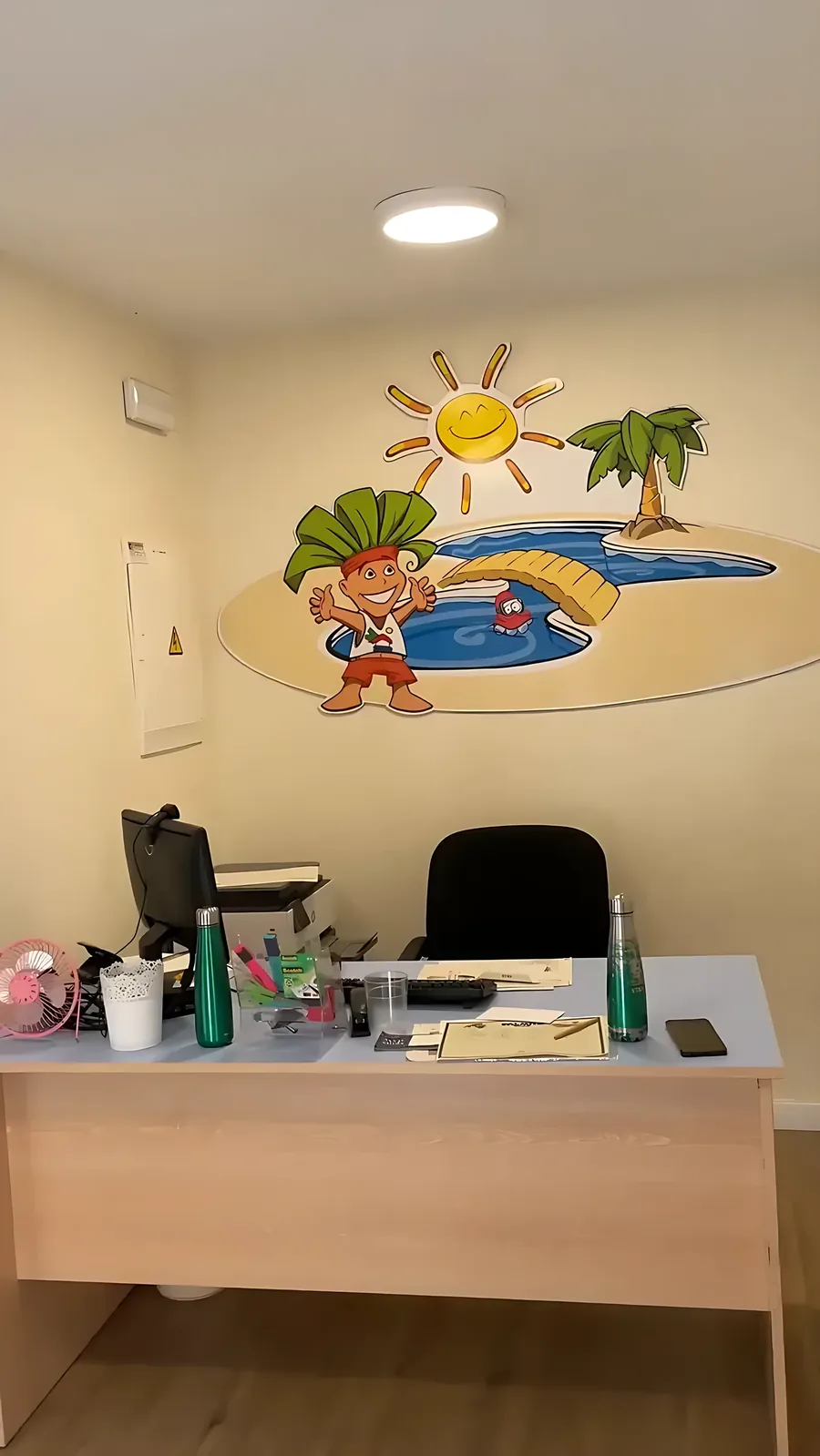
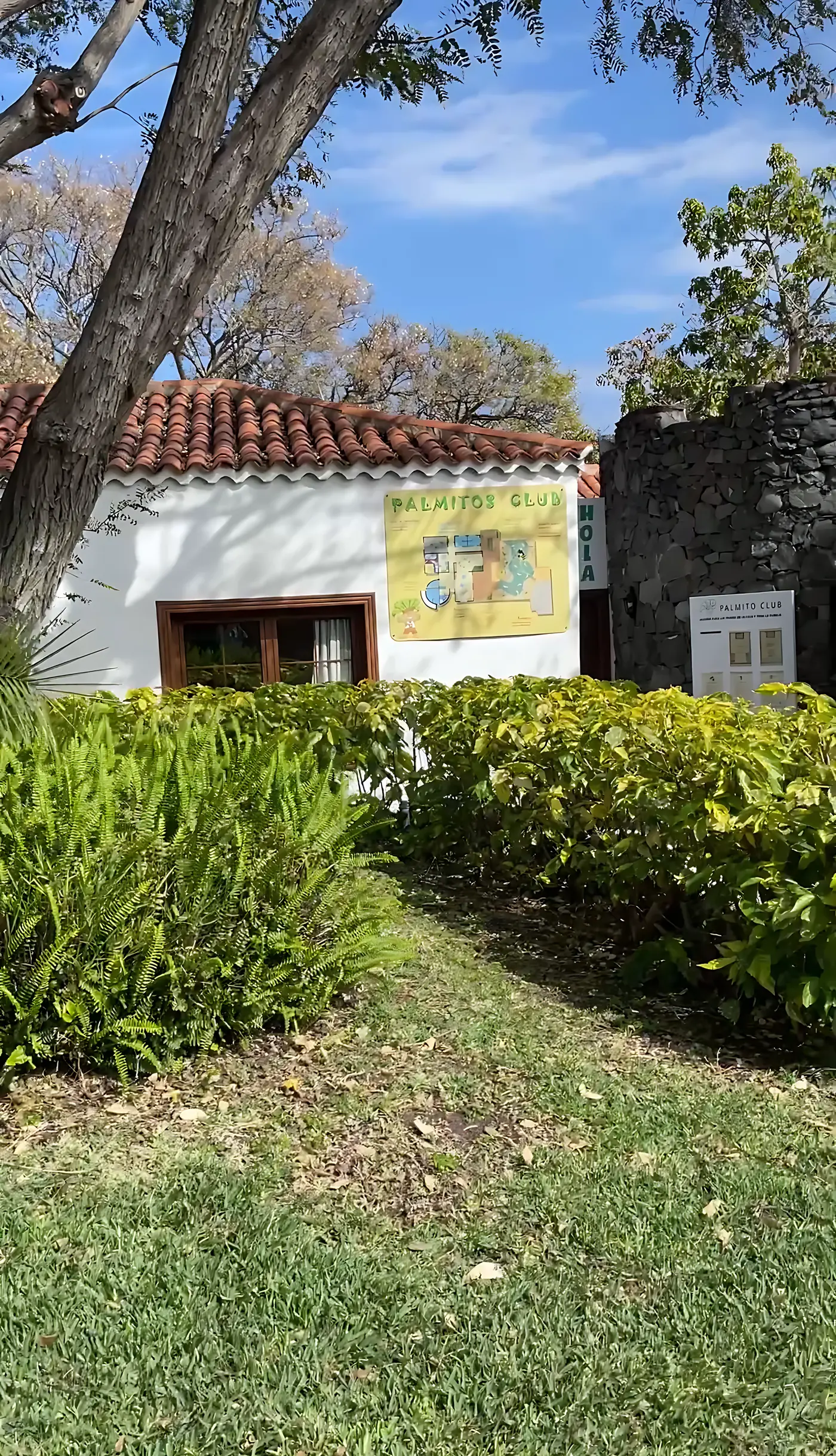
Over the door of that building a second Palmito throws his arms wide beside the word HOLA. The sign on the gable is hand-painted and says PALMITOS CLUB; round the corner, on the newer wing, another hand-painted sign says PALMITO CLUB. Somewhere along the way somebody dropped the S and nobody went back for the old one. We like that. It is the kind of detail a place only has when it has been doing the same kind thing for long enough to gather layers.
Behind the HOLA door
The club is for children from four, with a babyroom for the very small where a parent stays alongside. Four to sevens have it all year round. For eight to thirteens there is a second programme, MaxiClub, but only in the holidays — Easter and summer — which is worth knowing if you travel in October with an eleven-year-old. It is free for guests, with a morning session and an afternoon one and a pause across the heat of lunchtime.
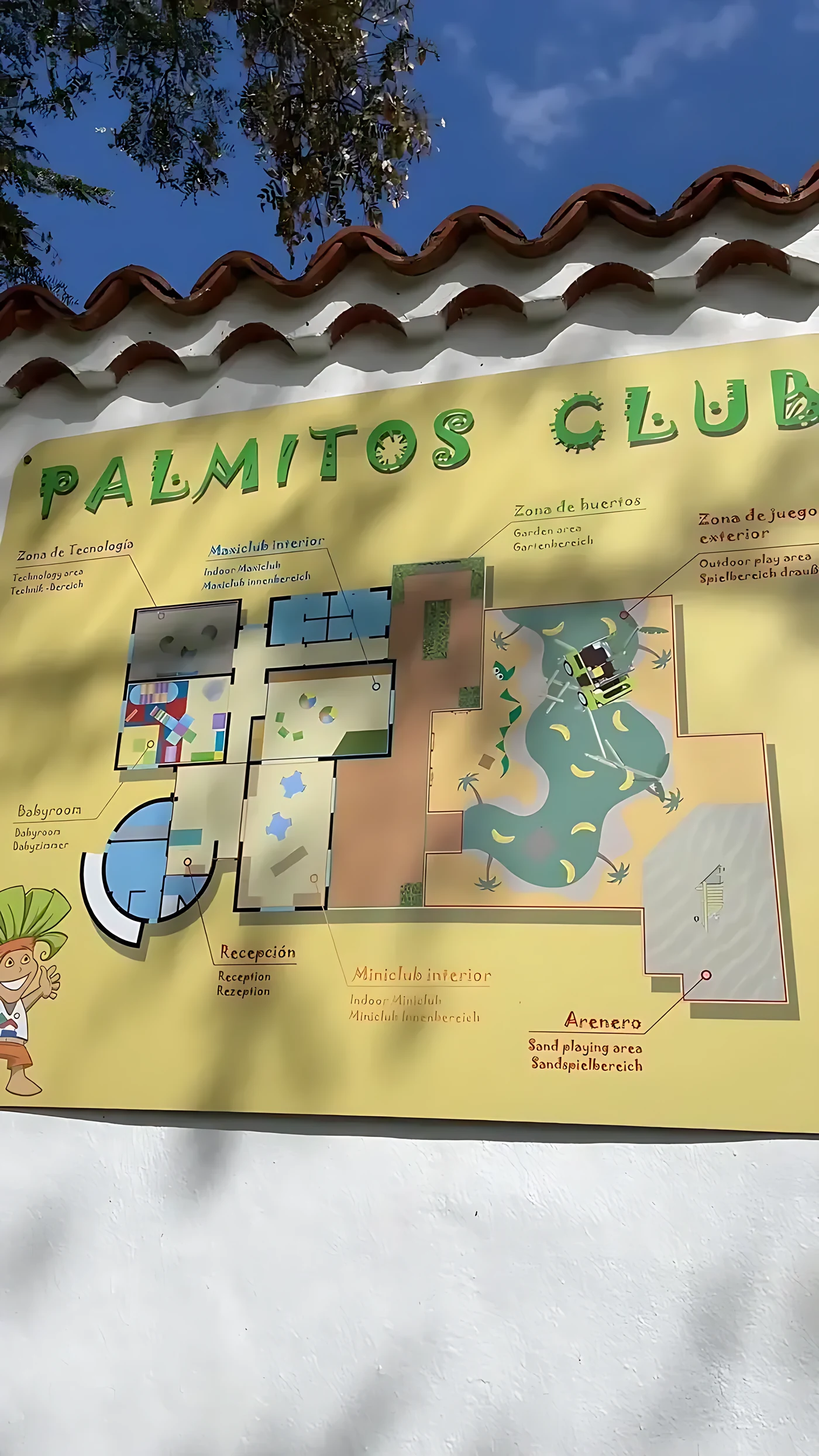
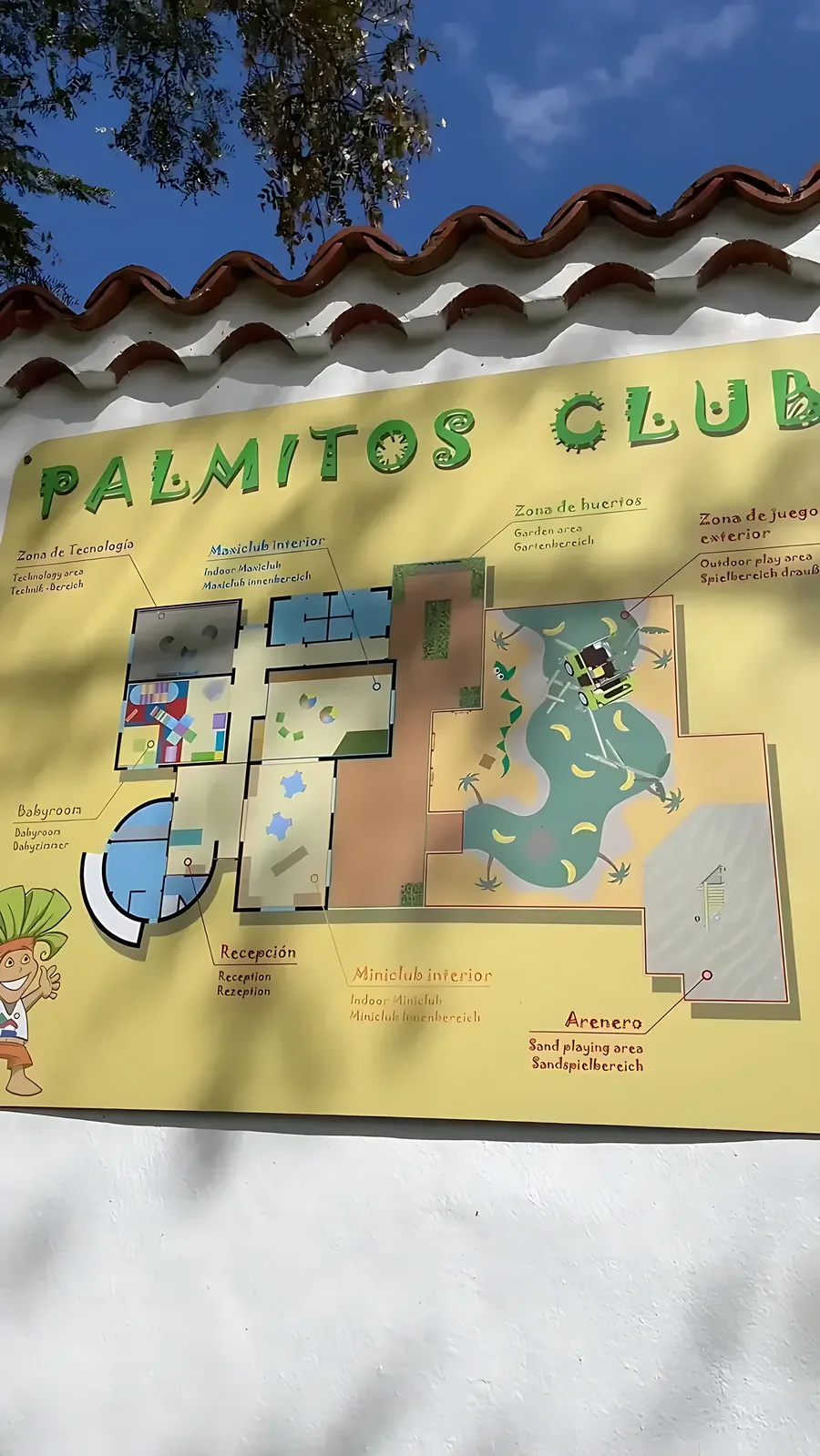
The best description of it we found anywhere is not on the hotel’s website. It is the painted plan on the outside wall. It shows a reception, an indoor mini-club, the babyroom, a sandpit, an outdoor play area and a technology room — and in the corner, marked in green, a zona de huertos. The children have a vegetable garden of their own.
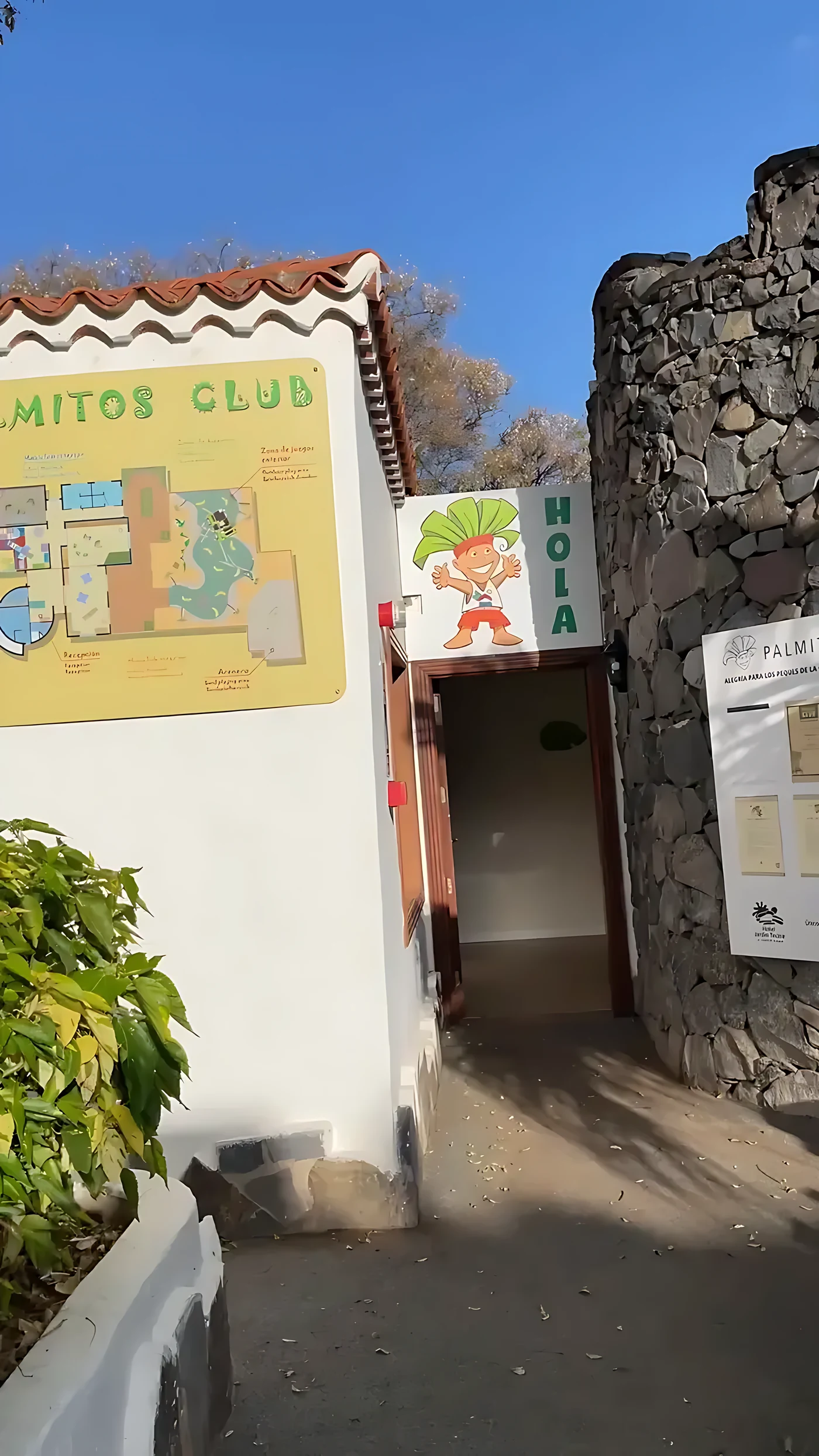
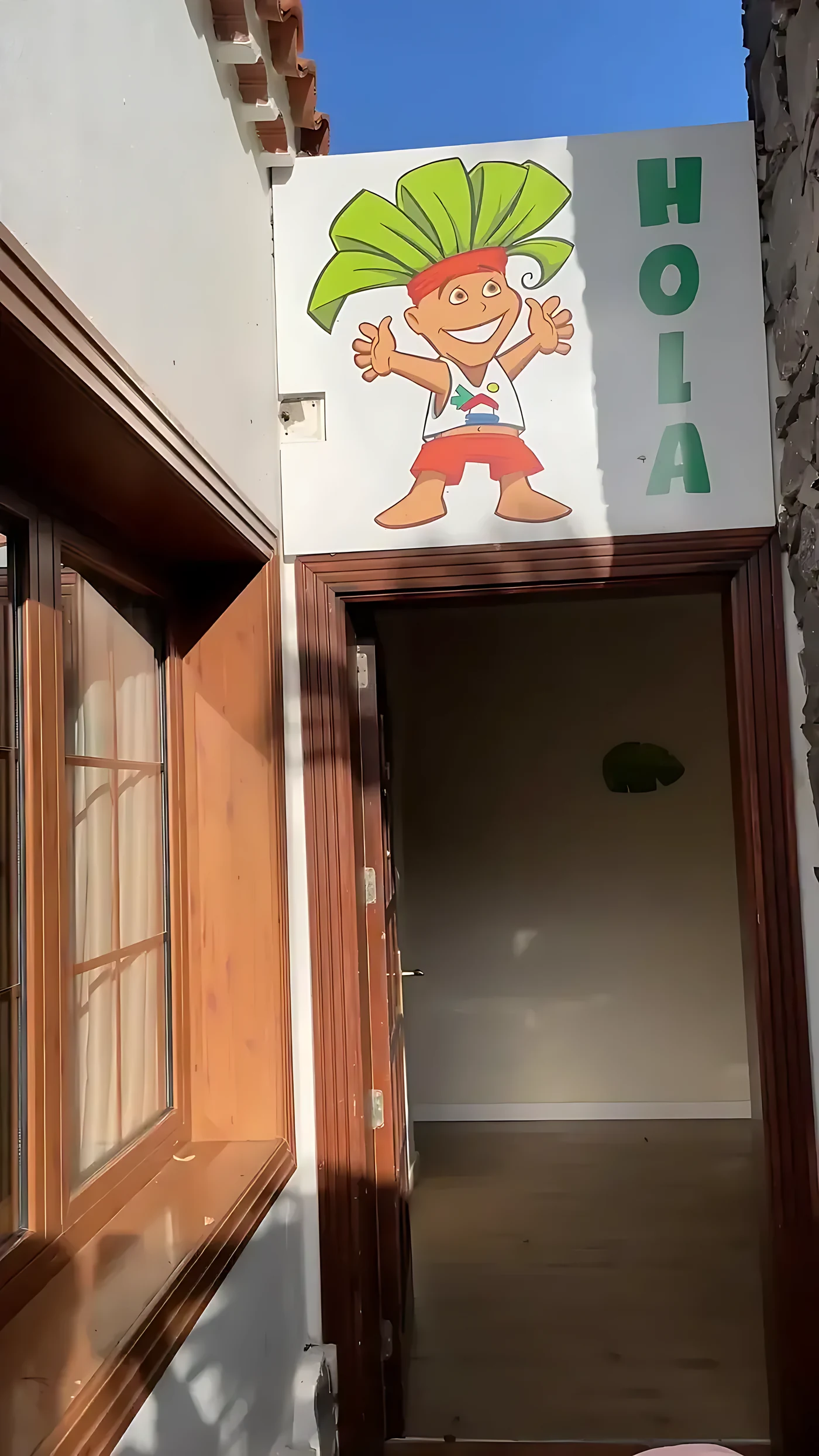
The week we checked, the timetable inside ran to carnival masks, painted T-shirts, maracas, clay, things made from recycled materials, a gymkhana and the parachute game. Water games every afternoon at four. A family game every day at half past twelve, so that parents are drawn in rather than handed a pager. A talent contest. And on Sunday evening, a session called Palmito Orchard.
The environmental teaching is refreshingly practical. Children learn which colour of bin each kind of rubbish goes into, and then they make a Palmito of their own out of recycled materials and carry him home. Nobody is lecturing a five-year-old about carbon. They are teaching him to tell a yoghurt pot from a newspaper, which is the habit that actually lasts.
The people who run the club are the same team who run the games by the pool and the shows at night. That sounds like an administrative detail and it is the most important thing about the place for a small child. The person who painted her face at eleven is the person waving from the stage at nine, and seeing a known face everywhere is most of how a four-year-old decides that somewhere is safe.
One thing to know in advance, because families have strong views about it: the technology room on the plan has a PlayStation 5 in it for the older children, installed in the 2023 refit. It is one room, in a building surrounded by trees and a vegetable plot, and it is entirely your call.
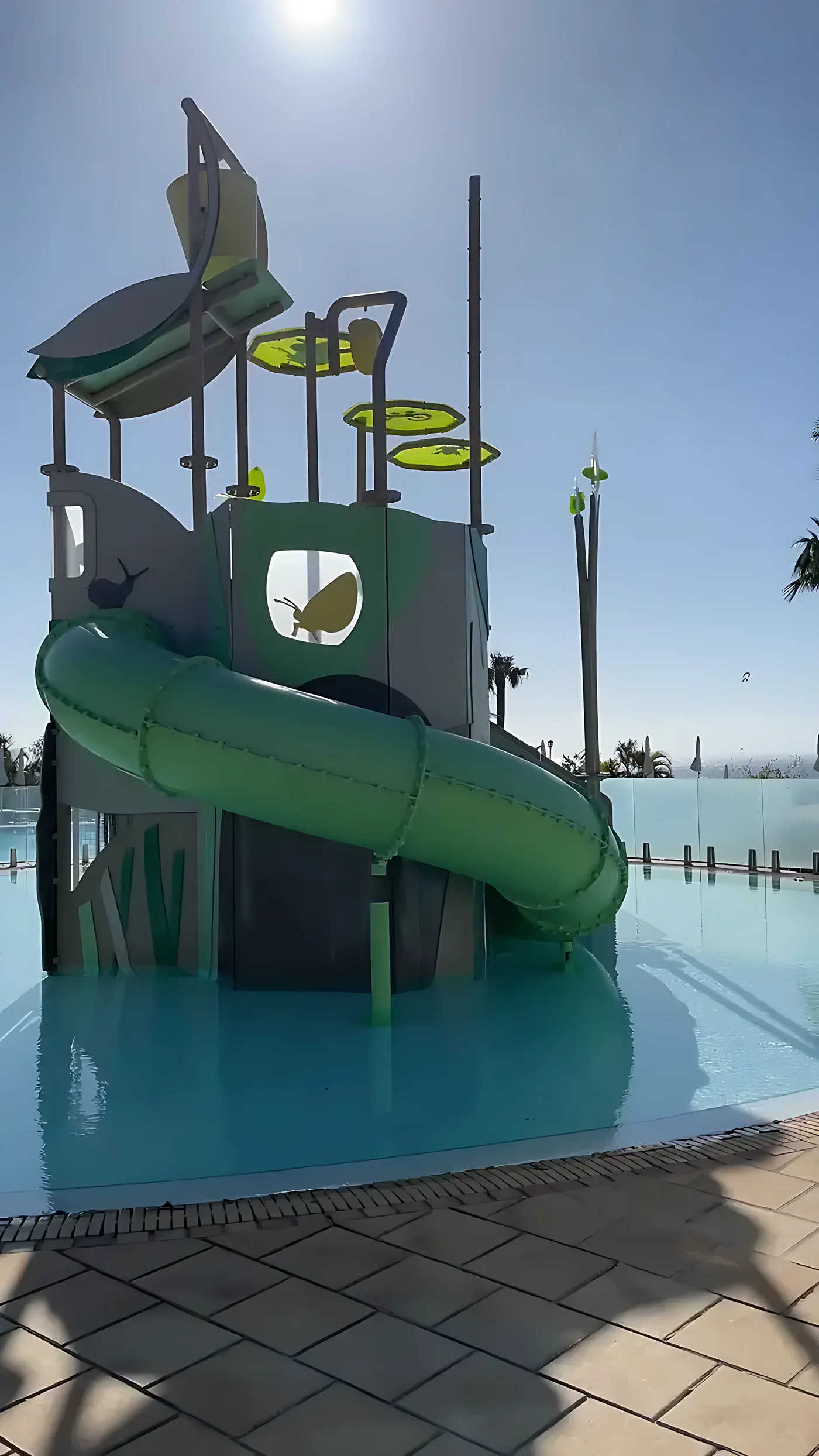
There is water, too. Laurus, added in the 2024 renovation, is a slide and a giant bucket that fills slowly and then tips, without warning, over whoever is standing underneath. Children can use it from a metre tall, and under-eights need an adult alongside.
Wednesday is the banana walk
If you plan one morning of the week around anything, plan it around this.
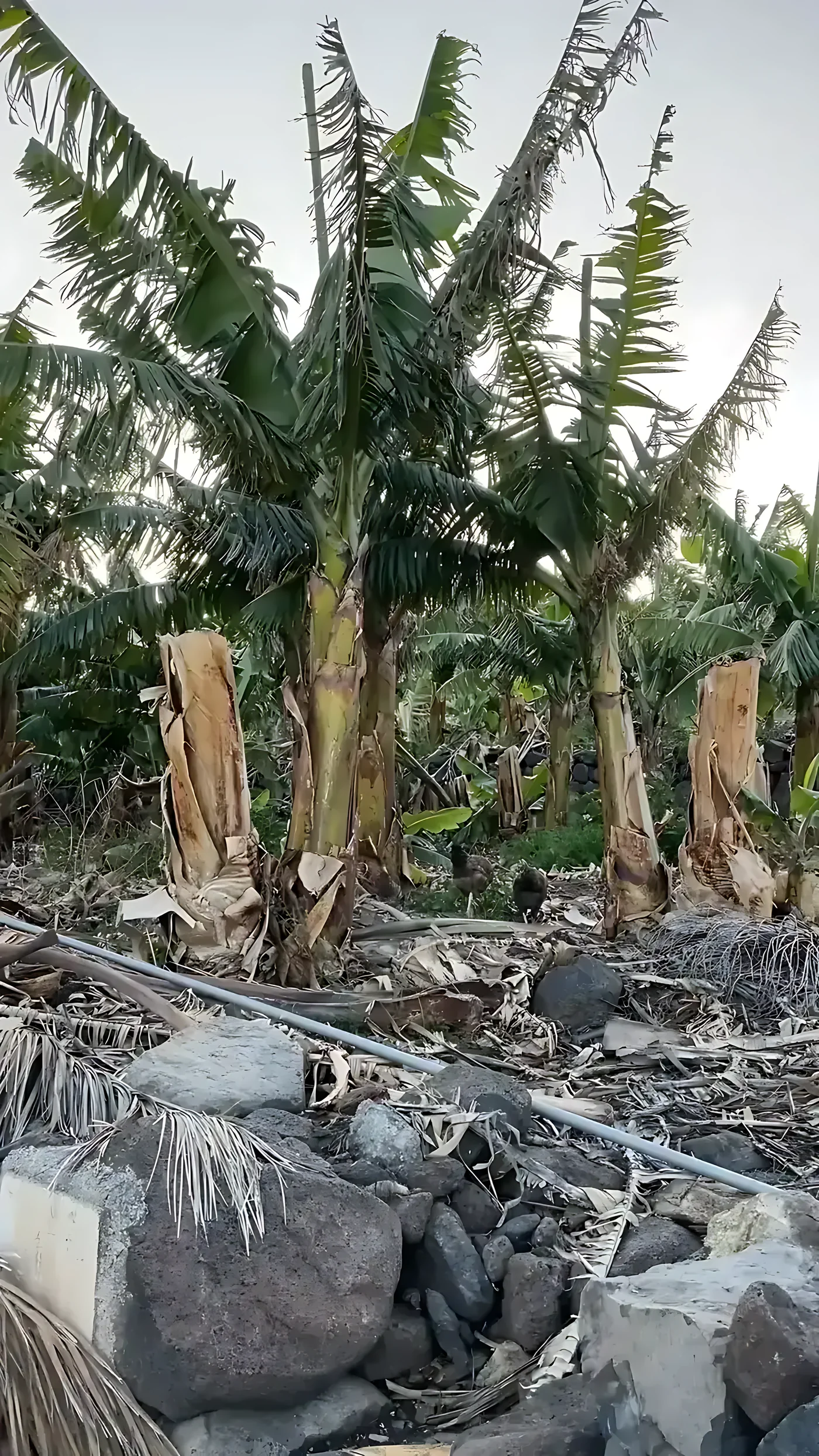
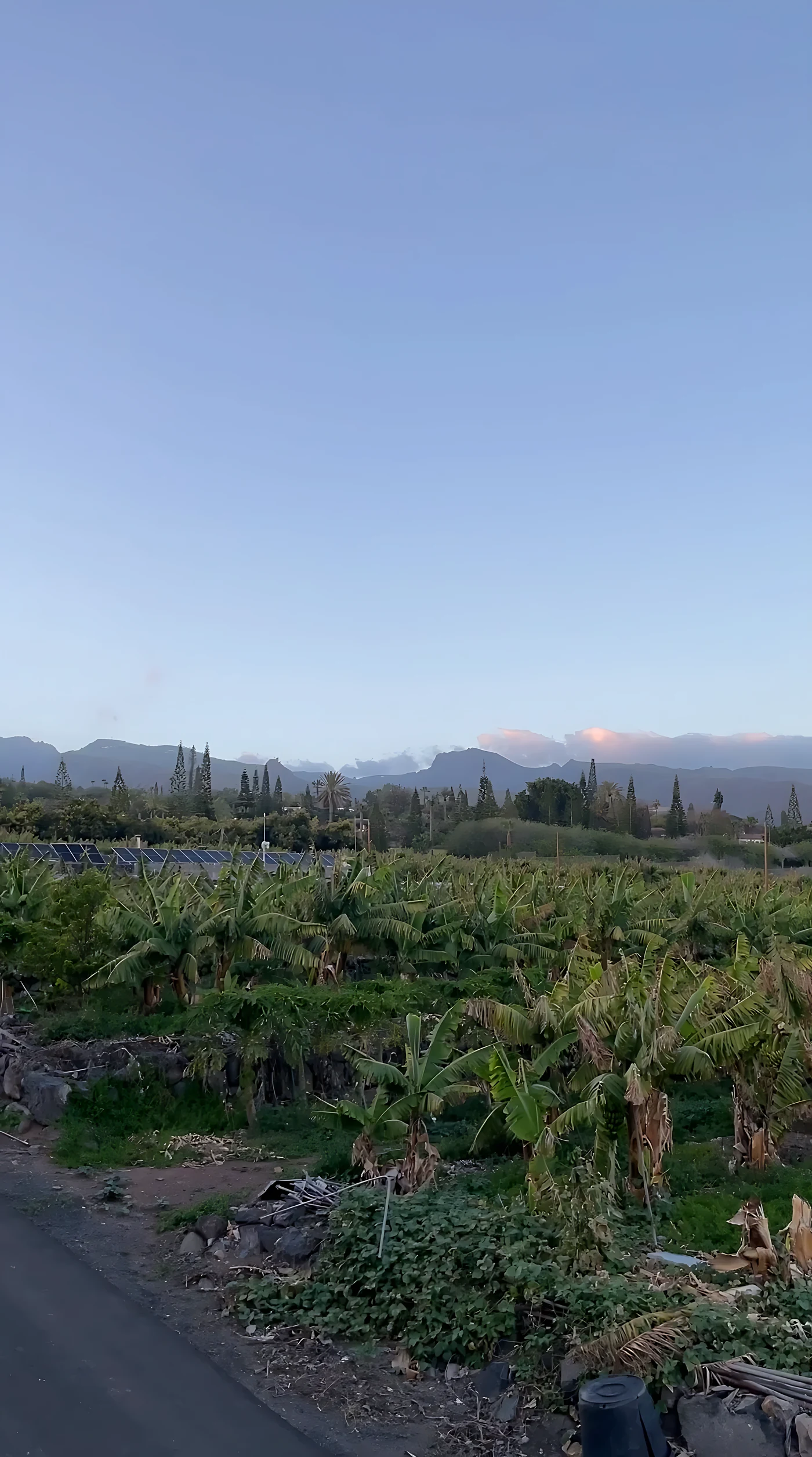
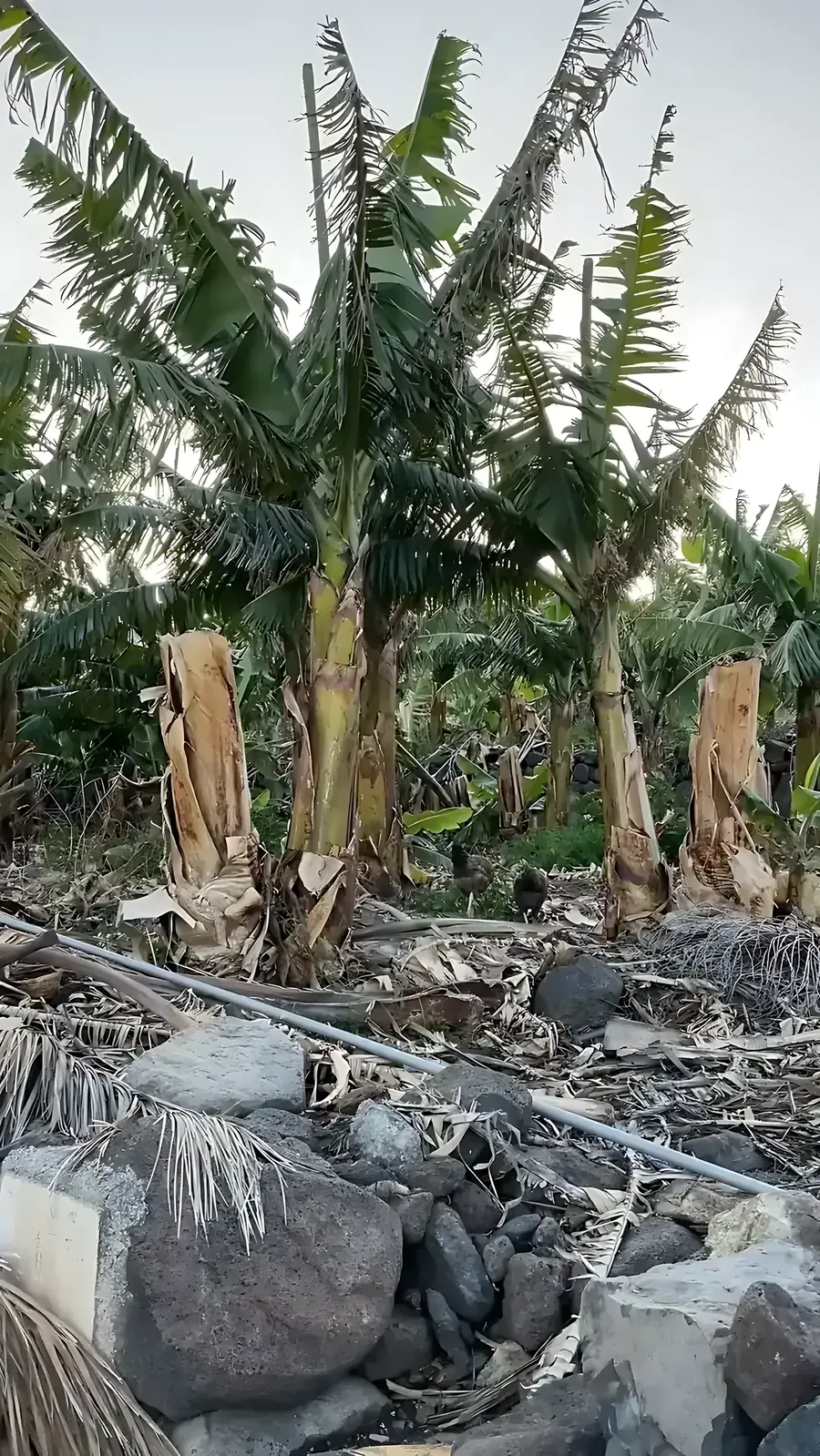
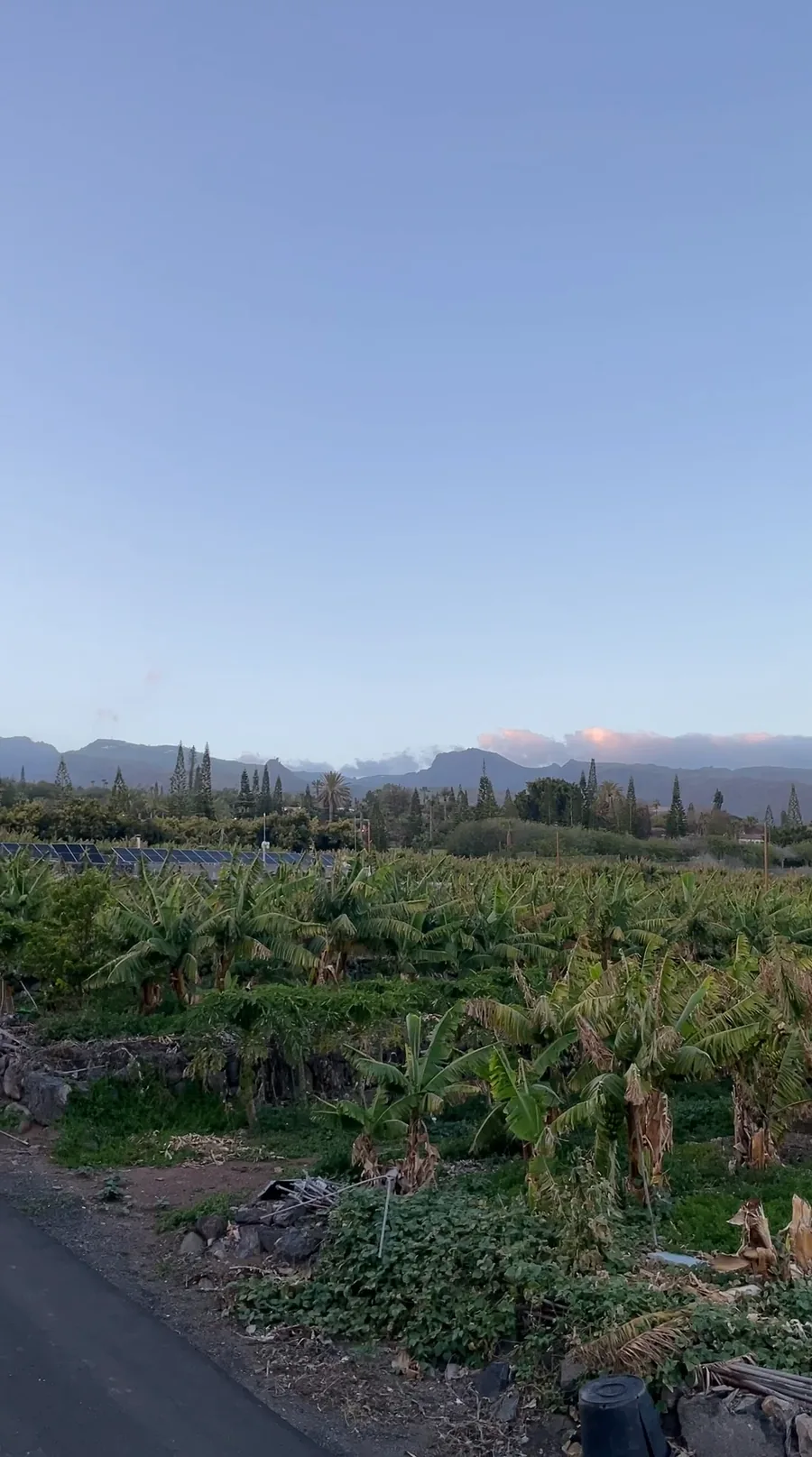
At ten on Wednesday a guide called Jürgen walks guests down into the banana plantation below the hotel. The hotel calls it nuestra platanera, our plantation, and it is the reason the place exists at all: in 1904 Thomas Olsen, of the Norwegian shipping family, began farming this dry southern coast and sending tomatoes and bananas north to Europe. The walk explains how the plant is grown here, why it behaves as it does, and what the crop has meant to these islands, standing among plants that grow out of broken volcanic rock. Afterwards there is banana liqueur at the pool bar for the grown-ups, which tells you the walk was built for the whole family rather than parked in the children’s programme.
Jürgen also leads the botanical walk on Thursday mornings, through a garden of more than fifty species from around the world. The hotel names him on its own pages and says he brings his knowledge and his passion to every tour. That matters more than it sounds. A walk with a named guide is a walk with a person, and a person is what a child remembers.
One more detail, which we find rather moving. When the hotel installed its solar panels in 2024, it put them in the banana plantation and the car park. The newest thing on the estate went in on the oldest.
Tuesday is the farm, and the farm is the heart of it
At the bottom of the cliff, beside the beach club, there are nine and a half thousand square metres of garden in nineteen parcels. It is called Eco Finca Tecina. It is worked on permaculture principles and by hand — the hotel’s stated reason for using no machinery is that machines damage the soil — with no pesticides, no herbicides and no chemical fertiliser. At its centre is a mandala garden, more than sixty species planted in among each other in rings. Papaya, moringa, noni, avocado, pomegranate, Canarian bananas, and vegetables for the beach club’s restaurant, El Laurel, which serves an eco and vegan menu built on what the finca harvests.
But the children do not come for the vegetables. They come for the animals, and the animals are where you learn what kind of people run this place.
Margarita is a Friesian cow. She came with her calf, Ferdinanda, from a farm on the island that was closing down; by the hotel’s account the herd was going to the slaughterhouse, and it took the two of them instead. Hugo the donkey came from a family who were moving away and could not take him. The first lamb ever born on the farm, in 2017, was named Eco. Three of the sheep are Palmera sheep, an endangered breed from the neighbouring island of La Palma, and the black Canarian hens came from a neighbour.
And then there is Pedro. When a ewe rejected her lamb, Ben, Pedro fed him from a bottle, for weeks, until he could fend for himself. The hotel wrote that down in 2019 in a blog post nobody was ever going to make famous, and it is the best sentence we read about Jardín Tecina.
Two cows that were bound for the slaughterhouse, and a man called Pedro bottle-feeding a lamb for weeks. That is a sustainability programme a child understands.
The farm tour runs on Tuesdays at ten, in Spanish, German and English, and the hotel is candid about how a mixed group works: while the adults learn about organic growing, the children go and meet the animals. Some of these stories are seven years old, and animals, like people, move on. The farm’s own page still names Margarita and Ferdinanda. Ask for them by name.
One practical warning. The beach club, and with it the farm visits, closed from April to the end of June 2026 for the compulsory periodic inspection of the cliff slope above it. The Tuesday walk is back on the weekly timetable, but the suspension notice is still on the hotel’s walks page. It is worth one phone call before you promise a four-year-old a cow.
The evenings are Canarian
This is the part of the week many families miss, because it happens after the children’s club has closed and it is not on the children’s timetable at all.
On Monday nights at half past nine, a Gomeran group called Hautacuperche plays and dances the traditional music of the island. On Wednesday nights, same time, there is an exhibition of Silbo Gomero — the whistled language of La Gomera, which carries across ravines because shouting will not. UNESCO inscribed it in 2009 as the only fully developed whistled language still used by a large community, and it has been taught in the island’s schools since 1999. A child who has spent the day with Palmito gets to hear a whole language made of whistles. Expect it to be copied, loudly, for the rest of the holiday.
The days have their own island layer in the walking programme, and it is better than it looks on paper. Monday morning is a history walk about the Olsen family and what they did to this coast, which stops at the largest preserved threshing floor in the Parque de Las Eras — a round stone floor where grain was once beaten out under the hooves of animals walking in circles. Friday morning is geology: how this island was built by volcanoes and then taken apart by water. Tuesday night at nine is a walk under the stars, which works because there is so little light out here to compete with. And for the grown-ups, on Monday at noon, a wine tasting.
Down through the rock to the sea
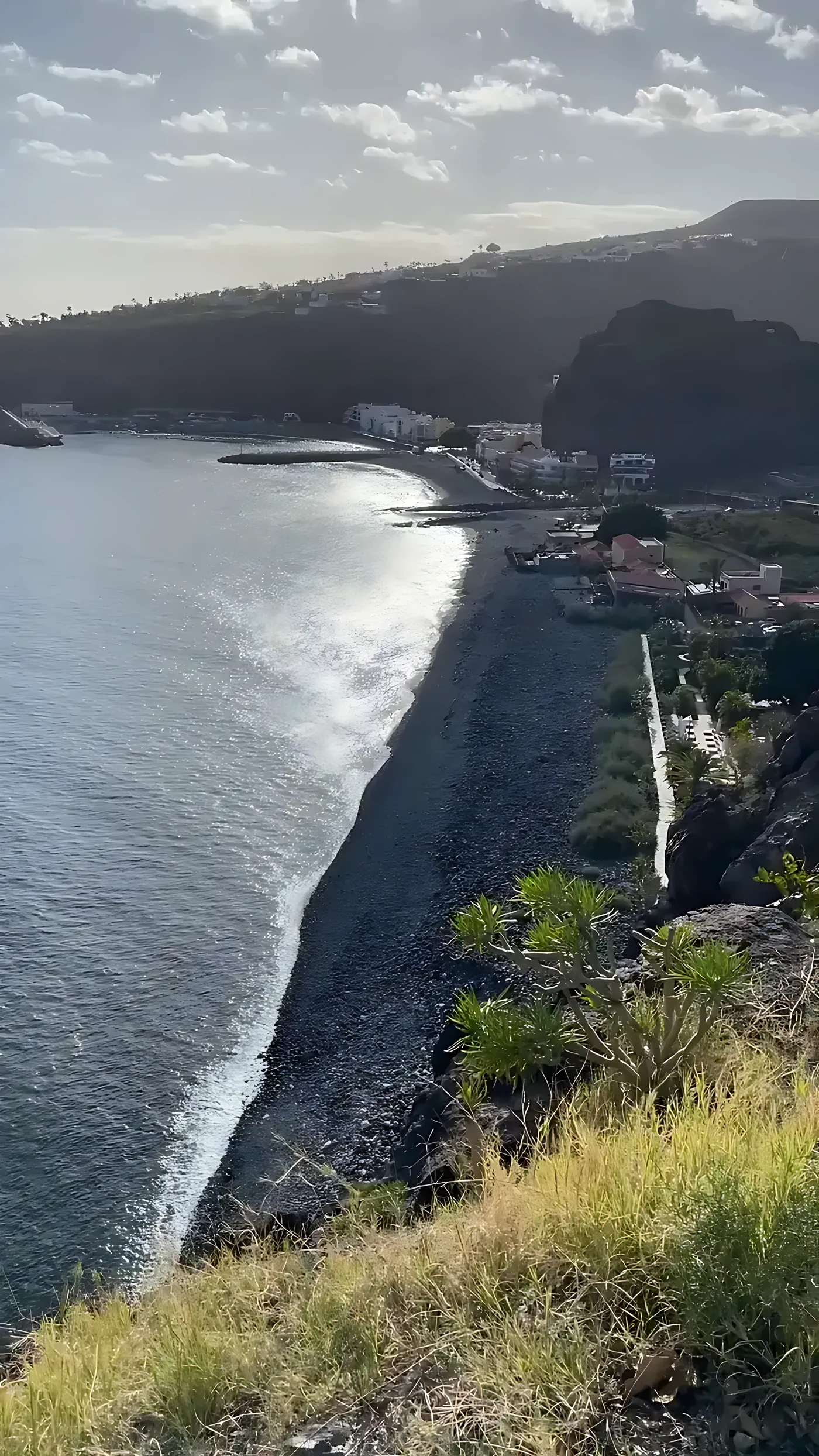
There is a lift carved into the cliff. It takes you from the gardens down through the volcanic rock to the beach club at the bottom, and for a small child it is a ride in its own right.
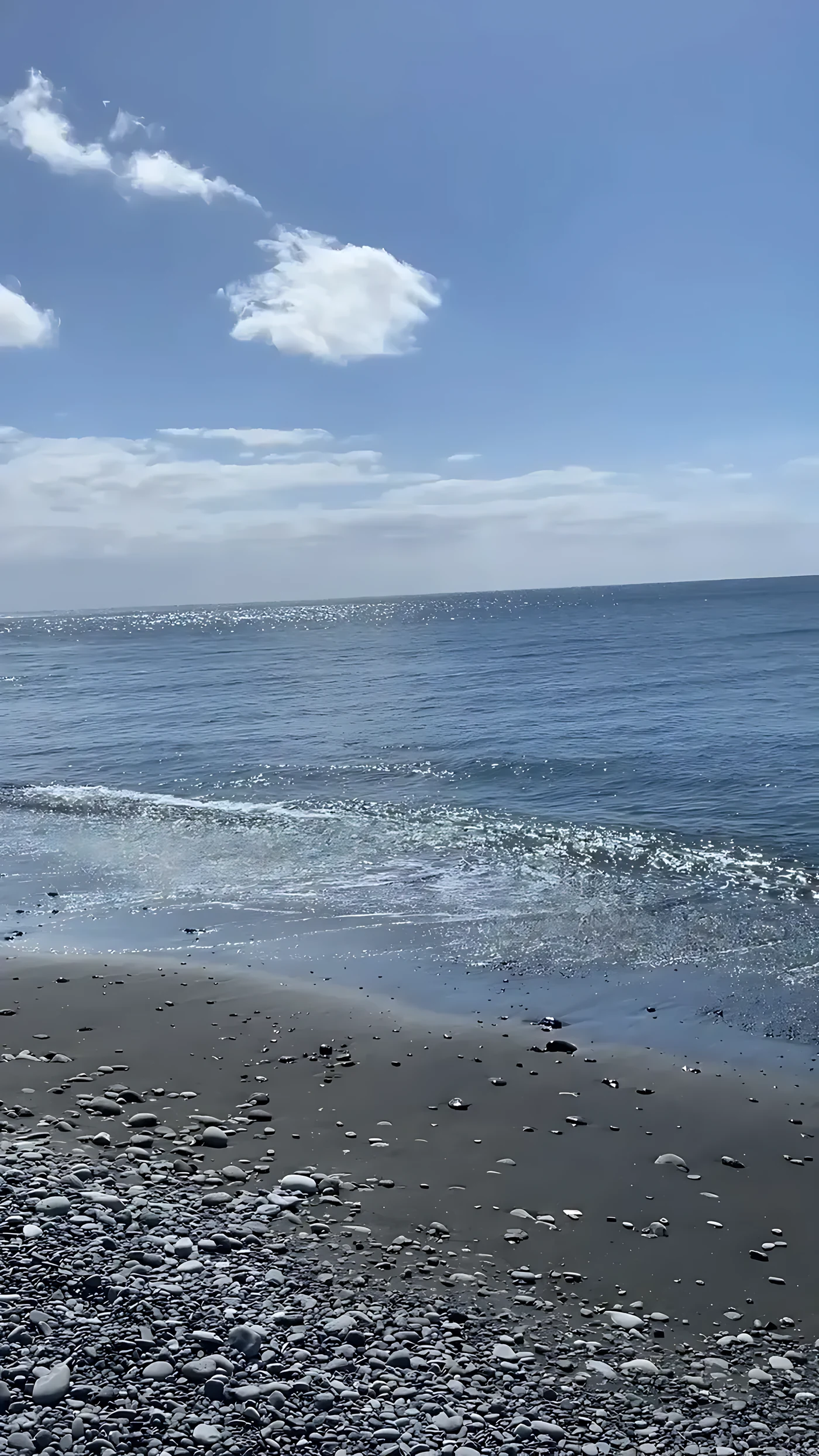
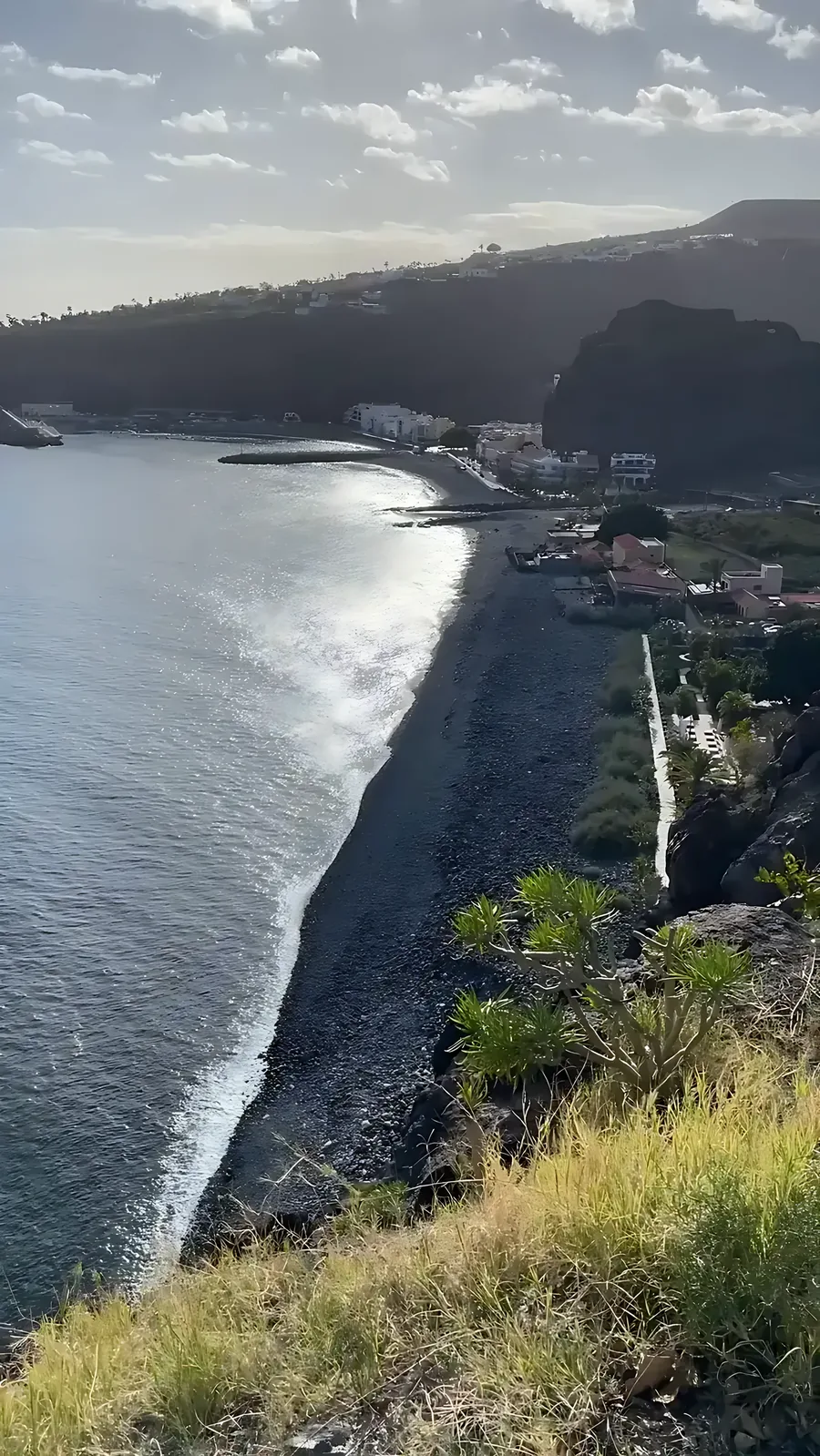
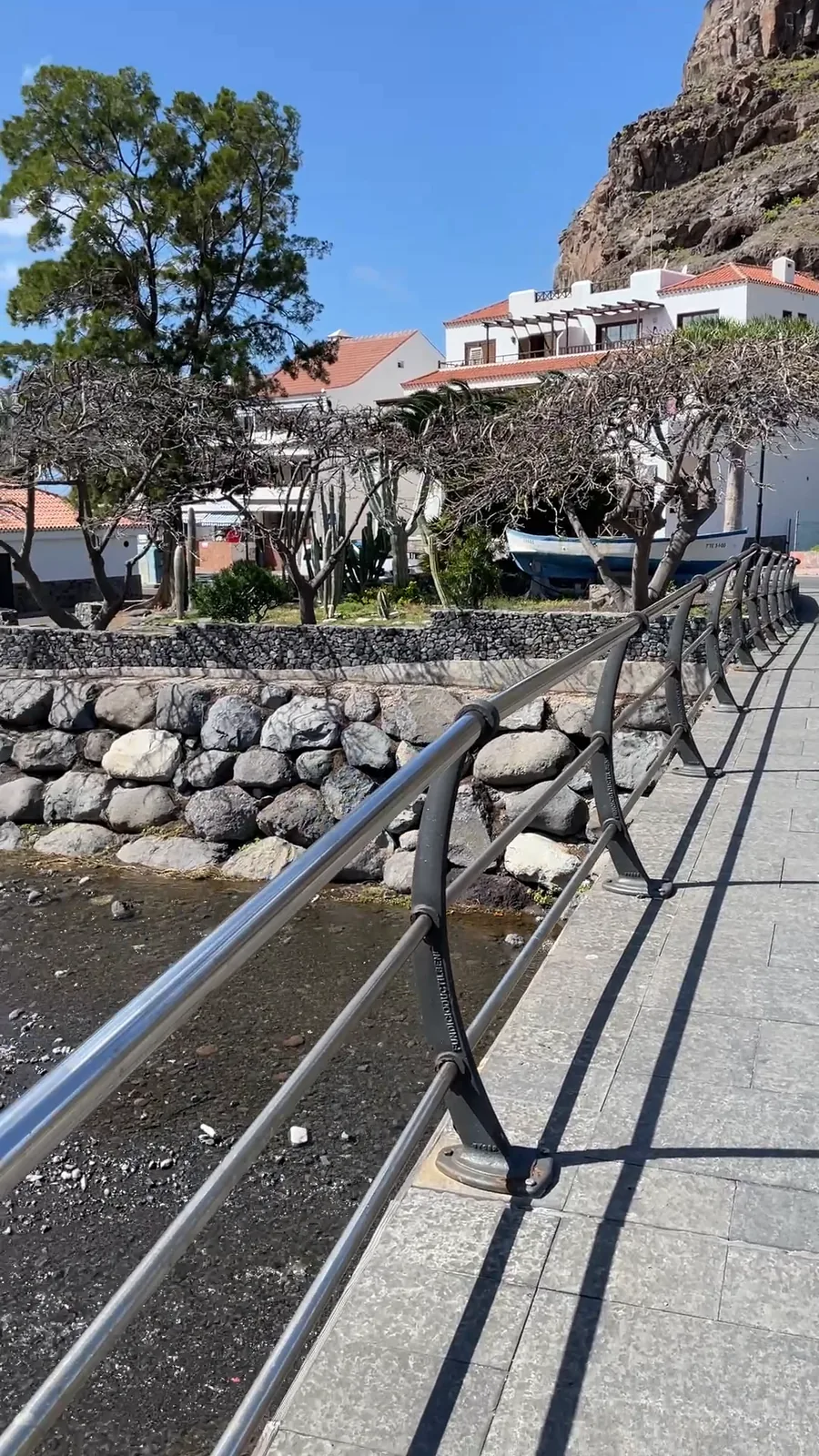
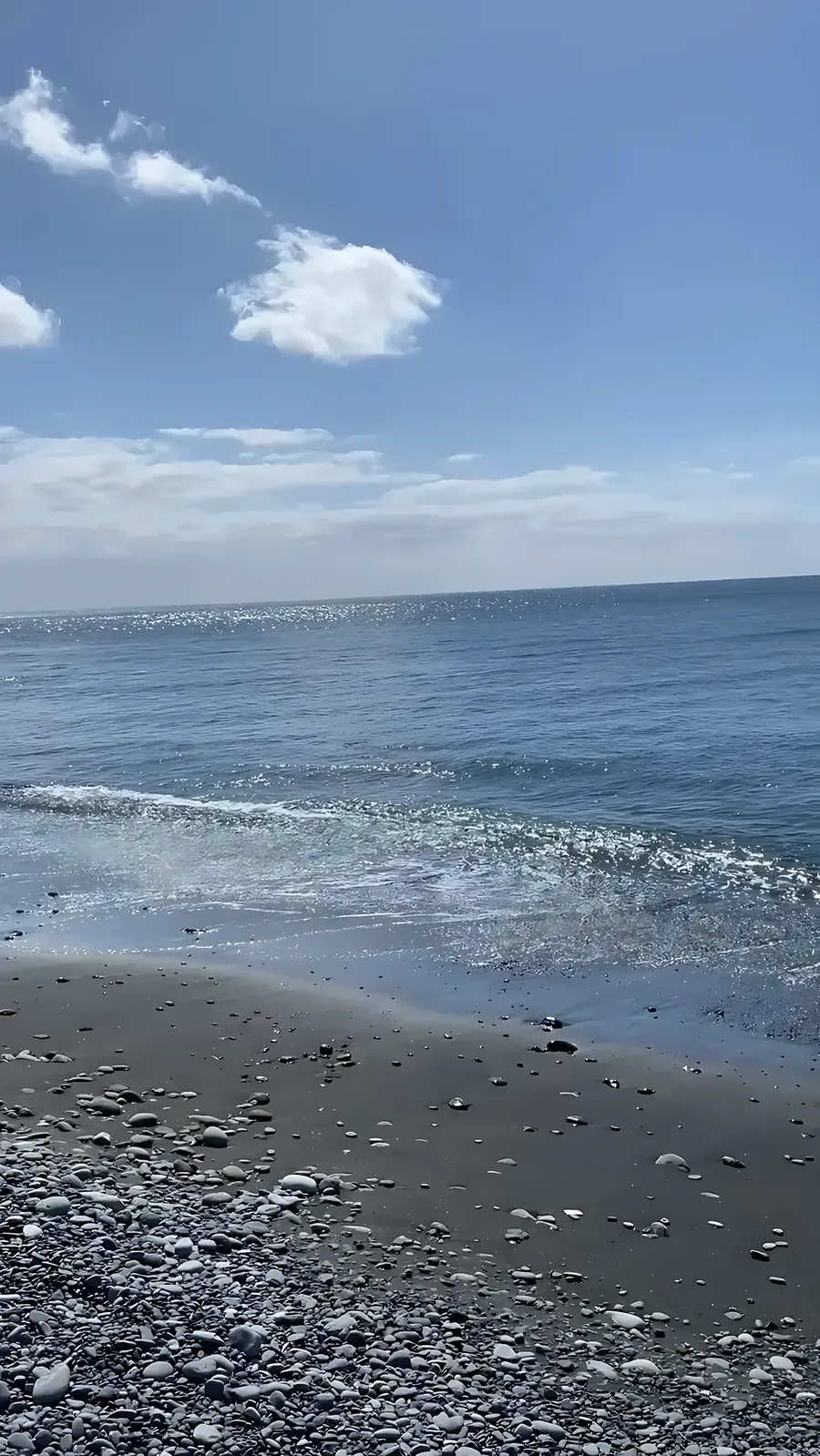
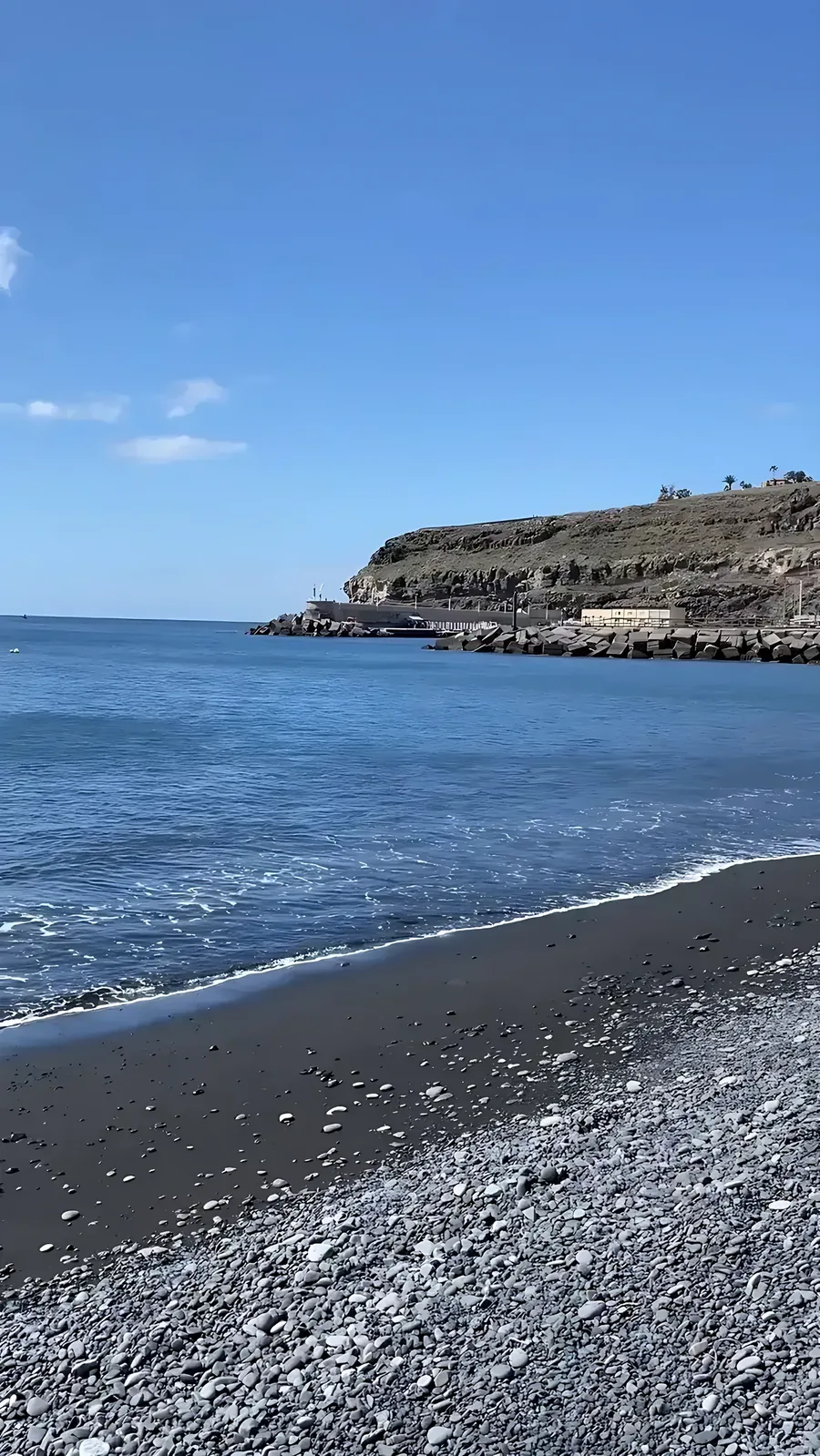
At the bottom is the beach of Playa de Santiago: dark volcanic sand and pebble rather than the pale sand of the brochures, holding the day’s heat and rolling under the backwash. It has held a Blue Flag for sixteen years running, and in 2026 it is the only Blue Flag beach on the island. Bring swim shoes. From the beach the promenade runs flat along the shore into the village, past the point where the ravine meets the sea, which is the reason there is a village here at all.
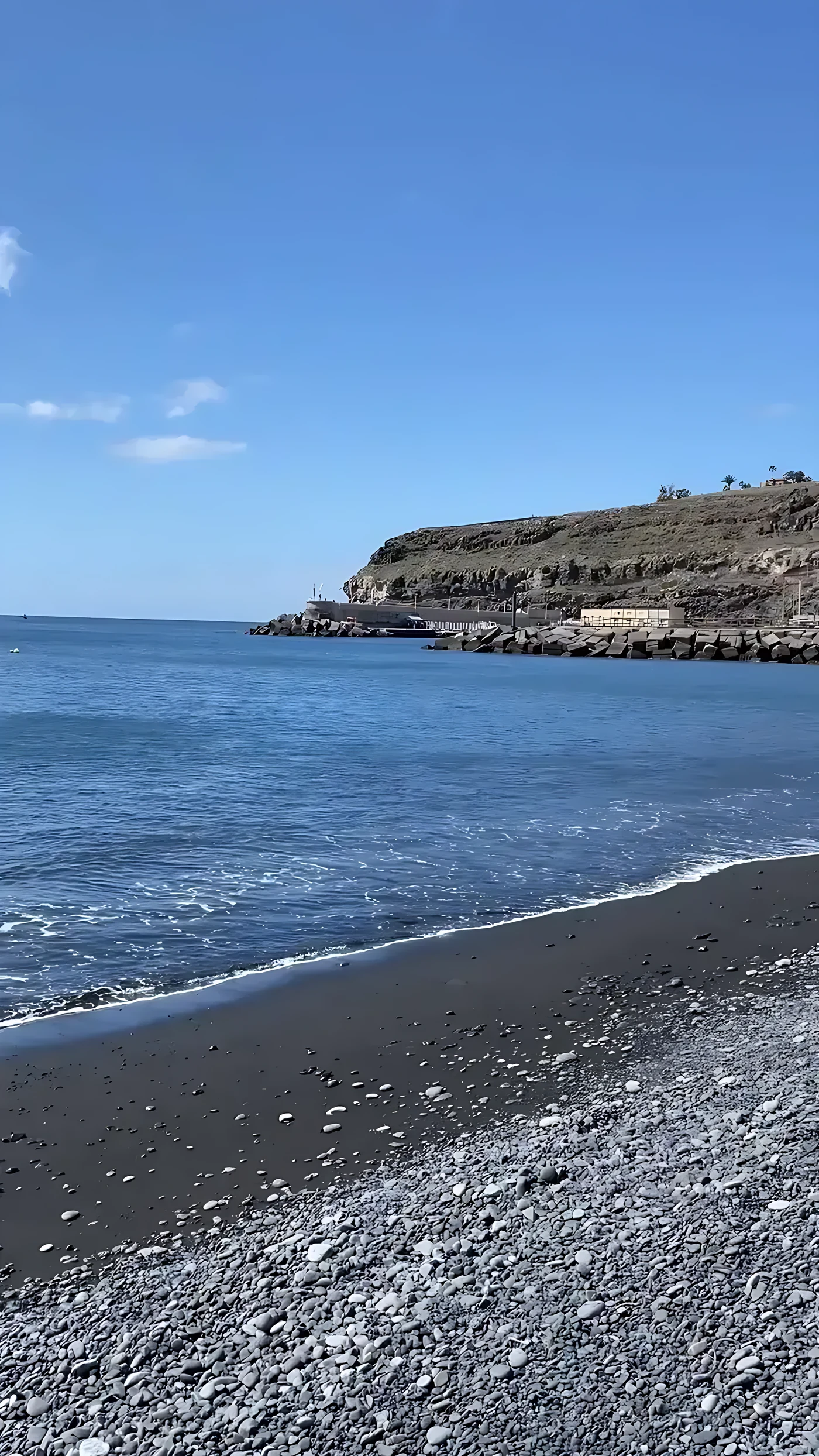
One note the hotel states itself, and we repeat for anyone with a buggy or a wheelchair: the lift-and-path route to the beach club is not step-free. The step-free way down is by road. Ask at reception rather than finding out at the bottom.
Twenty-two frames
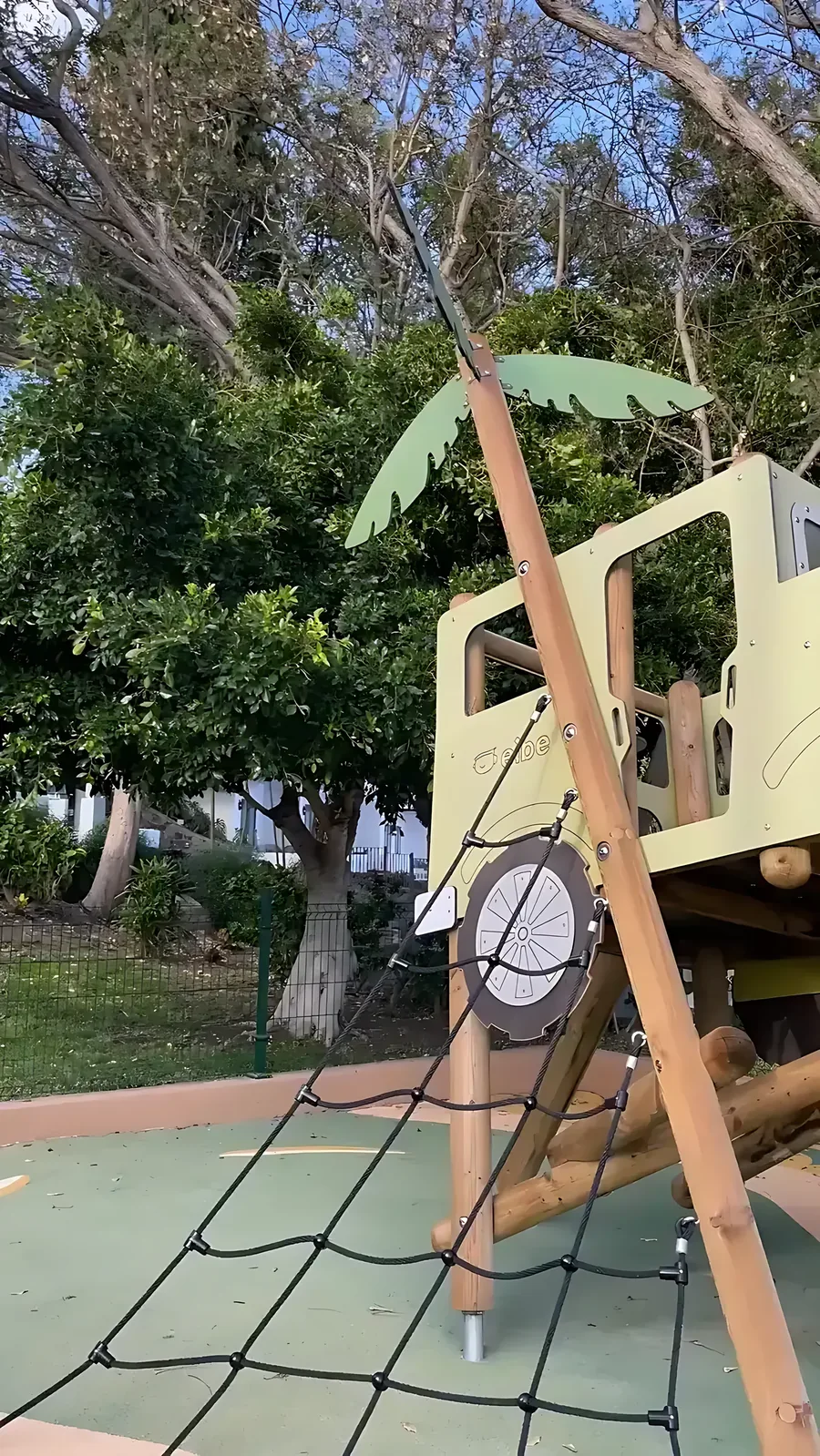
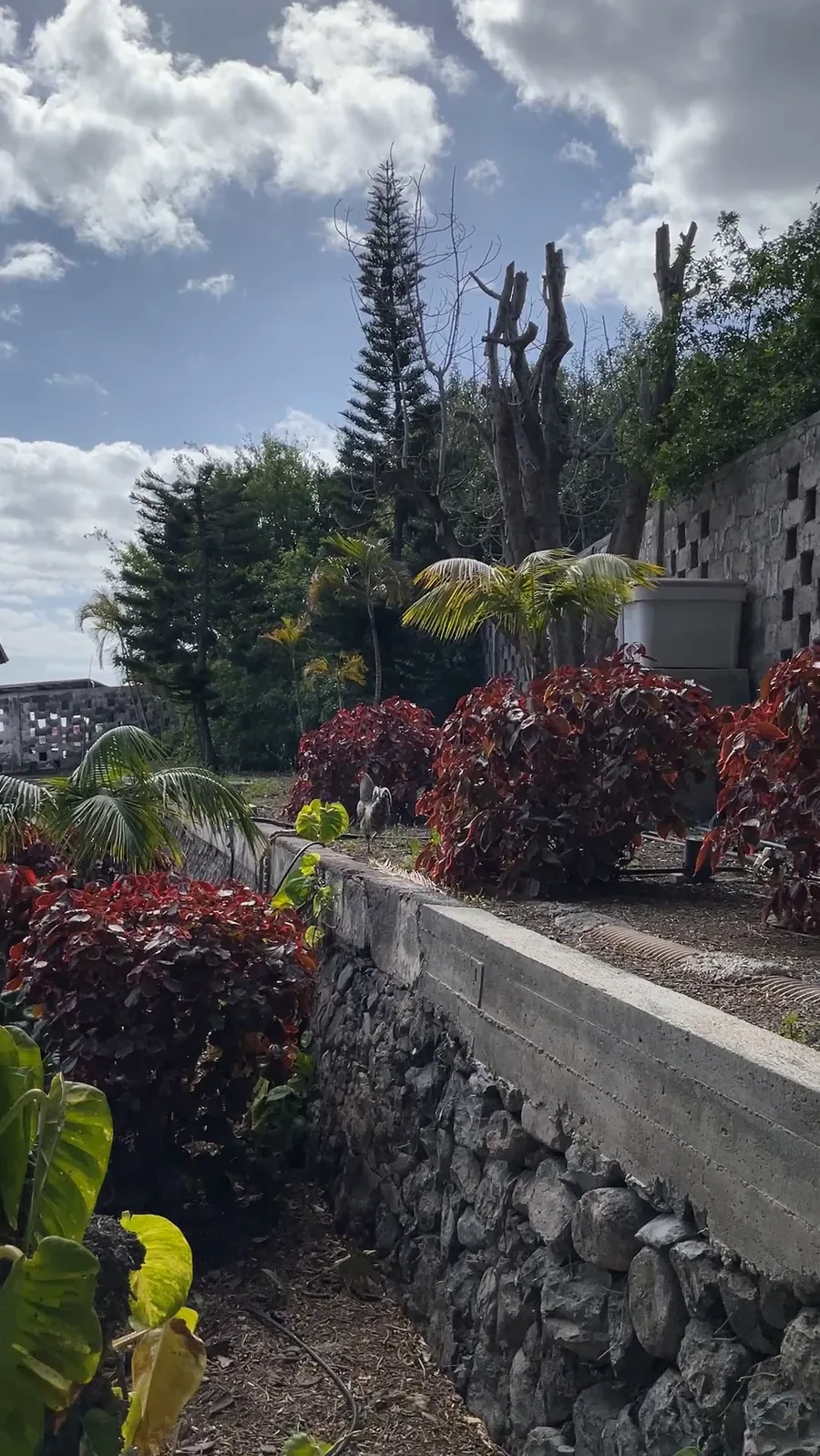
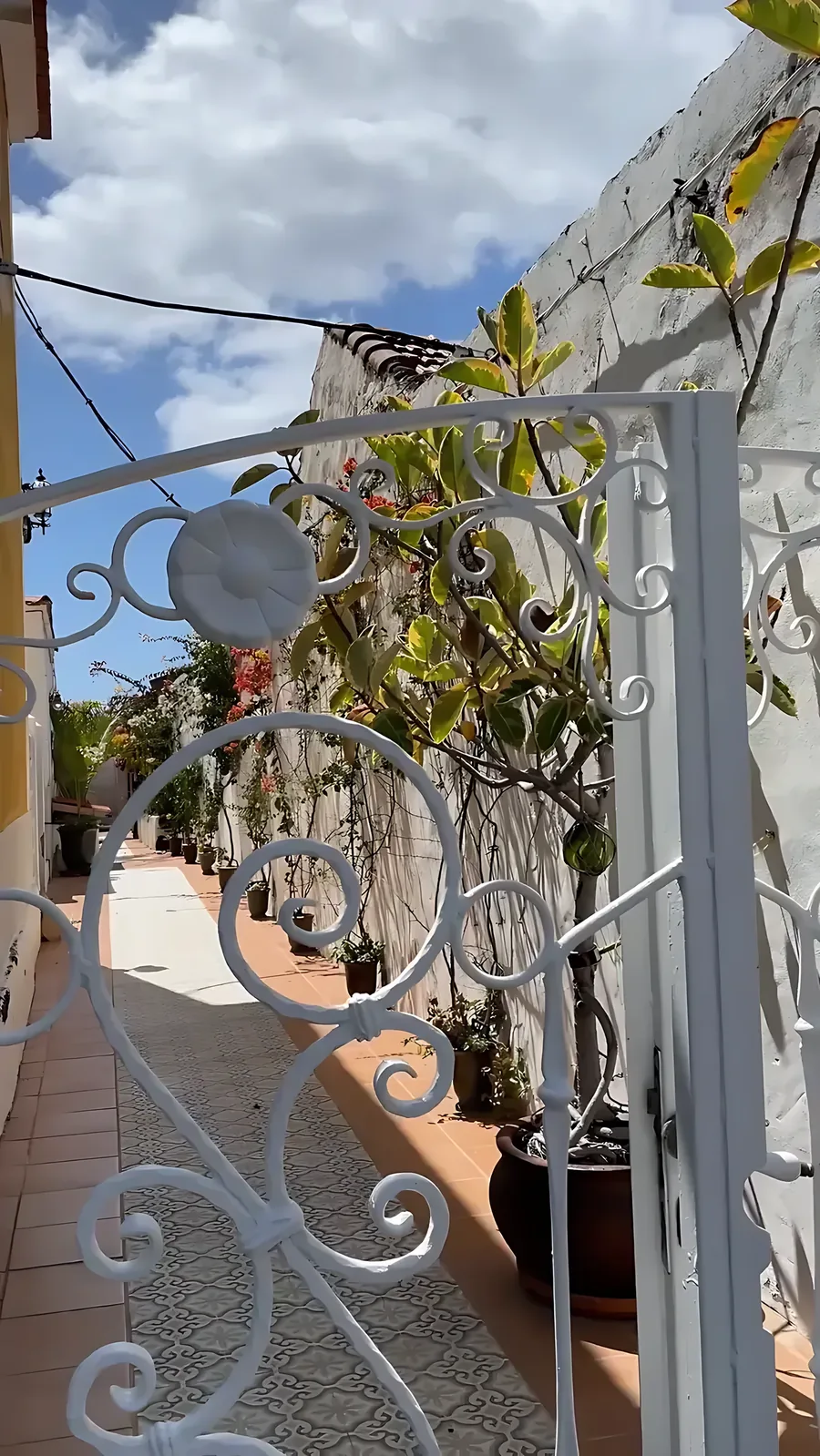
The club, the playground, the lanes and the walk down to Playa de Santiago. Photographed on foot over several days, with nobody in the frame.
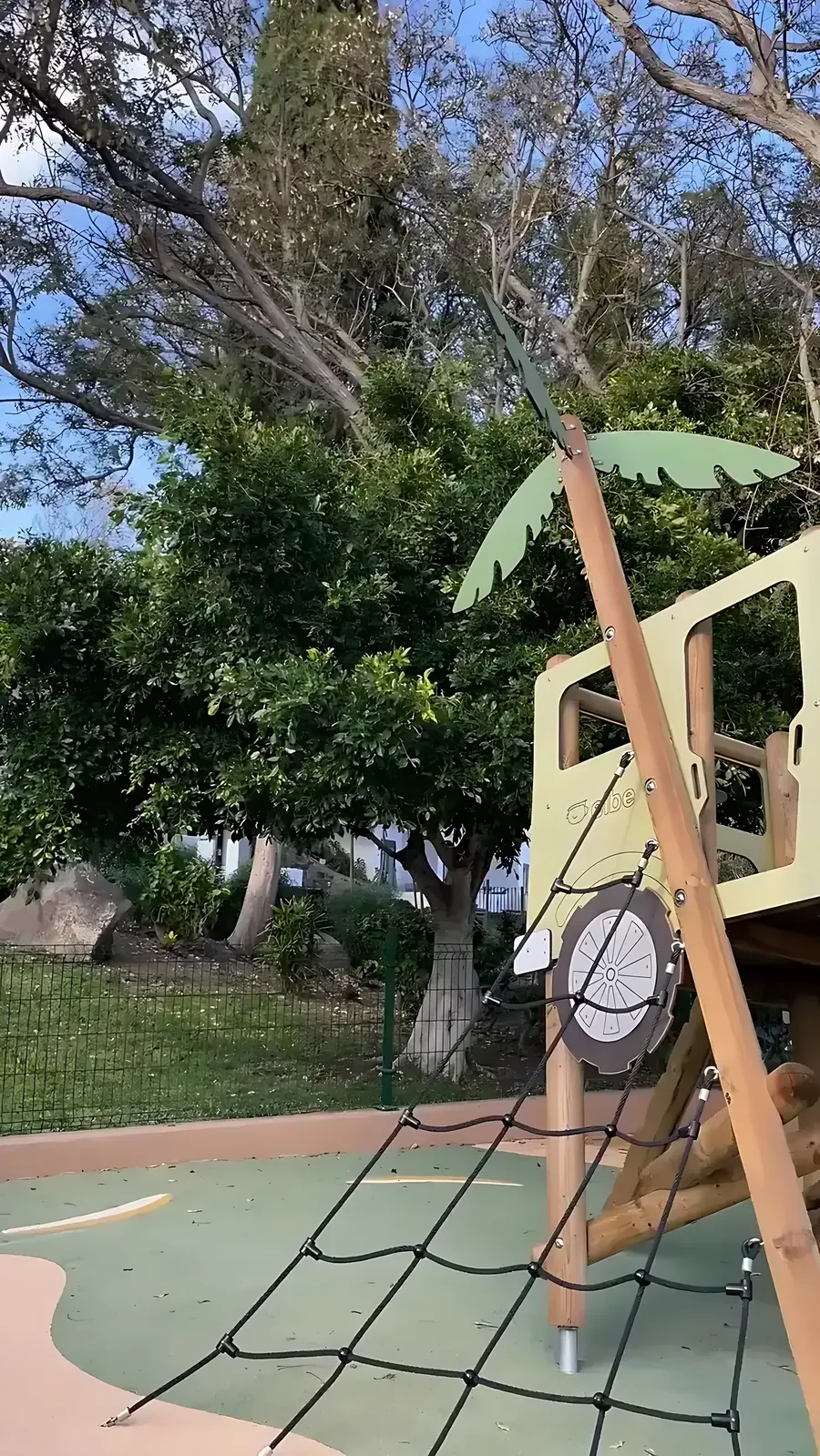
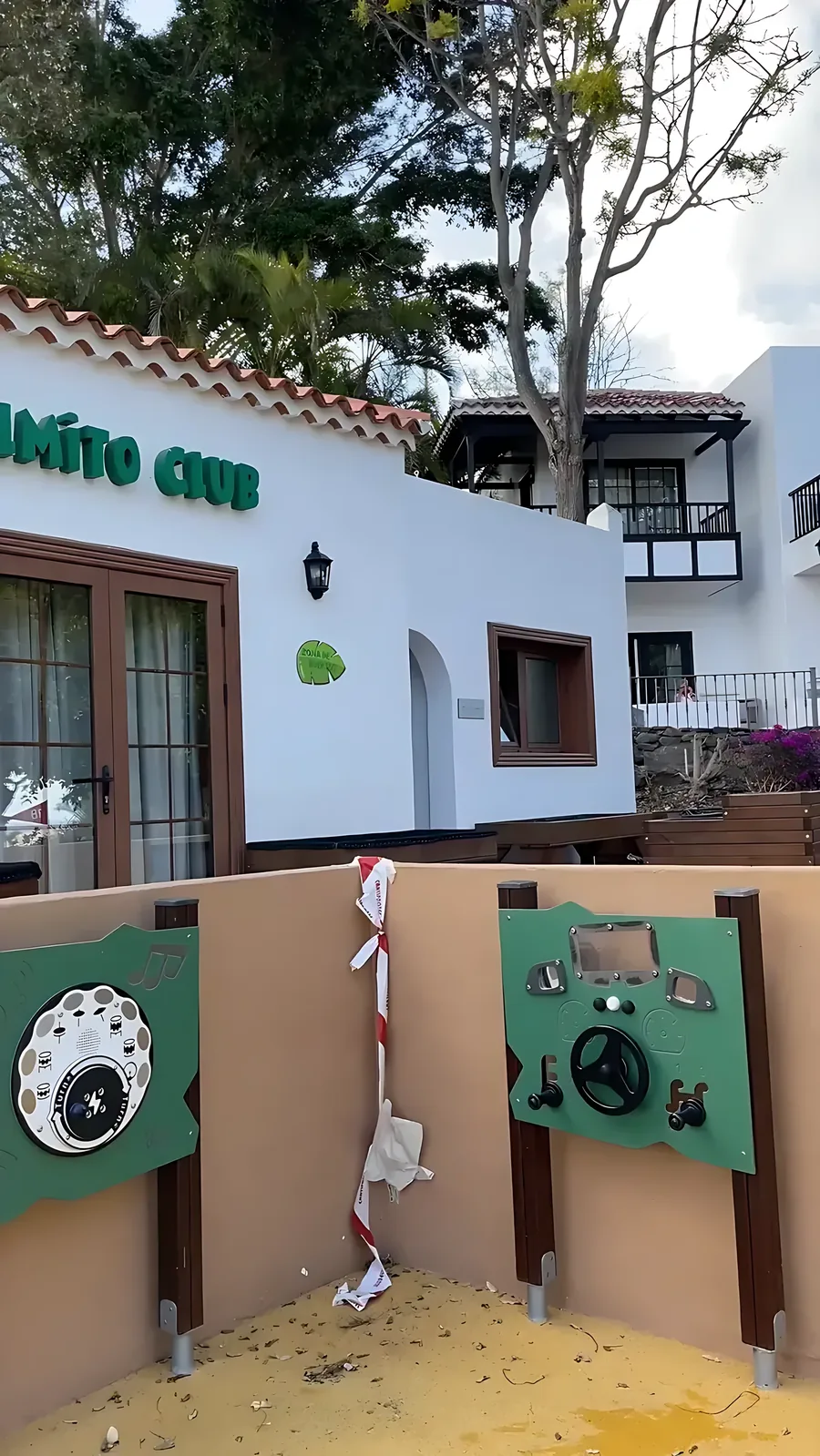
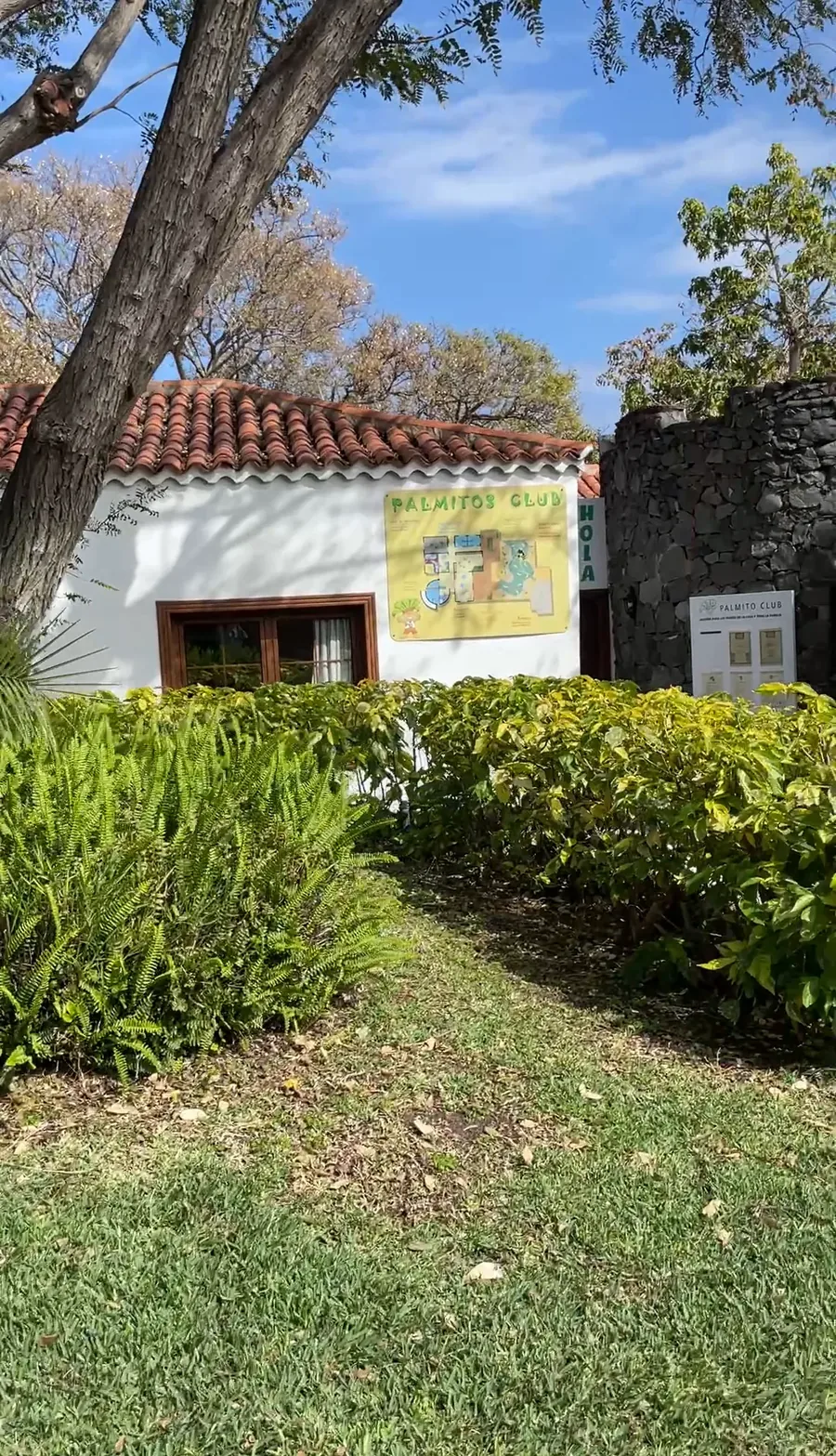
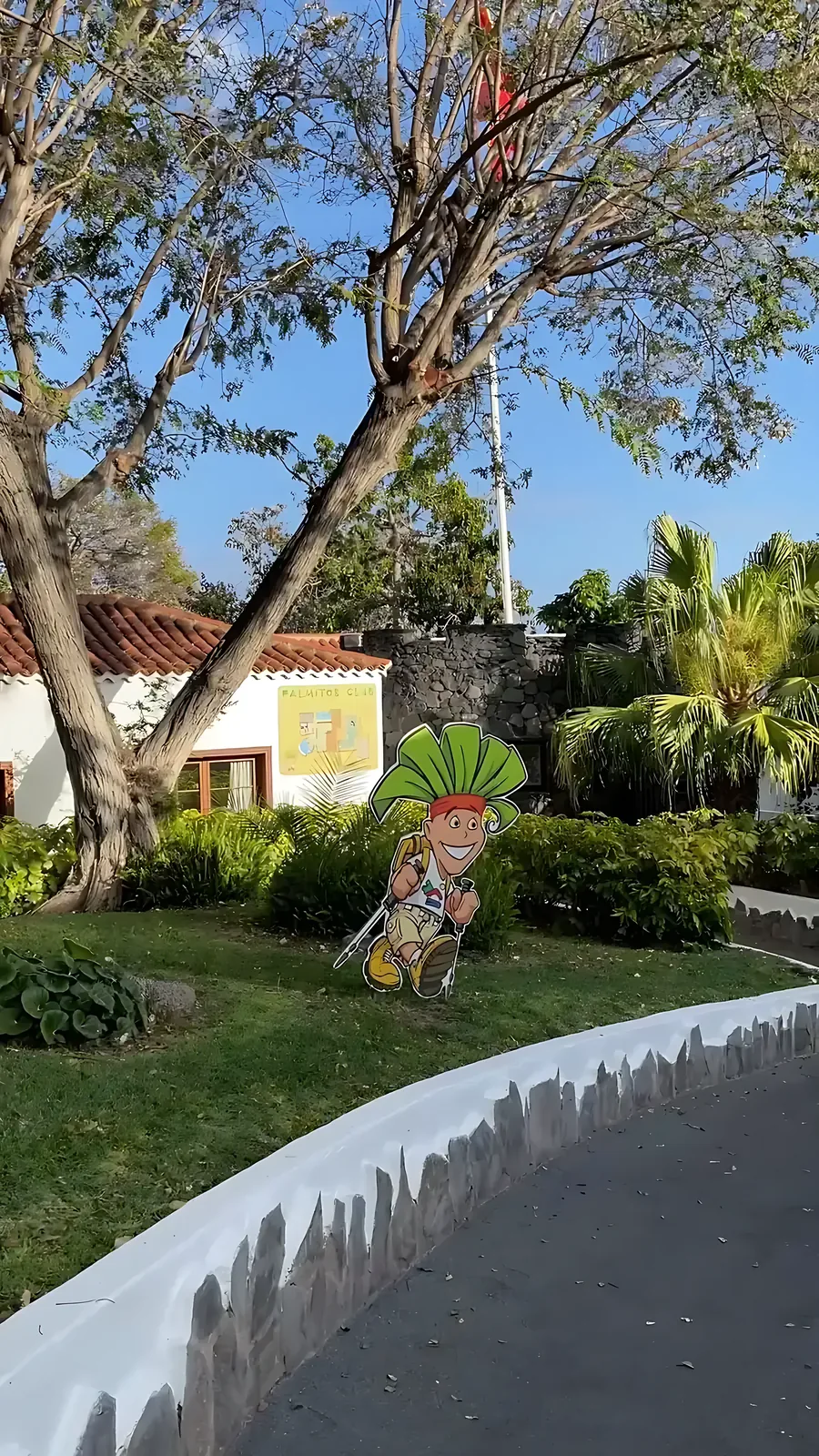
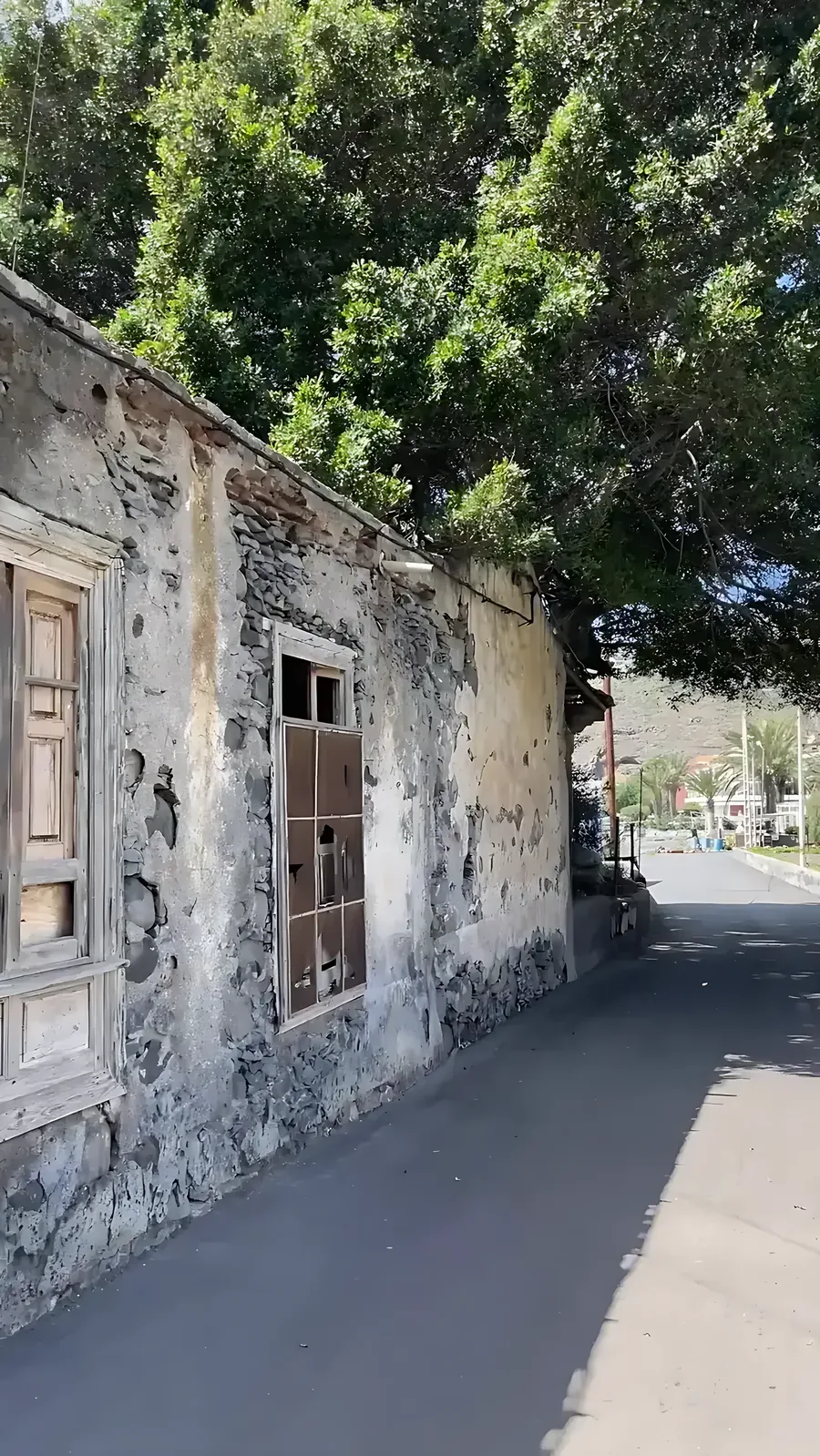
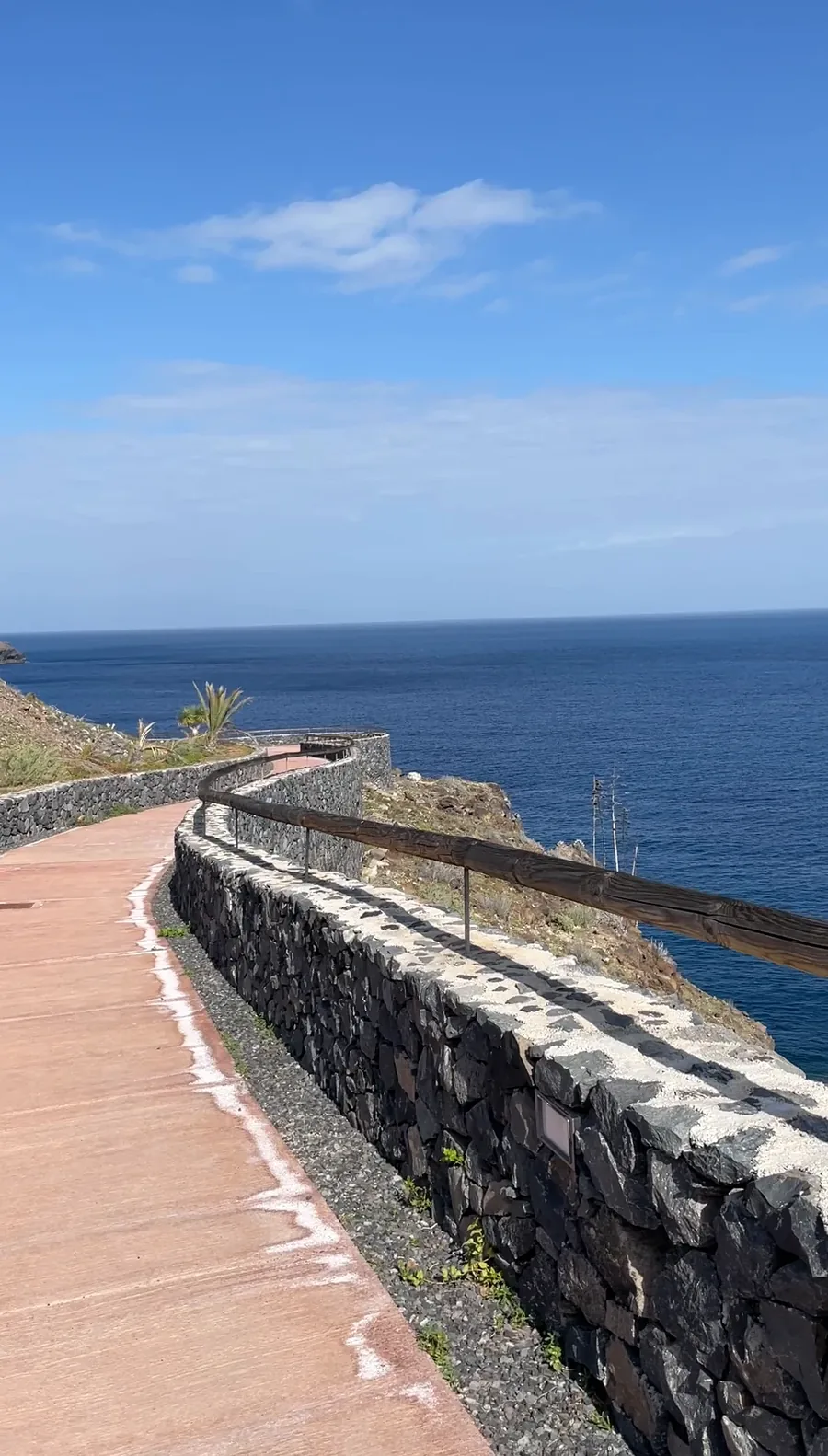
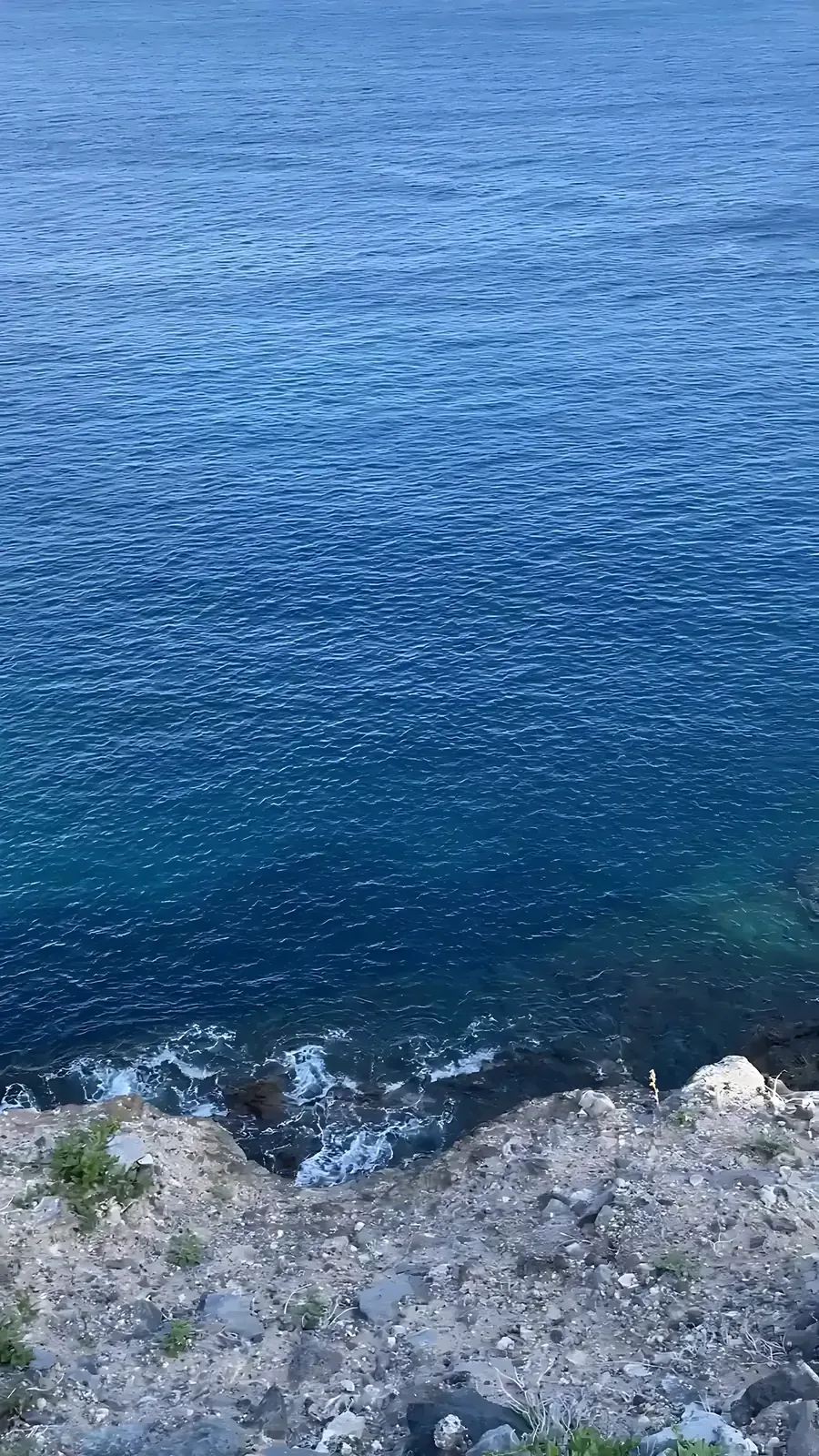
What sustainability means here
The most sustainable thing this hotel has done in recent years has nothing to do with solar panels.
In April 2024 it closed for eight months for a twenty-million-euro renovation. It kept every employee on the payroll for the whole of that time and put them through training rather than laying them off. When it reopened on 6 December, Andrés Marín, director general of Fred. Olsen, said they had reopened with the same management team they had closed with, and that the people of La Gomera mattered to them too. Staff numbers have risen since, to an average of 320 in the first half of 2025. On an island of about twenty thousand people, where the canneries in the village below closed within living memory, that is what sustainability looks like to the people who live here.
The environmental side is unusually well documented. The hotel has been registered under EMAS, the European Union’s eco-management and audit scheme, since 2014 — the demanding one, with an independently verified public statement every year. It holds ISO 14001, Travelife Gold, Biosphere and an EarthCheck bronze. It has its own desalination plant and water network, and its wastewater is treated and reused to irrigate the golf course next door.
And the audit is less flattering than the brochure, which is exactly why we trust it. The hotel’s marketing says half its energy comes from its own solar panels. Its own audited statements, including the most recent, validated in November 2025, say that solar consumption is not yet being measured, so there is no figure for it. The panels are real and were finished in 2024; the fifty per cent has simply not been measured yet. The carbon footprint in 2023 was 724 tonnes, rising in absolute terms as the hotel grew busier. We would rather print all of that than a leaflet, and a hotel that publishes an audit which disagrees with its own leaflet has earned more trust on everything else, not less.
Is it a place with soul
Our test is whether a place would still make sense if the guests went away. This one would. The cows would still need feeding. Jürgen would still know what he knows about a banana plant. The farm would still be dug by hand. And the people who were kept on through eight empty months would still be the reason the lights came back on in December.
It began in November 1987, with about twenty-five guests arriving in five taxis while the builders were still at work. It is larger and more polished now, and far better audited. What it has kept is harder to build than any of that: a painted boy in a palm-frond hat pointing children towards a door that says HOLA, and a group of people on the other side of it who plainly mean it.
What we actually know
- The hotel’s entertainment page describes Palmito Club for children from 4 to 13, a space for 0 to 3s accompanied by a parent, and MaxiClub for 8 to 13s during holiday periods such as Easter and summer. Its programme page says 4 to 7. Both pages were edited in June 2026.
- Free of charge, daily 10:30–13:00 and 16:00–18:30, January to December, per the TUI.com listing. The hotel itself publishes no hours or price for the club.
- The weekly Palmito timetable for 14 September to 11 October 2026 lists crafts (carnival masks, recycled materials, T-shirt painting, maracas, clay), gymkhana, the parachute game, water games daily at 16:00, a family game daily at 12:30, a talent contest and “Palmito Orchard” on Sunday at 17:30. The zona de huertos is marked on the painted plan outside the club.
- A PlayStation 5 was installed in the older children’s playrooms in the October 2023 refit. Laurus, a water slide and tipping bucket added in the 2024 renovation, is for children from 1 metre tall; under-8s must be accompanied.
- The banana plantation walk runs on Wednesdays at 10:00 with the guide Jürgen, who also leads the botanical walk on Thursdays. Banana liqueur is served at the pool bar afterwards. The hotel calls the plantation its own; the 2024 solar panels were installed in the banana plantation area and car park.
- Eco Finca Tecina: 9,500 square metres in 19 parcels, permaculture, no machinery, no pesticides, herbicides or chemical fertilisers, a mandala garden of more than 60 species. El Laurel serves an eco and vegan menu from the finca’s harvest as a supplement on half and full board; not every item on it comes from the farm.
- The animal stories — Margarita and her calf Ferdinanda, Hugo the donkey, Eco the lamb, the Palmera sheep, the black hens, and Pedro bottle-feeding Ben — are from the hotel’s own blog, March 2019. Its current farm page still names Margarita and Ferdinanda.
- Club Laurel and the farm visits were closed from 13 April to 30 June 2026 for the mandatory periodic inspection of the slope above the beach club. The lift remained available. The Tuesday farm walk is back on the weekly timetable; the suspension notice is still on the walks page.
- Weekly shows in the Salón Beatriz de Bobadilla: Hautacuperche, a group of traditional La Gomera music and dance, on Mondays at 21:30; a Silbo Gomero exhibition on Wednesdays at 21:30. Walks: history and the Parque de Las Eras threshing floor on Monday, geology on Friday at 10:00, under the stars on Tuesday at 21:00.
- Playa de Santiago beach has held a Blue Flag for 16 consecutive years and is La Gomera’s only Blue Flag beach in 2026. The beach club is reached by a lift cut into the rock; step-free access is by road only.
- Closed 8 April to 5 December 2024 and reopened on 6 December after a €20 million renovation, with all staff retained and trained. Rooms reduced from 434 to 424. Average staff 245 in 2023 and 320 in the first half of 2025, per the hotel’s environmental statements.
- EMAS registration ES-IC-000141 and ISO 14001 since 2014; Travelife Gold; Biosphere; EarthCheck bronze; Q de Calidad Turística. The 2023–24 statement was audited by SGS and the 2024–25 statement validated by AENOR in November 2025; both were prepared by Lídice Felizola Delgado, quality and environment manager.
- Both statements say solar consumption “is not yet accounted for”. The 100 per cent renewable figure refers to the electricity supply, via a supplier’s certificate of origin; the hotel also burns some diesel and butane. Carbon footprint: 566 tonnes in 2021 and 724 in 2023; 2024 was a closure year.
Still open: what the solar panels actually generated in 2025, now that they are installed; and which of the animals from the 2019 stories are still at the farm today. We have asked.
How this story was made. Photographed on foot over several days, at our own cost; nothing here is sponsored and nothing was provided free. No person appears in any photograph or clip on this page. Every clip was checked at four frames a second, and every stretch of footage in which a child, a guest or a member of staff appears was discarded rather than cropped. The video files have had their audio tracks removed entirely rather than merely muted. Programme details, hours and certifications come from the hotel’s own pages and timetables, its published EMAS environmental statements, tour-operator listings and the Canarian press, and are attributed wherever they are somebody’s claim rather than a checkable fact.
Independent and self-funded. Atlántis is not sponsored by design: not affiliated, not a paid placement, and nobody we write about knew in advance. Everything on this page was found, booked and paid for at our own cost. The views are our own, judged against the Atlántis values: sustainability, cultural immersion, eco travel, real experiences, family-friendliness, and car-free travel or the deep past, depending on the place.