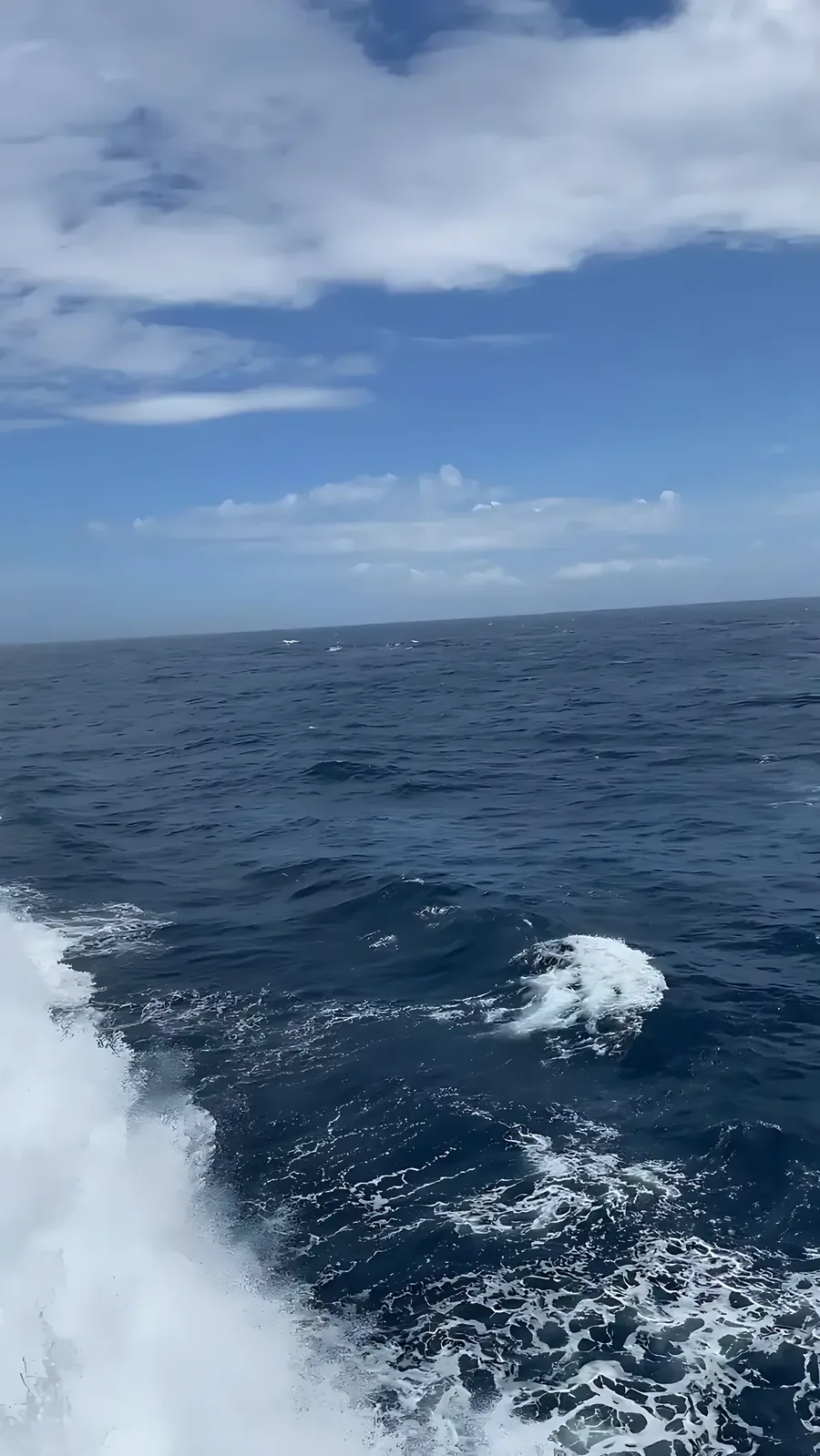
The island begins as a wake. Behind the ferry the Atlantic is torn white and then, slowly, forgets, and by the time the water has closed again behind you La Gomera is filling the front of the boat: not a beach, not a skyline, but a wall of rock with a small town pushed into the one gap in it.
That town is San Sebastián, and the gap is the reason it is there. Almost everything on this island is where it is because of a gap.
The boat that changed the arithmetic
For most of its history the quickest way off La Gomera was slow. The old mail and cargo boats to Santa Cruz de Tenerife took around seven hours. On 8 July 1974 a ship called Ferry Gomera, run by the Olsen family — the Norwegian shipping family who had been farming bananas at Playa de Santiago since 1904 — cut the crossing to about an hour and a half. The ship was later renamed Benchijigua, after the family’s estate above the village where this drive ends.
A day’s journey became a morning’s. An island that had always been closer to its own ravines than to its neighbours was suddenly an hour from everywhere.
The roads came late
Here is what the smooth tarmac hides. Until the middle of the twentieth century there were almost no roads on La Gomera at all. Juan Ramón Herrera Castro, writing for the island government about its old paths, describes life running on an intricate system of caminos, serventías and veredas — royal roads, rights of way and footpaths worn into the rock by people and mules. The road along the north coast took from 1917 to 1949 to finish; its tunnel at La Carbonera opened in January 1936. Before that, goods went on and off the boats along the north coast by pescantes, cranes bolted to the edge of the cliff, because there was nowhere for a boat to come in.
And across the ravines, where no path was quick, people whistled. Silbo Gomero was not a curiosity. It was how you sent a message to a valley you could see but not reach.
The driver
We took a taxi. We did not ask the driver’s name, which we regret. We did not photograph him, which we don’t.
What we can tell you is what this island thinks a taxi is for. There are fifty-four taxi licences on La Gomera, and in July 2026 the island government paid their holders nearly a quarter of a million euros in support, because, in the words of its president, Casimiro Curbelo, the taxi fulfils a social and territorial function of the first order. On an island of about twenty thousand people, with eight bus lines and villages separated by ravines that do not connect, that is not rhetoric. It is how somebody in a high village gets to a doctor, and how a walker gets to the top of a path that ends at the sea.
A great deal of what a place is lives in the person who drives you through it. Next time we will ask.
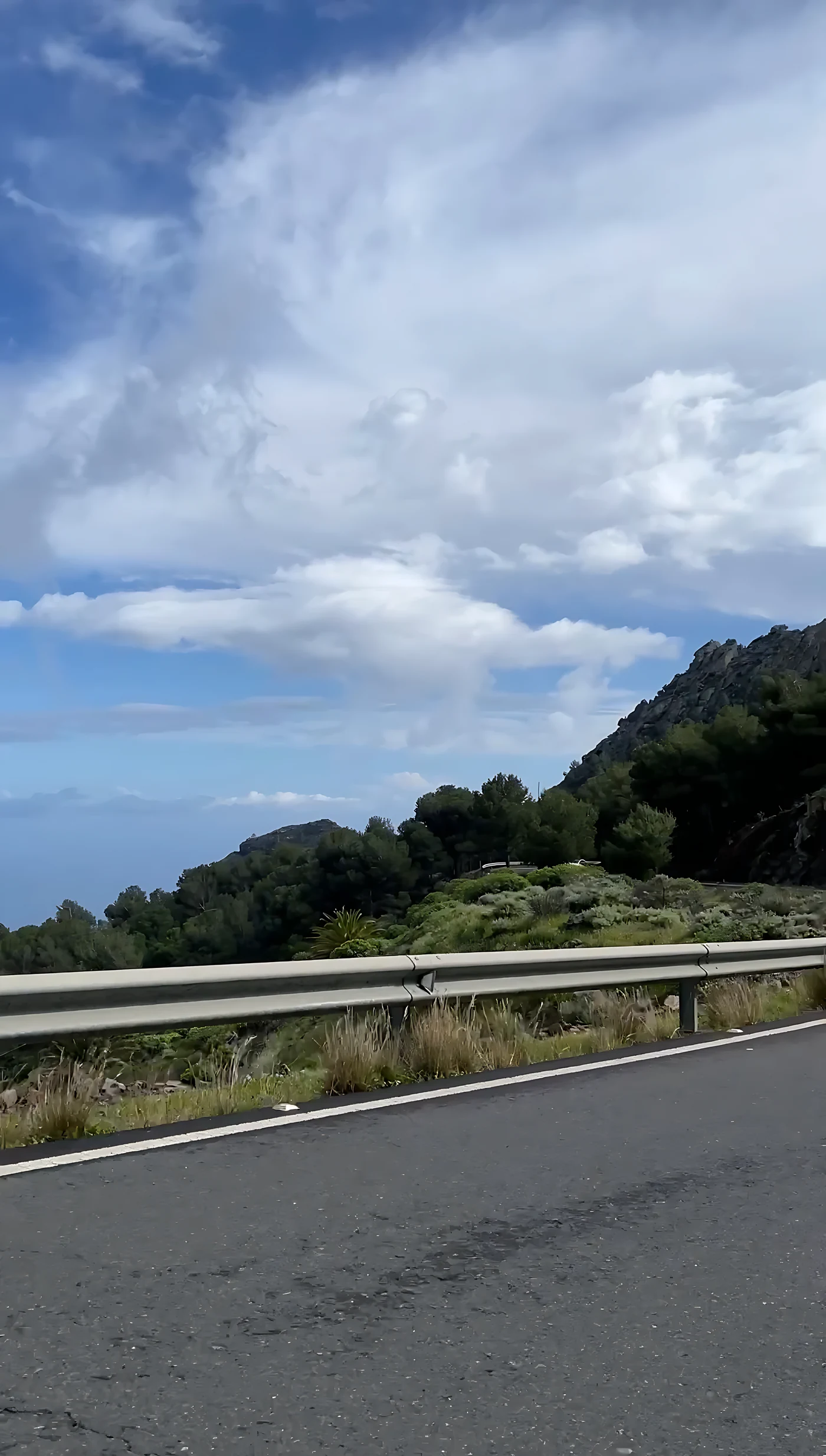
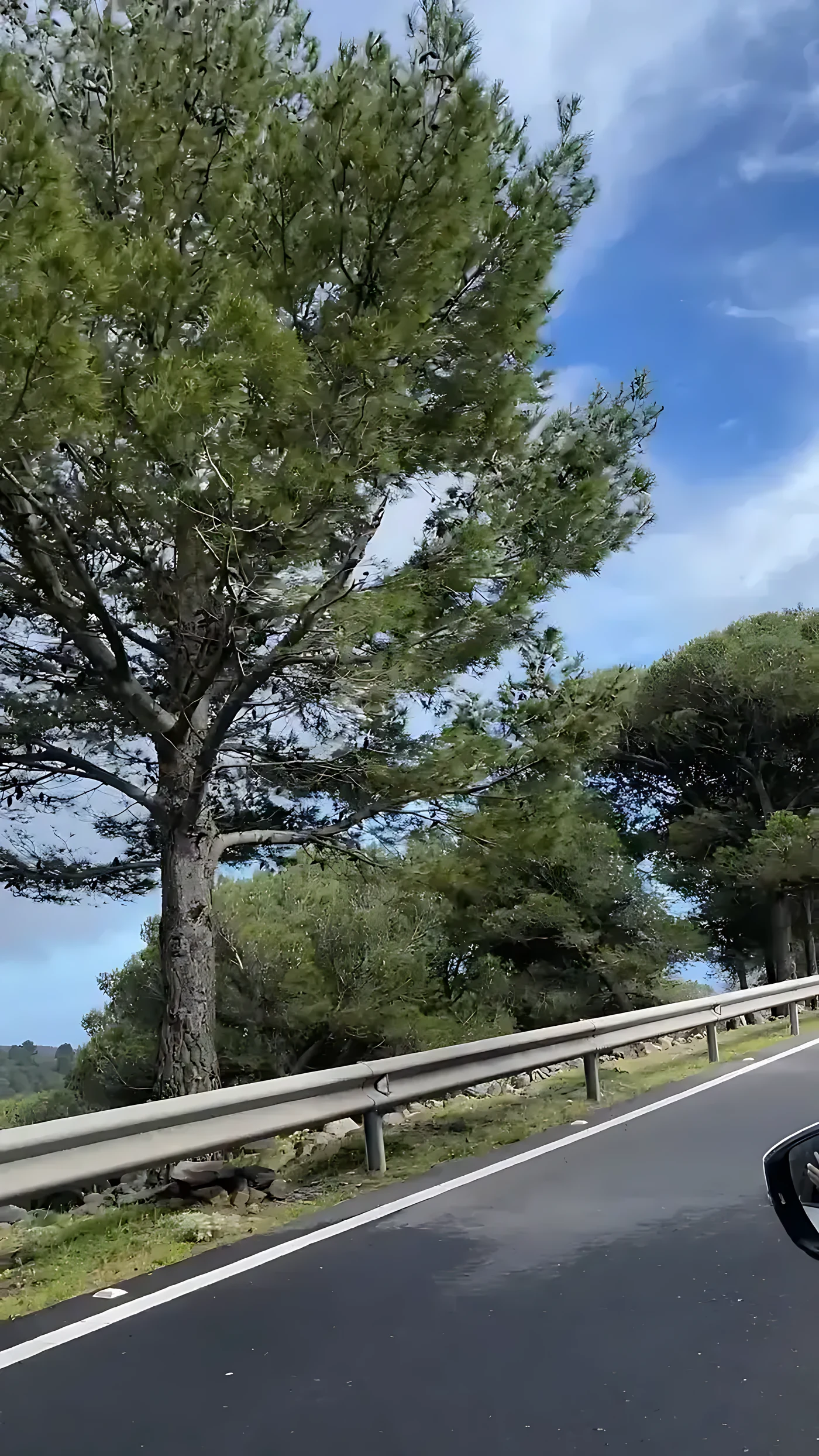
A pass with a killing in its name, and not in its meaning
The main road out of San Sebastián, the GM-2, climbs to a pass called the Degollada de Peraza. It is the way to the south of the island, to the airport and to Garajonay, and it is the way this taxi went.
The name sounds like a verdict. Degollar is to cut a throat, and Peraza is the name of the island’s Castilian lord who was killed in 1488. But a degollada, in Canarian Spanish, is simply a pass between two heights; the Academia Canaria de la Lengua says so plainly. The folk meaning grew over the plain one, the way ivy grows over a wall.
The killing, though, is real. On 20 November 1488 Hernán Peraza was killed by Gomeros led by a man the chronicles call Hautacuperche. Exactly where is disputed. The sixteenth-century chronicler Abreu Galindo puts it at the cave of a Gomera woman called Iballa, at Guahedun, with whom Peraza was having an affair; tradition later placed it at the pass. In Abreu Galindo’s telling, Peraza, warned, first tried to slip away wearing a woman’s skirt, then armed himself and stood in the mouth of the cave, where Hautacuperche’s shaft went in between the breastplate and the neck.
What followed was not a story. Peraza’s widow, Beatriz de Bobadilla, called in Pedro de Vera, the governor of Gran Canaria. According to the accounts historians rely on, the males of the rebel communities over the age of fifteen were executed, and women and children were enslaved; more than two hundred people were sold. A later legal process freed most of those who survived, and both de Vera and Bobadilla had to post bonds while it ran, from 1490 into 1502. The most lurid details of hangings and drownings come from a chronicle written two centuries afterwards and should be handled with care. The enslavement is documented.
Two names in one room
Here is the part we did not expect, and have not been able to stop thinking about.
Down at Playa de Santiago, at the end of this drive, Hotel Jardín Tecina holds its evening shows in a room called the Salón Beatriz de Bobadilla. On Monday nights, in that room, a Gomeran folklore group plays and dances the island’s traditional music. The group takes its name from Hautacuperche.
We do not want to make too much of it. Nobody chose it as a statement, so far as we know, and the name of a room in a hotel built in the 1980s is not a position on the fifteenth century. But five hundred and thirty-eight years after the killing, the drum of his people is played under the name of the woman who punished them for it, to an audience that may never have heard of either. That is what history looks like when it is still alive. Not reconciled, not resolved. Sharing a room.
The music of the man who killed Peraza, played every Monday in a room named after Peraza’s widow.
He is not forgotten. Since 2007 a four-metre bronze of Hautacuperche by the sculptor Luis Arencibia has stood at La Puntilla, in Valle Gran Rey, near the rock where tradition places the plotters’ meeting. At its unveiling Moisés Plasencia, then the Canarian government’s director of heritage, said that Hautacuperche had never left La Gomera, but that today, at last, he was there in a form people could see. Every November the rebellion is marked at the pass. In 2024 the group Jurria Tamonerque broke a clay vessel there, the Rotura del Gánigo, and walked the old route down to San Sebastián, and the person they honoured was Ángel Magdalena Bravo, born in 1954 at Guarchico above Chipude, a master of the island’s stick-fighting tradition.
The memorial under Agando
Further up the same road, where the ridge stands up into towers of old volcanic rock, there is a steel memorial by José Abad at the foot of the Roque de Agando.
On 11 September 1984 the wind turned and drove a forest fire up the ravine and onto the road between Agando and its neighbour, Ojila. Twenty people died there, thirteen from La Gomera and seven from Tenerife. Among them was Francisco Afonso Carrillo, the civil governor of the province, who was thirty-six and had been in the post for forty-four days, with his secretary, Bartolomé Alonso, and his driver, José Brito. A wreath is laid there every 11 September.
It is worth knowing before you go up, because the road is beautiful, and beauty makes it easy to forget that on this island the forest and the people have always been at each other’s mercy.
Where the cloud sits on the road
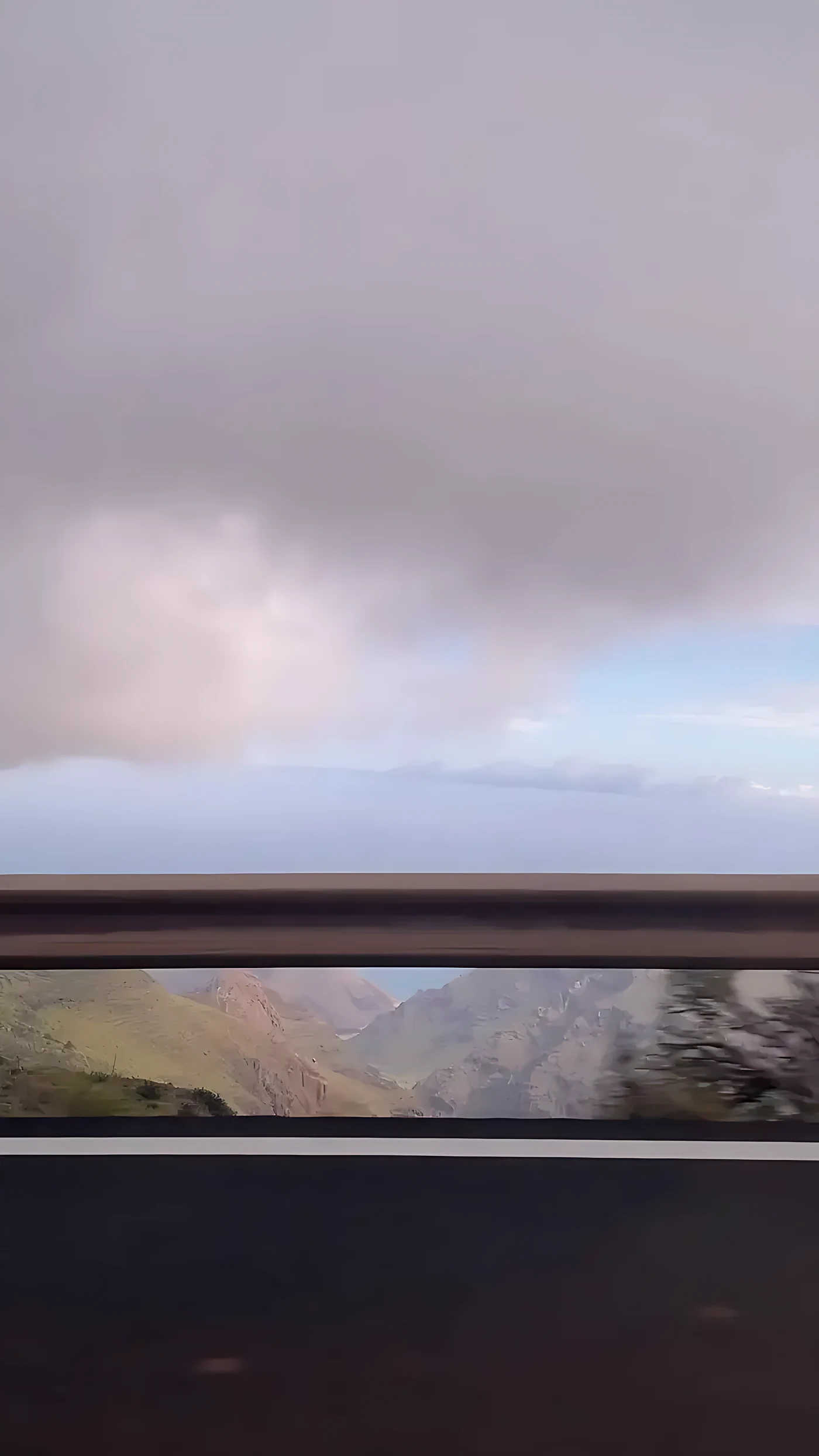
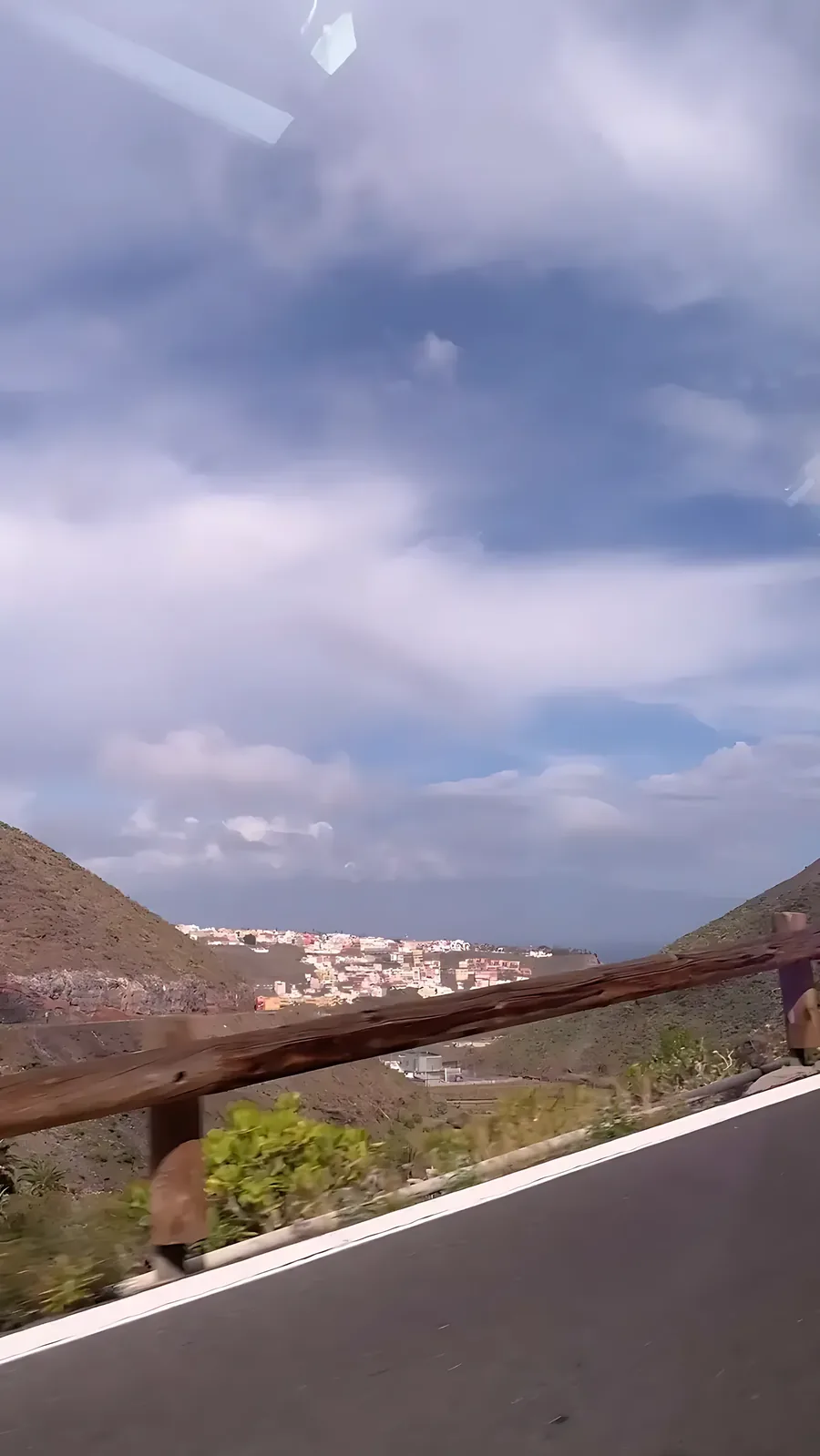
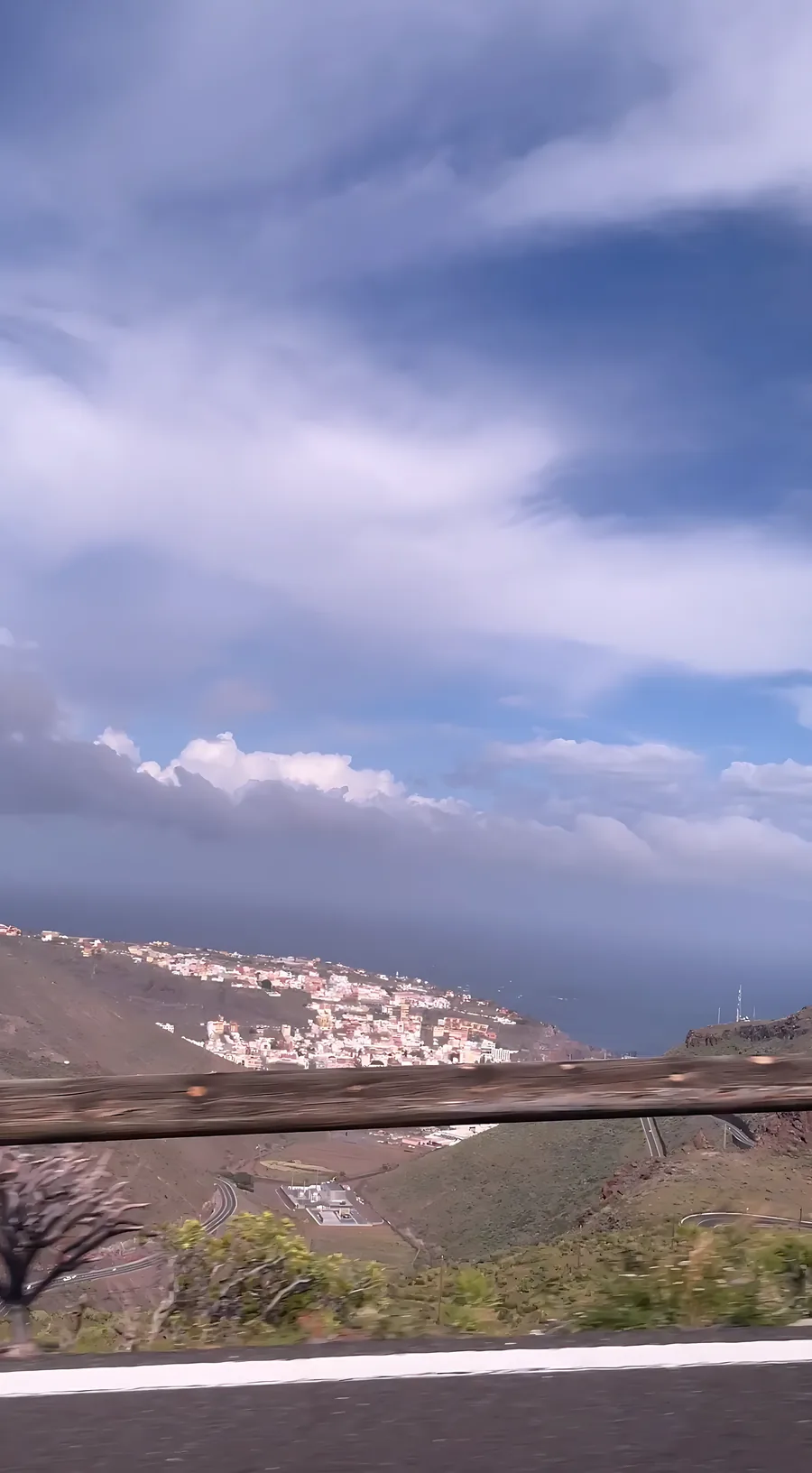
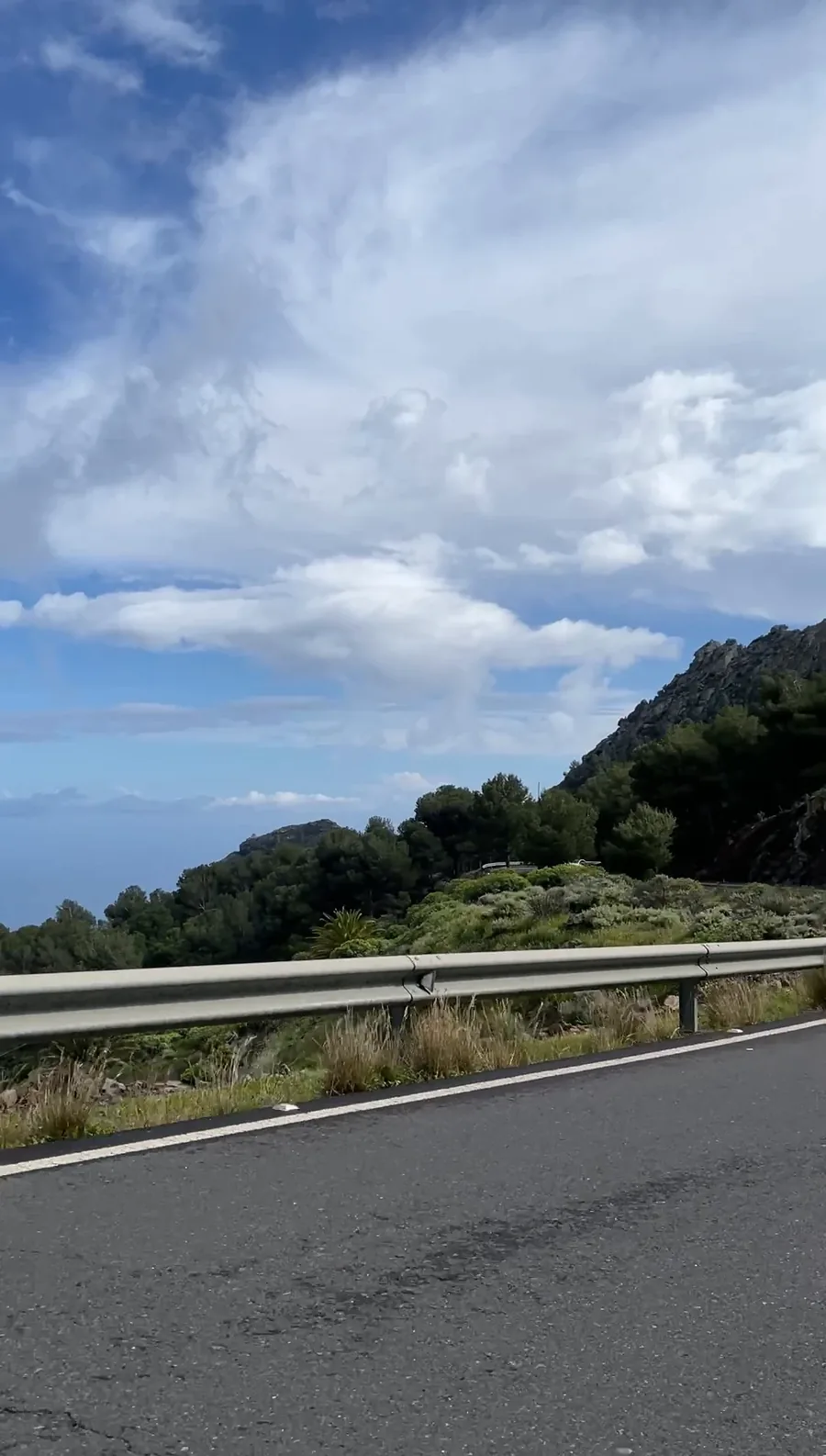
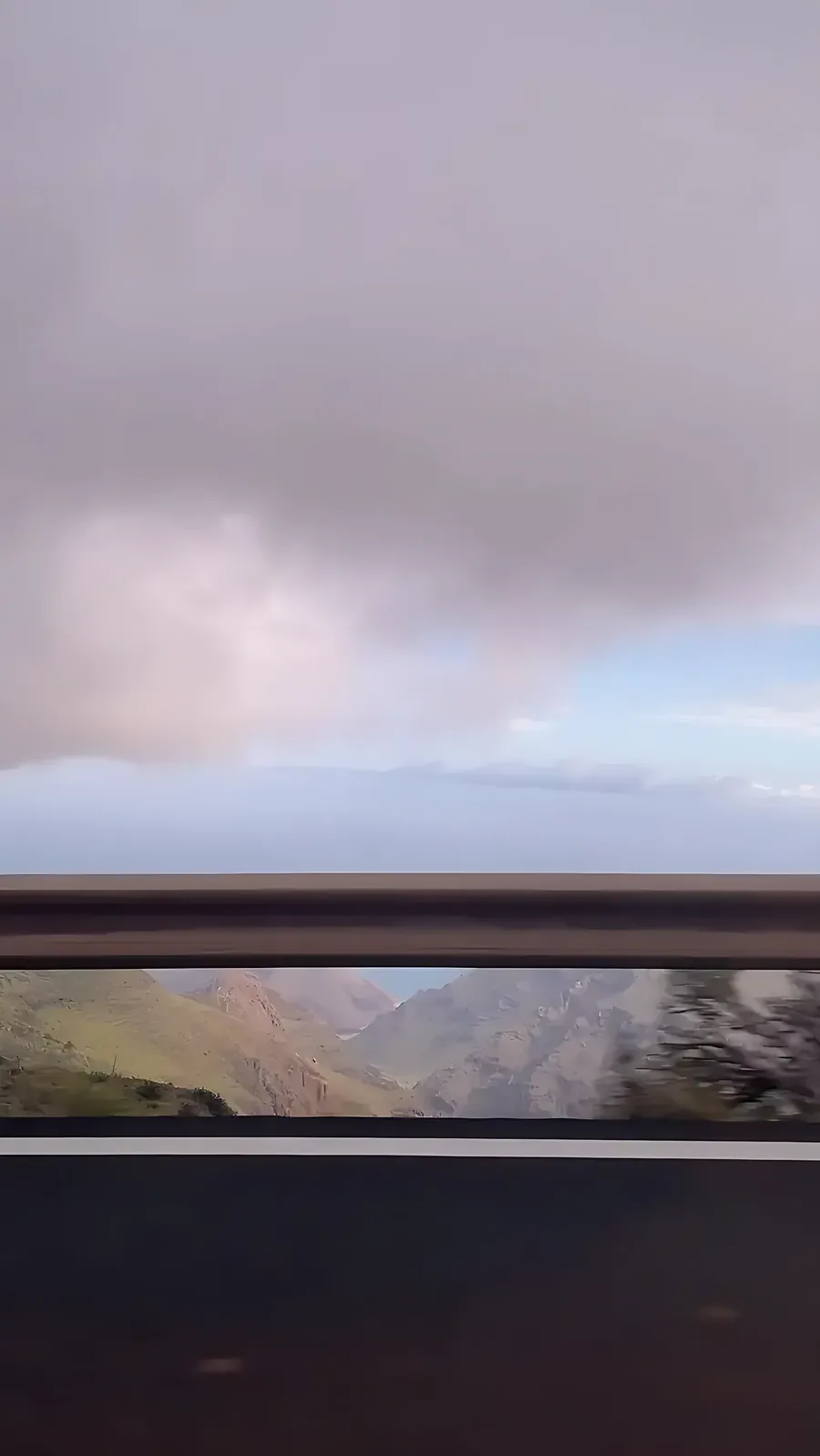
Somewhere on the way up you drive into weather. Down at the port it was bright; up here the cloud sits on the ridge like a lid, and the taxi runs along just underneath it.
The line is not an accident. The trade winds push a layer of damp air against the island from the north-east, and warmer air above stops it rising any further, so it breaks against the ridge. The conservation plan for Los Roques describes the high road as a border: on the north side, an area in regular contact with the fog; on the south, a lee where the fog spills over and thins. Heading south, you come down out of it into sun.
Down into the light
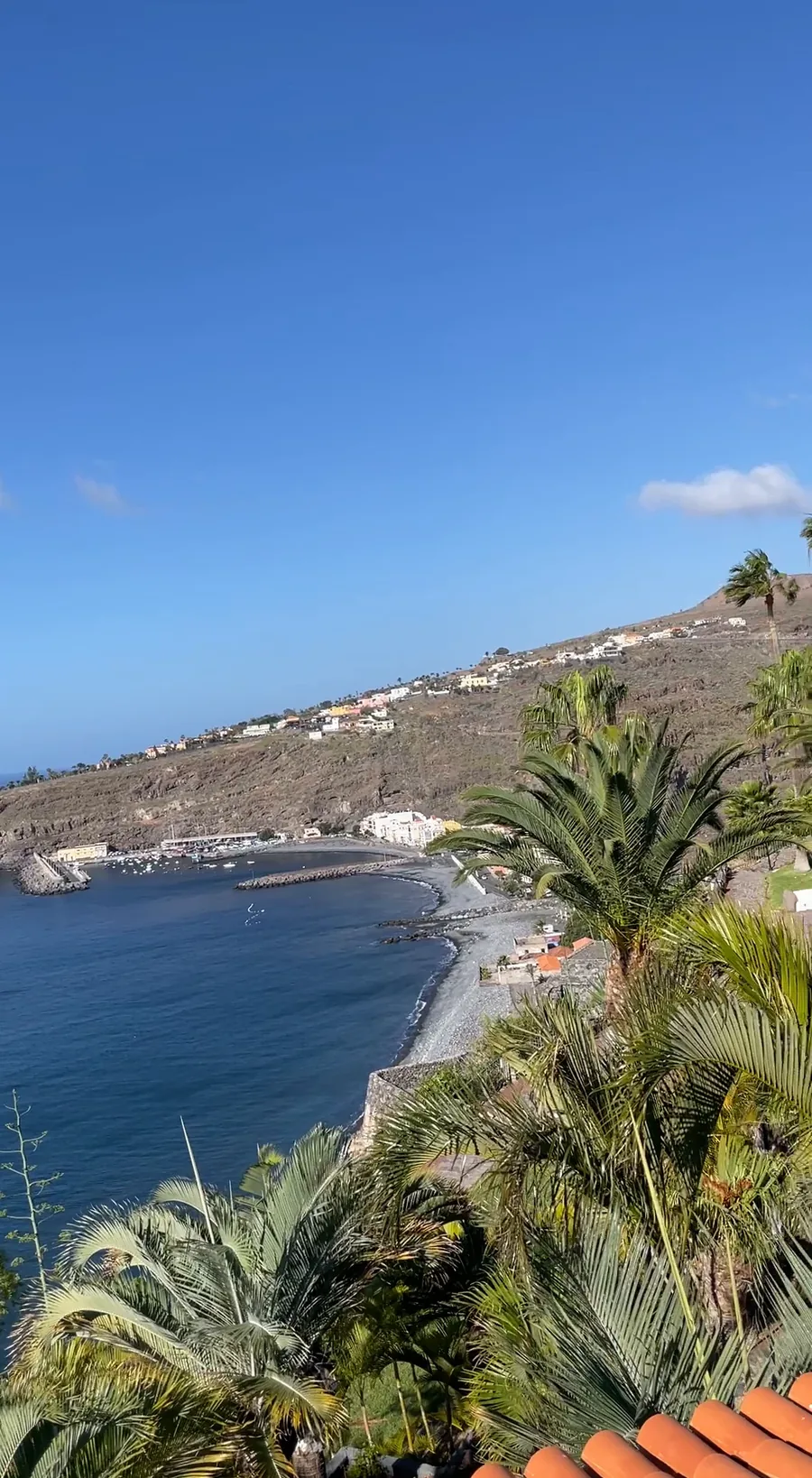
And then, as suddenly as it came, the cloud is behind you. The land goes brown and dry and steep, and there is the sea again, on the other side of the island this time, with a small bay and a harbour arm in it. That is Playa de Santiago.
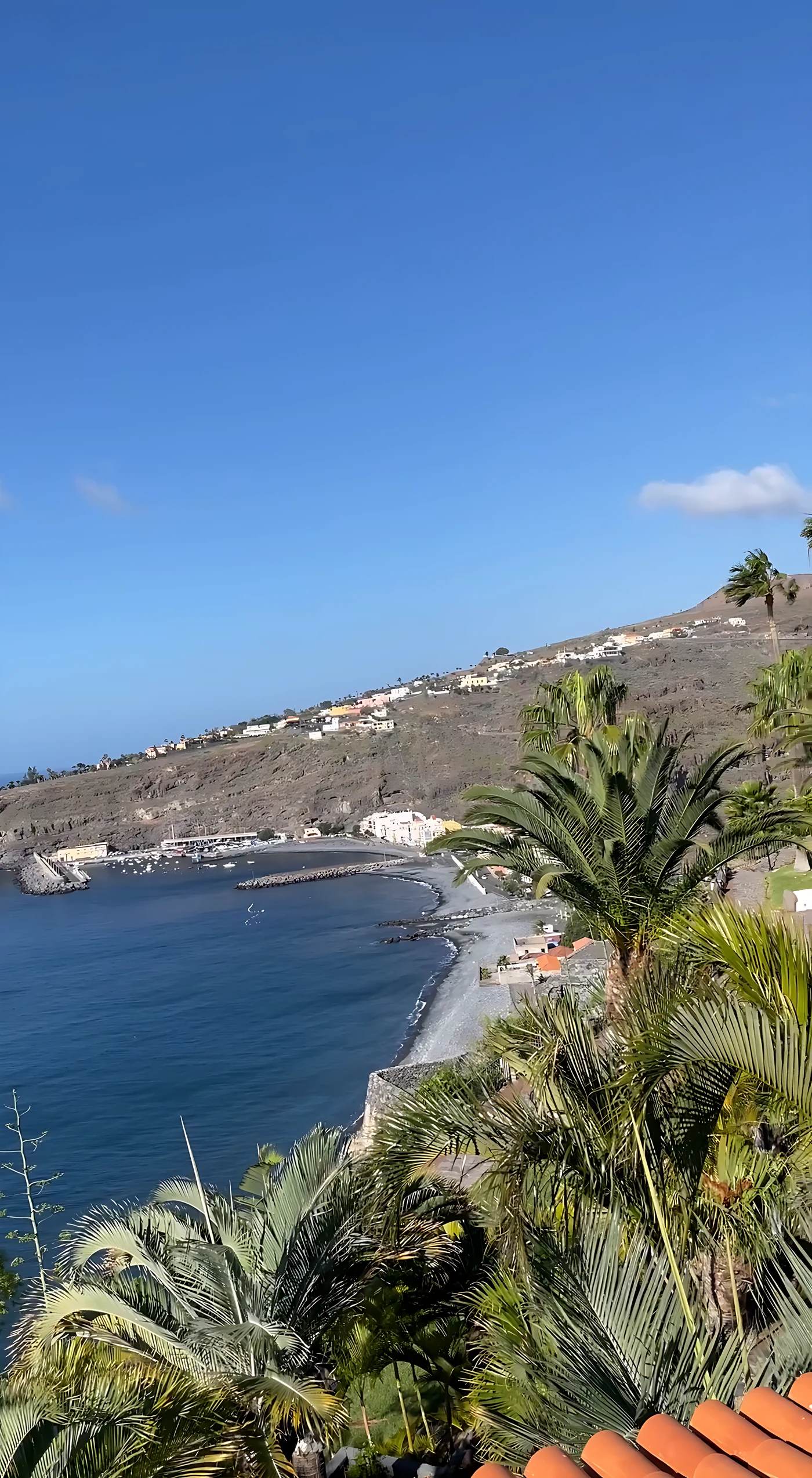
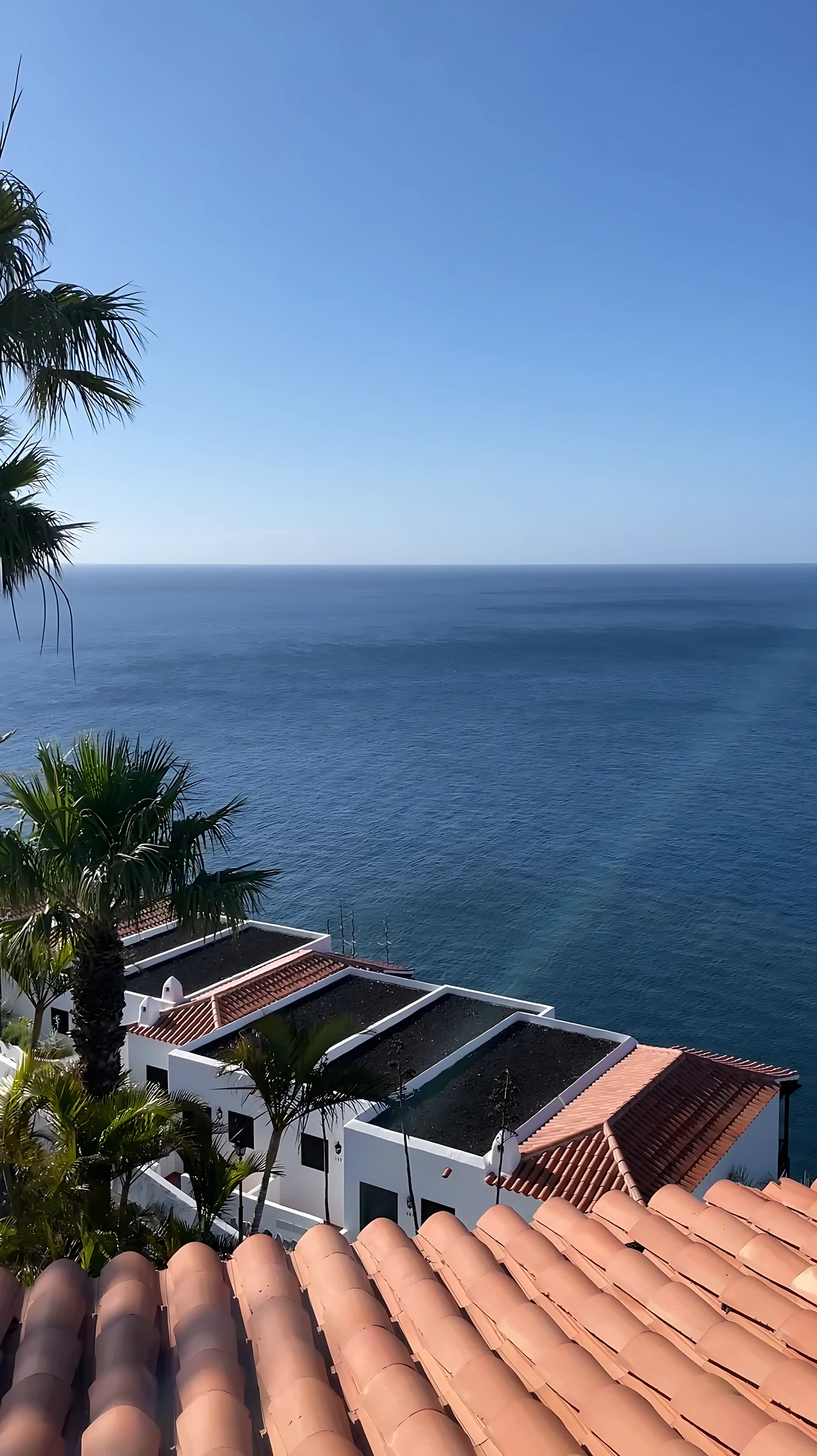
The drive is short, and it takes you through most of what this island is: a harbour in a gap, a cliff road, a pass with a killing in its folk-name, a memorial, a cloud, and a village that exists because a ravine let it.
What you will not see from the back seat is the people the road is made of. The ones who whistled across ravines before there was a road. The twenty who died on it in 1984. The fifty-four drivers who take its bends every day so that the island’s villages stay joined to each other. Look at the view, by all means. Then ask the driver’s name.
Eight frames
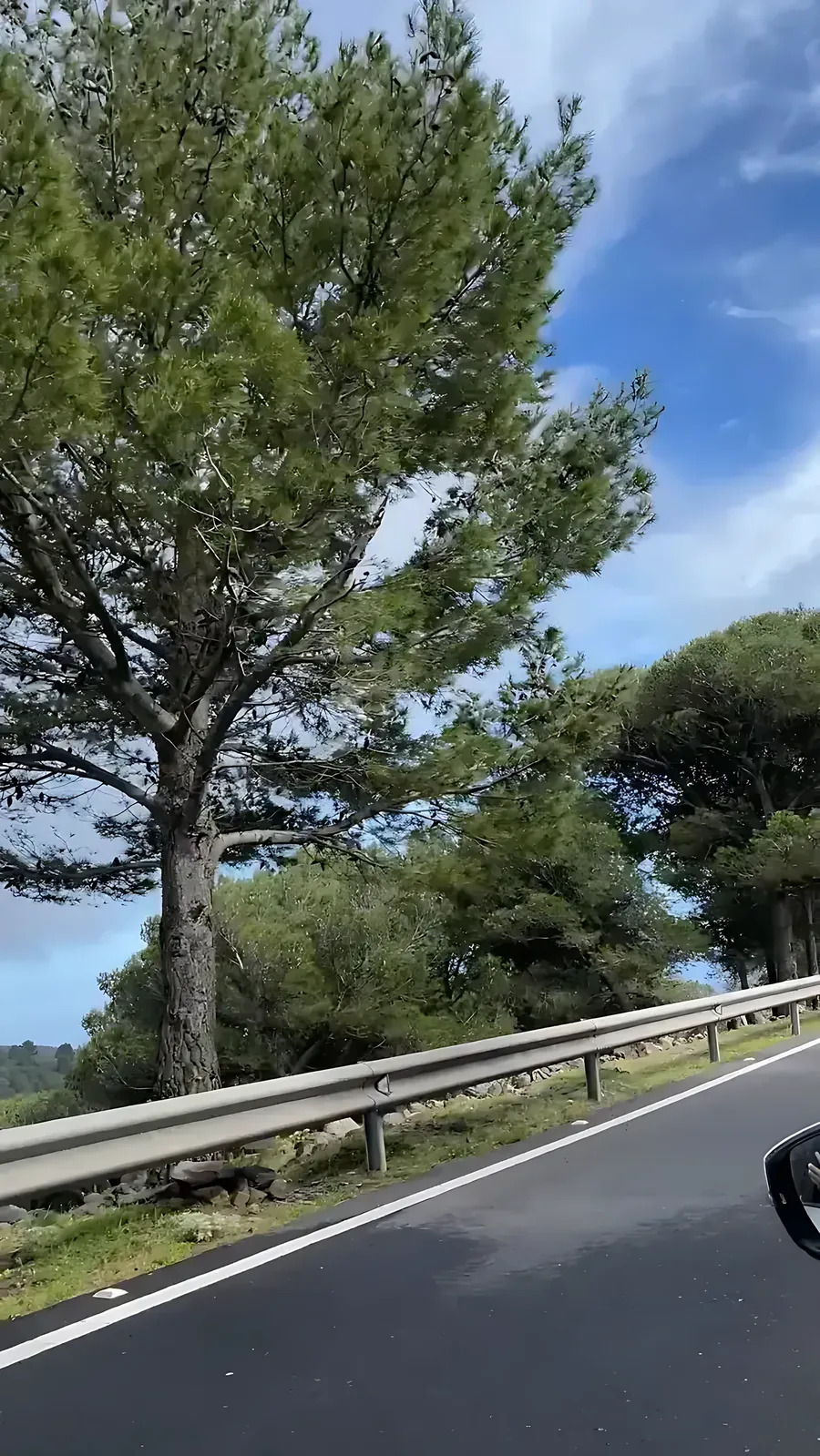
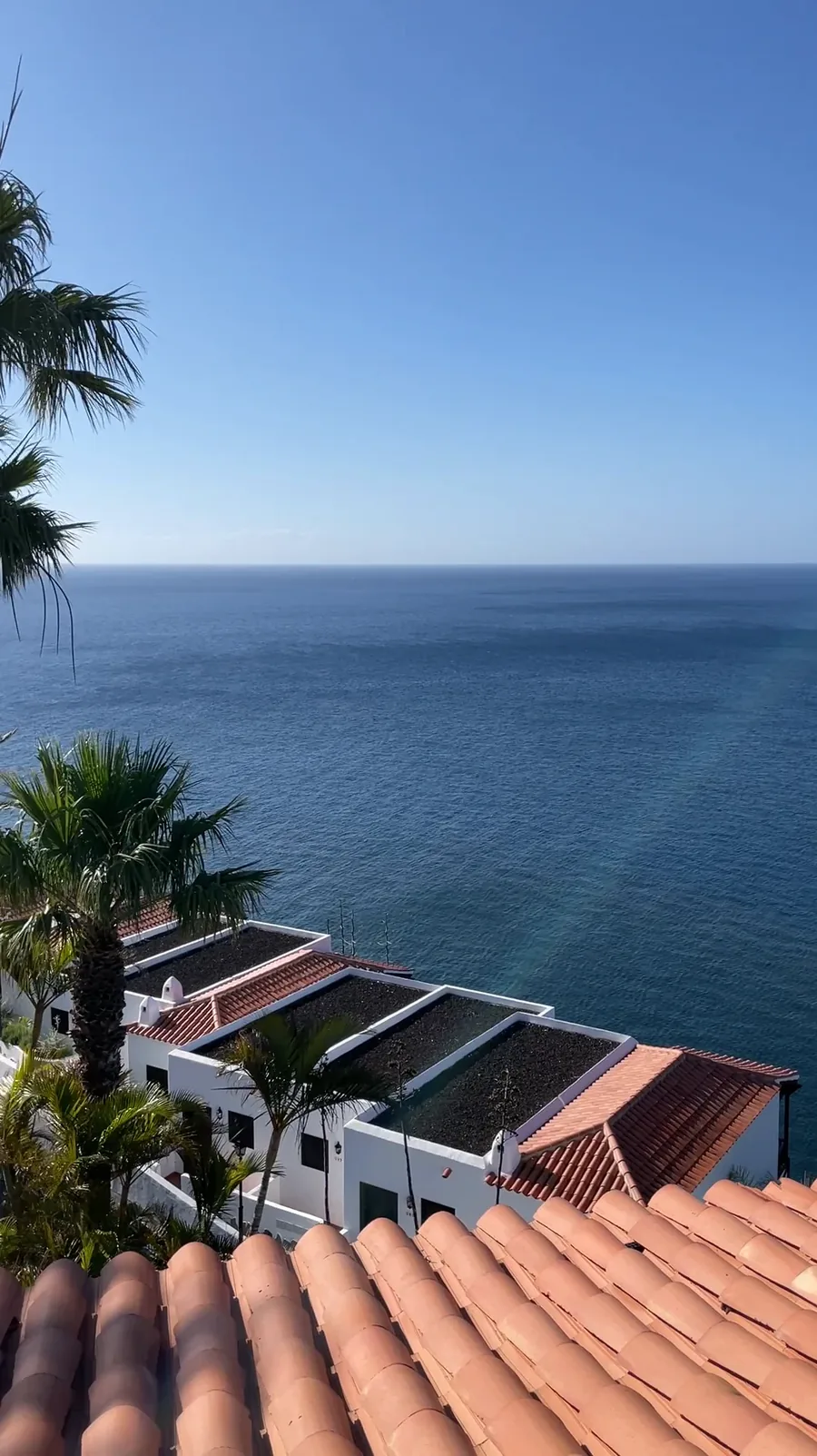
The crossing, the climb out of San Sebastián, the cloud, and the drop to Playa de Santiago. Filmed through the window of a taxi, with nobody in the frame.
What we actually know
- On 8 July 1974 the Olsen family’s Ferry Gomera cut the crossing to Tenerife to about an hour and a half; the old mail and cargo boats had taken around seven hours to Santa Cruz. The ship was later renamed Benchijigua after the family’s estate at Playa de Santiago. Source: Diario de Avisos, July 2019.
- Juan Ramón Herrera Castro, for the island government, on life before the first roads were completed in the mid-twentieth century. The north road was begun in 1917 and finished in 1949; the La Carbonera tunnel opened in January 1936. Sources: eldiario.es, December 2014; Gomera Verde, May 2017.
- The GM-2 runs from San Sebastián to the Degollada de Peraza and gives access to the southern municipalities, the airport and Garajonay. Source: Cabildo de La Gomera, February 2026.
- Fifty-four taxi licences shared €248,543 of island-government support; Casimiro Curbelo described the taxi’s “función social y territorial de primer orden”. Source: GomeraToday, 7 July 2026. The bus network has eight lines. Source: Gomeranoticias, 20 September 2026.
- Degollada means a pass between two heights. Source: Academia Canaria de la Lengua.
- Hernán Peraza was killed on 20 November 1488; commemorations today use 21 November. Abreu Galindo, writing in the late sixteenth century, places it at Iballa’s cave at Guahedun; tradition places it at the pass. The account of executions, enslavement, the sale of more than two hundred people, the legal process of 1490 to 1502 and the bonds posted by de Vera and Bobadilla is from EFE’s reporting with the historian Antonio M. López, August 2018. The catalogue of atrocities by Marín y Cubas dates from 1687.
- The Hautacuperche statue by Luis Arencibia was installed at La Puntilla, Valle Gran Rey, in 2007. The Rotura del Gánigo took place at the Degollada de Peraza on 23 November 2024, organised by Jurria Tamonerque, honouring Ángel Magdalena Bravo.
- Hotel Jardín Tecina’s timetable for September and October 2026 lists the folklore group Hautacuperche on Mondays at 21:30 in the Salón Beatriz de Bobadilla.
- The fire of 11 September 1984 killed twenty people, thirteen from La Gomera and seven from Tenerife, including the civil governor Francisco Afonso Carrillo. About 900 hectares burned. Sources: Diario de Avisos, July 2026; eldiario.es, September 2023. The memorial at the foot of Agando is by José Abad.
- The fog boundary along the high road is described in the conservation plan for the Los Roques natural monument.
We could not find a single press interview with a named La Gomera taxi driver. That is a gap in the record, not in the island.
How this story was made. Filmed through the window of a taxi on a single drive, and on the ferry before it, at our own cost; nothing here is sponsored. The driver does not appear, and no person appears in any photograph or clip; stretches in which a passenger was reflected in the glass, or another road user could be seen, were cut rather than cropped. The videos have had their audio removed entirely. The history comes from the chroniclers, historians and reporters named in the text. Where a detail is legend or contested, we say so.
Independent and self-funded. Atlántis is not sponsored by design: not affiliated, not a paid placement, and nobody we write about knew in advance. Everything on this page was found, booked and paid for at our own cost. The views are our own, judged against the Atlántis values: sustainability, cultural immersion, eco travel, real experiences, family-friendliness, and car-free travel or the deep past, depending on the place.