Order coffee at a roadside stall in the south and you are handed two things: a small glass with an inch of condensed milk in the bottom, and a dented aluminium filter balanced on the rim of it, dripping. The filter is called a phin. There is no way to make it go faster. You sit on a plastic stool at shin height, in the shade if you are lucky, and you wait, and the waiting is not incidental. It is the form.
That is cà phê sữa đá, and the reason there is condensed milk underneath rather than fresh milk on top is practical and old. Fresh milk did not survive the heat or the supply chain. Condensed milk did. What began as a substitution became the standard, which is how most national dishes happen.
What follows is not really about coffee. It is about four or five families who each solved a shortage, and what has happened to them since.
The man who ran out of milk
In 1946, Hanoi had no dairy. Nguyễn Văn Giảng, by his family’s account a bartender at the hotel now called the Metropole, whisked egg yolk with condensed milk until it held air, and floated it on coffee. That is cà phê trứng, egg coffee, and it exists because of a war and an absence.
The café is still open, still in the family, and it has quietly become two cafés. The founder’s youngest son, Nguyễn Trí Hòa, runs the house at 39 Nguyễn Hữu Huân, down an alley in the Old Quarter; his daughter Nguyễn Hương Giang and her husband Vũ Khắc Sơn are behind the counter day to day. A second son, Nguyễn Trí Đức, opened a branch on Yên Phụ in 2006, and his own sons run that one. There is a fourth generation coming, a great-granddaughter who has been saying since she was ten that the café will be hers.
“Everything has to be real: the coffee, the eggs, and the people.” — Nguyễn Trí Hòa
His son-in-law put the business a different way. In thirty or forty years, he said, what they sell is not coffee. It is the story of Hanoi. And then, about the generation above him: it was the old people who made that story in the first place.
One working detail, from the Yên Phụ branch, which is the kind of thing that only comes from doing it every day for decades: once the egg is whisked it has to go out immediately. Leave it standing and it turns fishy and curdles. That is why nobody can make this at scale, and why it is still a thing you have to go to a particular alley for.

Three sisters, a clay pot and a charcoal fire
Cheo Leo has been open in Saigon since 1938, which makes it the city’s oldest surviving café. It is down an alley off Nguyễn Thiện Thuật in District 3 and it is run by three sisters who never married: Lê Thị Tuyết, Nguyễn Thị Sương and Nguyễn Thị Sáu. A grandson helps at weekends.
They still make it the way their father did. Water is drawn and left to stand for days in a covered clay pot. The stove is charcoal. The coffee goes through a cloth sock — a vợt — not once but twice. The finished hot coffee waits in a clay pot sitting on the coals; the cold waits in a second pot set away from the heat. None of that is efficient and all of it is the reason people come.
“This is the greatest inheritance our parents left us. We only water it and tend it.” — Lê Thị Tuyết
One of the sisters left accounting to come back to the counter, because she wanted to keep the reputation her parents had built. When the café closed during the pandemic it was the longest it had been shut since 1938.
Ba Lù, and a fight over a flavour
In Chợ Lớn, the old Chinese quarter, there is a coffee stall in Phùng Hưng market that goes back to 1953 — and the family trace the trade back roughly a century, to a wooden cart. It was started by Lâm Thiệu Điện, known as Ba Lù, who had come from Hainan during the French period. That single fact is the clearest link there is between Saigon’s coffee trade and the Hoa community who largely built it.
The roast has not changed. A hand-cranked iron drum over a wood fire, an hour a batch, and into it during the roast go salt, French butter and rice liquor. Ground by hand. Steeped in a cloth sock twenty-five centimetres deep.
Chung Quốc Hùng, the eighth son, runs the market stall. He started helping customers at twelve and says he did not get his father’s flavour right until he was twenty-eight. It is a process, he says, and it is not easy. He also says nobody in the family wants to take it on after him.
Except that one of them does, and not amicably. His sister Chung Thị Hoàng has opened her own shop nearby, and her reason for it is one of the most human sentences in this whole story: she had to open her own place so people would know how good Ba Lù coffee really is, and restore the true flavour, and take back her father’s name.
Two children of the same man, both convinced they are the one keeping him. That is not a quaint heritage story. That is a family.
The couple in Huế who invented something and own none of it
Cà phê muối — salt coffee — was made up in 2010 by a married couple, Hồ Thị Thanh Hương and Trần Nguyễn Hữu Phong, at their first shop at 10 Nguyễn Lương Bằng in Huế. Their own explanation of it is a piece of practical sense: the salt softens the bitterness of the coffee and takes the edge off the sweetness of the condensed milk at the same time. The sign in the shop reads: the flavour of love — salty, sweet and bitter.
In 2023 it went across the internet, and then across the world. By 2024 it was on menus in cities that have never heard of Huế.
They earn nothing from any of it, and the reason is worth being precise about, because the lazy version is that somebody stole it. Nobody stole it. The name was never registered as a trademark, and it would probably have failed if they had tried, because it describes the product rather than distinguishing it; and a recipe of that kind is not patentable for want of novelty. There was never a right to infringe. Vietnamese intellectual-property specialists have made exactly this point in print: the drink originated in Huế and is now being developed everywhere except Huế. Phong has said, disarmingly, that he had always assumed intellectual property was something for industry and technology.
Two people invented a drink the world now sells. No law was broken. That is the problem.
And none of it is grown anywhere near here
Coffee came to Vietnam with French missionaries in 1857, one tree at a time. The first commercial plantations went in around 1888, and the French opened the Central Highlands to production in the 1920s. Then came war, then rebuilding, and then in 1986 the Đổi Mới reforms let smallholders plant. Within fifteen years Vietnam was the second-largest coffee producer on earth, and it still is: around 640,000 farms, most of them small, about 95 per cent robusta. If you have ever drunk instant coffee anywhere in the world you have almost certainly drunk Vietnamese robusta without being told.
The money has moved violently. For nearly two decades growers were paid around 40 million đồng a tonne. Then robusta futures hit a record in February 2025 and domestic prices reached roughly three and a half times that; the 2024–25 crop year closed with exports worth a record 8.4 billion dollars. By mid-2026 the price had fallen back by more than a third. A record year is not the same as a secure one.
What that looks like from the ground is a question of who owns a well. Siu H’Kur is Jrai, thirty-seven, with nine children, in Ia Le in Gia Lai. Asked about drought and the deep boreholes that get people through it, she said the people who have those are the ones with money to drill them, and that they give her some water each time she asks. Her own position she put in five words: our life relies on rain.
And in Buôn Sút Mgrư, in Cư M’gar, Ê Đê households still do the whole thing themselves — pick ripe, hull, dry, store, then roast over coals for about twenty minutes and pound it in a mortar. It is steeped in a cloth bag rather than a phin, and it is a blend of three species, not one. Some households finish the roast with a little chicken fat or a splash of clear rice liquor, and add nothing at all afterwards. That is a coffee culture older and more particular than anything on a café menu, and it almost never leaves the village.
A new pressure is arriving from the buying end. More than 45 per cent of Vietnam’s coffee goes to the European Union, which now requires proof, traced to the individual plot, that a farm was not cut out of forest after the end of 2020. For a chain made of hundreds of thousands of smallholders that is a serious administrative burden, and it lands on the least powerful people in it.

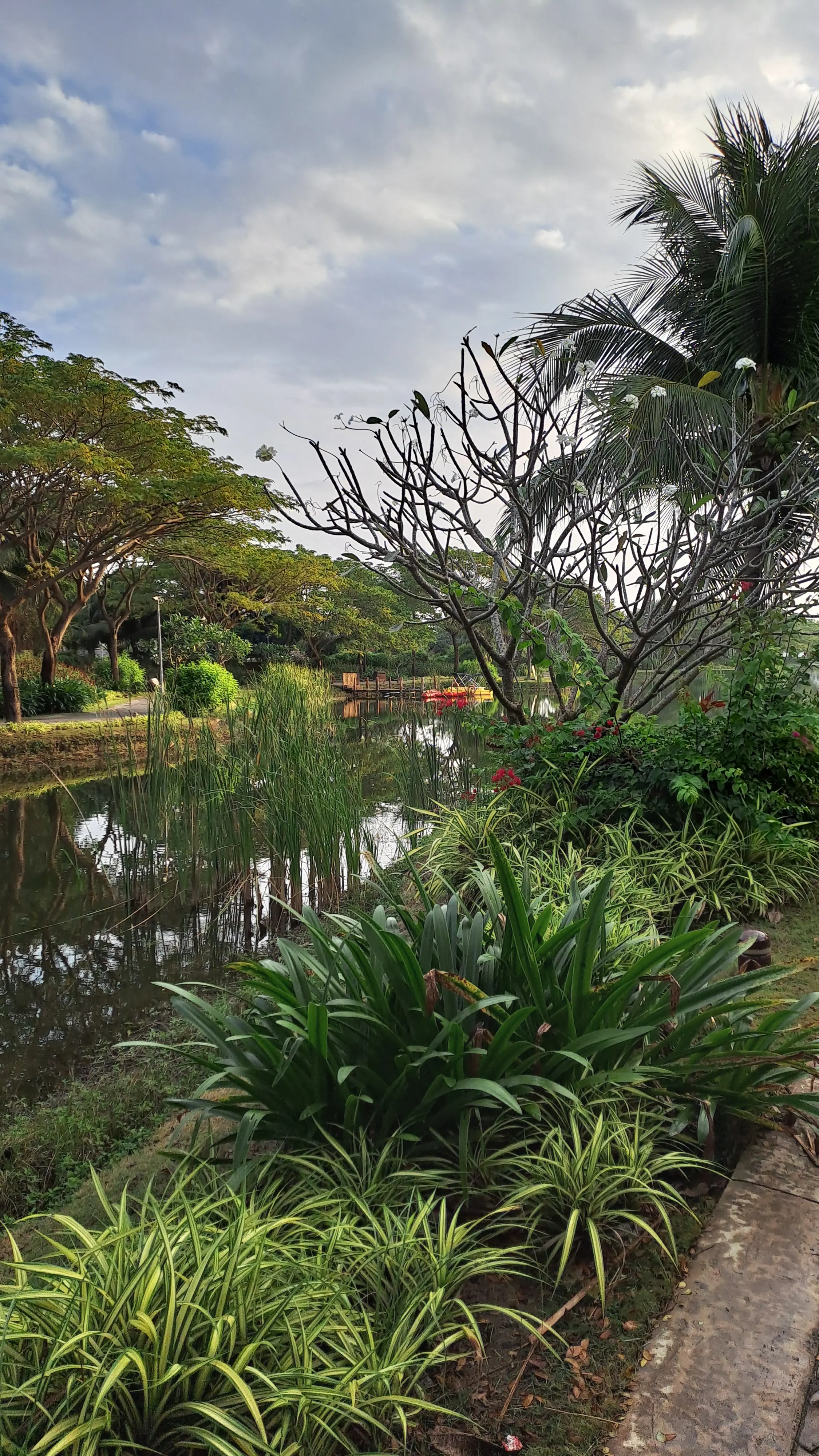
On this coast there is no coffee at all
We were at Hồ Tràm, on the south-east coast, and it would be easy to write a paragraph here about the local coffee. There isn’t one. There is no heritage roaster, no old café, no growing tradition anywhere on this stretch. The coffee arrives here in a bag, from the Highlands, three hundred kilometres away, the same as it arrives everywhere else. The cafés with the view were built for the resorts.
Saying so is more useful than inventing something, because the craft on this coast is real and it is somewhere else entirely. It is salt, and it is fish sauce, and the two are the same story.
At Hồ Tràm the boats go out around two in the morning and are in by seven, working crab nets and small fish. There is no fish market; buyers meet the boats on the sand and the catch is gone before most people are awake. Along the coast at Phước Hải the village is more than a hundred years old and the whole economy is fish — catching it, drying it, and turning it into sauce.
The sauce is made from local anchovy packed into large wooden barrels with salt that has itself been aged for at least a year, because a year takes the bitterness out of it. Six to twelve months later the first liquid is drawn off, completely clear. Nguyễn Cao Thiên makes it at Nước mắm Thiên Lộc, in Hồ Tràm itself; Nguyễn Thị Chiến makes it at Phước Hải under the Long Hải name.
And the salt in those barrels comes from Long Điền, twenty minutes up the coast, where more than five hundred hectares of pans produce something like thirty thousand tonnes a year, and the trade has been handed father to son since the southward settlement. It was formally recognised by the province as a traditional craft on 10 September 2018. The head of the Chợ Bến salt cooperative will tell you, without any romance about it, that lining the pans with tarpaulin yields about half again as much as making salt on bare earth.
Salt from Long Điền, into a barrel at Phước Hải, into a bottle in Hồ Tràm. The coffee is the only thing here that comes from somewhere else.
What is actually at stake
Go back over the names. Nguyễn Trí Hòa has a granddaughter who wants the café. The three sisters at Cheo Leo have a grandson who helps at weekends. Chung Quốc Hùng says nobody wants Ba Lù, and his sister has opened a rival shop to prove him wrong. Hương and Phong invented something the world drinks and hold no right to any of it.
The recipes are not the fragile part. Recipes are written down now; anybody can whisk an egg yolk. What is fragile is that each of these is a specific person doing a specific difficult thing at a specific address, and in every case there is exactly one conversation standing between it continuing and it stopping.
So the useful thing a traveller can do is embarrassingly simple. Go to the address. Sit on the stool. Wait the four minutes out rather than taking it away. Pay a person rather than a brand. That is the entire mechanism by which any of this survives, and it has never been anything more complicated than that.
What we actually know
- Cà phê trứng was created in Hanoi in 1946 by Nguyễn Văn Giảng. That he worked at the hotel now called the Metropole is his family’s account, repeated widely in the press; we found no hotel-side or archival confirmation. Café Giảng is at 39 Nguyễn Hữu Huân, with a second family branch on Yên Phụ opened in 2006.
- Cheo Leo, 109/36 Nguyễn Thiện Thuật, District 3, founded 1938 by ông Vĩnh Ngô, is Saigon’s oldest surviving café. It is run by three sisters: Lê Thị Tuyết, Nguyễn Thị Sương and Nguyễn Thị Sáu. Coffee is passed twice through a cloth vợt over charcoal.
- Cà phê vợt Ba Lù, in Phùng Hưng market, Chợ Lớn, was founded in 1953 by Lâm Thiệu Điện, an immigrant from Hainan. Roasted in a hand-cranked drum over wood with salt, butter and rice liquor. Chung Quốc Hùng runs the stall; his sister Chung Thị Hoàng opened a separate shop in 2026.
- Cà phê muối was created in 2010 by Hồ Thị Thanh Hương and Trần Nguyễn Hữu Phong at 10 Nguyễn Lương Bằng, Huế. It went viral in 2023. The name was never registered as a trademark and would likely have been refused as descriptive; the recipe is not patentable for want of novelty. No right was ever held, so none was infringed.
- The phin descends from the French individual drip filter; the word is a rendering of “filtre”. Its distinguishing part is the gravity press disc that sits on the grounds. It is pressed aluminium and industrially made — there is no craft village or heritage workshop behind it, and anyone who tells you who invented it is guessing.
- Bạc xỉu is from the Cantonese 白底小啡 by way of “bạc tẩy xỉu phé”: white base, a little coffee. It is an order placed at a Hoa-run shop in old Saigon, not a recipe name. No individual inventor is recorded.
- Coffee entered Vietnam with French missionaries in 1857; first commercial plantations 1888; Central Highlands production from the 1920s; smallholder planting after the Đổi Mới reforms of 1986. Around 640,000 farms, about 95 per cent robusta, with Đắk Lắk producing roughly 30 per cent of the national crop.
- Exports in the 2024–25 crop year reached a record 8.4 billion US dollars, per the Vietnam Coffee and Cocoa Association. Robusta futures peaked in February 2025 at roughly three and a half times the 40 million đồng a tonne growers had lived on for two decades. By mid-2026 the price had fallen back by over a third.
- More than 45 per cent of Vietnamese coffee goes to the European Union, which now requires plot-level proof that land was not deforested after the end of 2020.
- There is no heritage coffee roaster, no historic café and no coffee-growing tradition in Hồ Tràm or anywhere on the coastal Bà Rịa–Vũng Tàu strip. The local traditional crafts are salt at Long Điền, recognised by the province on 10 September 2018, and fish sauce at Phước Hải and Hồ Tràm.
Two things we could not establish. Neither Hồ Thị Thanh Hương nor Trần Nguyễn Hữu Phong is on record saying they received nothing for salt coffee; what is documented is that no registrable right ever existed, which is why we have written it that way. And we found no profile of a named M’nông coffee grower in credible reporting, which is a gap in the record rather than in the Highlands.
How this story was made. We were at Hồ Tràm and paid our own way; nothing here is sponsored. The photographs are of that coast and are captioned as such — we have no photographs of any café, family or farm named in this story, and we are not going to illustrate other people’s lives with stock images. Every person here is named because they have been named in published reporting or in their own business material, with quotations translated from Vietnamese sources and attributed in the text. Ages and figures drift between Vietnamese outlets published a year apart; where they conflict we have taken the most recent and said whose figure it is.
Independent and self-funded. Atlántis is not sponsored by design: not affiliated, not a paid placement, and nobody we write about knew in advance. Everything on this page was found, booked and paid for at our own cost. The views are our own, judged against the Atlántis values: sustainability, cultural immersion, eco travel, real experiences, family-friendliness, and car-free travel or the deep past, depending on the place.