The banner hangs in the stairwell: 1896–2026, 130 Jahre. It is worth being precise about what turns 130, because the honest version is more interesting than the round number.
In the 1870s this spit of land held a few houses. A hotelier called Josef Schwaiger opened the Hotel Krone here in 1876. A Salzburg banker bought it two years later, added a wing, over-reached and went bankrupt. In April 1887 the wreckage was bought by Carl Böhm.
Böhm came from Linz. He had worked as a waiter in Vienna and, by his family's account, had saved enough by twenty-five to set up on his own. He opened a Viennese coffee house in Stuttgart, which was a novelty there and became fashionable. He married Therese Zierhut, the daughter of a Salzburg hotelier. She grew homesick. He sold the coffee house and bought a small hotel by a lake in the Pinzgau.
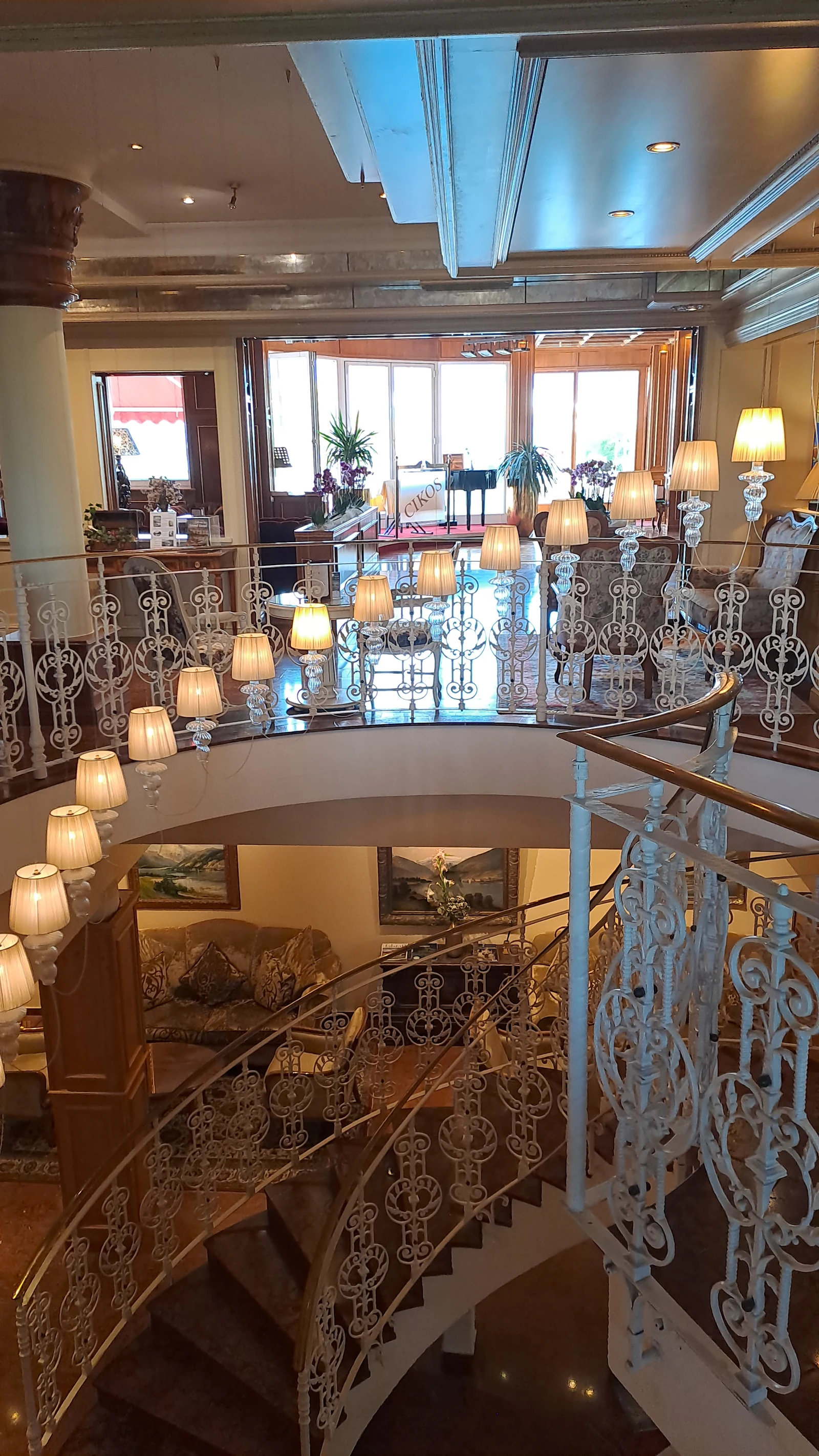
He did not do it incrementally
The family's account is that he had the whole building in mind from the beginning, an imperial, long-stretched thing, and built it in three planned stages while the hotel carried on trading around him. He extended the peninsula with driven piles to make room for it. In 1889 he pulled down the original Klampferhaus for the west wing. He hired Jakob Ceconi, of the Salzburg building family, and put in baths, a lift, a billiard hall and a telephone.
In March 1896 he dropped the name Hotel am See and called it the Grandhotel am See. It reopened on 15 May. The season closed on 18 August, which was the Emperor's birthday, as seasons did before 1914.
That is the 130 years: a name, and the ambition behind it.
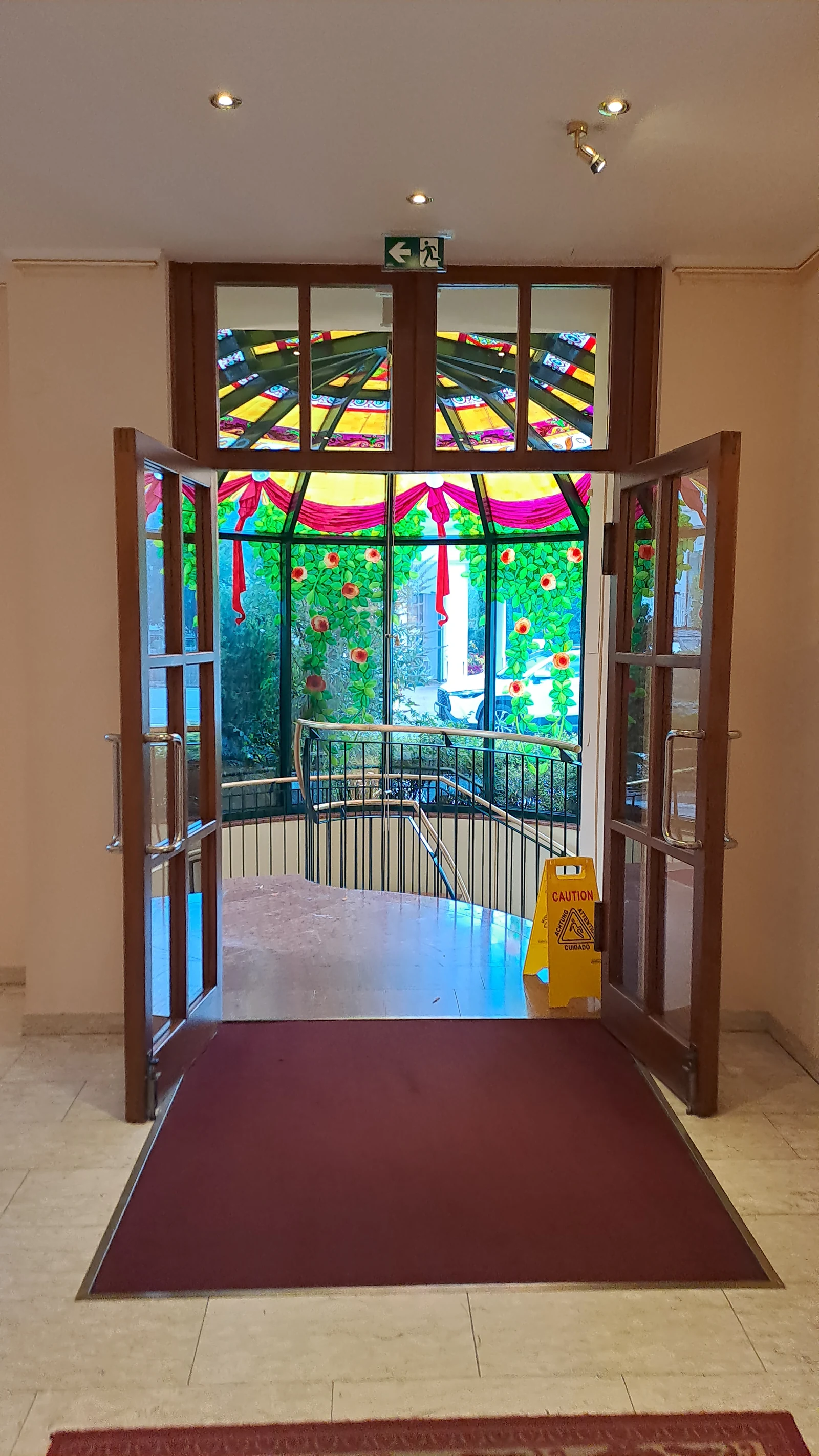
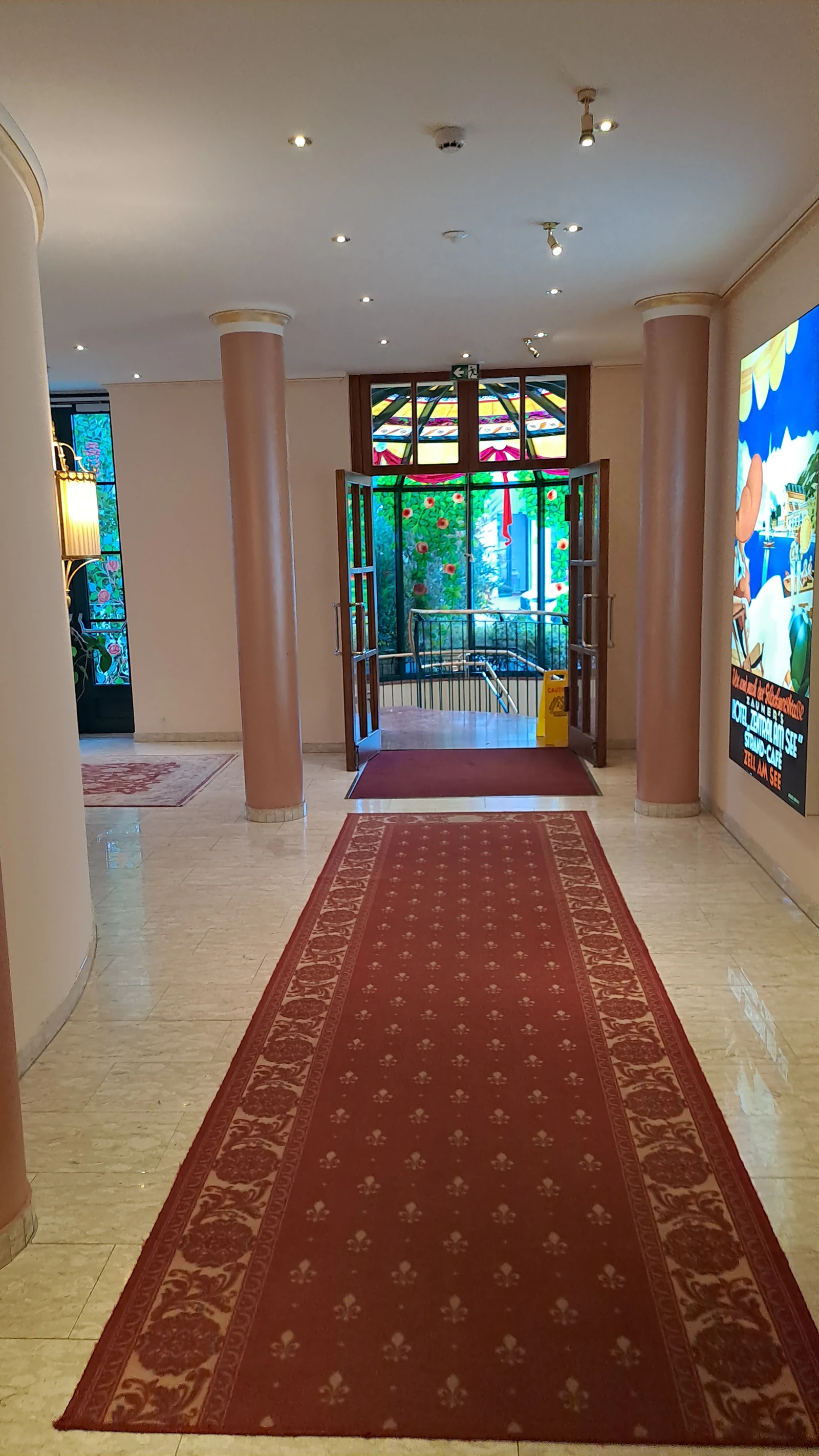
What a guest got in 1903
A guidebook from that year lists it. First rank, on the outermost tip of the peninsula, four minutes from the station. A hundred rooms and thirty-two balconies. A passenger lift, cold and warm baths in the house, heatable rooms. A shady garden with terraces, a boathouse with keel and sailing boats, foreign newspapers, a music and reading room, a dining room seating two hundred and fifty under a seven-metre ceiling.
And, in the garden, playgrounds and a swing for children.
A swing, in the garden, listed in a guidebook in 1903. That is the reason this house is worth writing about as a place to bring a family.
Not a programme. Not a brochure line. A swing.
Then the century did what it does
The First World War turned the hotel into a military hospital. Böhm sold in 1918, to a Viennese buyer named Pischkittel who later took the name Palmer, and inflation ate the proceeds. From spring 1933 the thousand-mark levy cut off the German market, and the family eventually gave the house up.
In 1941 it was sold to a Reich-German association and stopped being a hotel altogether. The municipality objected and got nowhere. Whether anything else lies behind that sale is not settled in the sources available, and we are not going to imply an answer we cannot evidence.
American troops entered Zell am See on 9 May 1945 and requisitioned the building. They ran a university in it for soldiers waiting to go home, then a hospital, then a school, until 1955. Fire in October 1951. Flood in 1965.
In 1955 a Tyrolean ski instructor called Franz Gramshammer bought it, by the hotel's telling for a symbolic schilling, and reopened it into the winter boom. In 1980 it went to a Swedish time-share company.
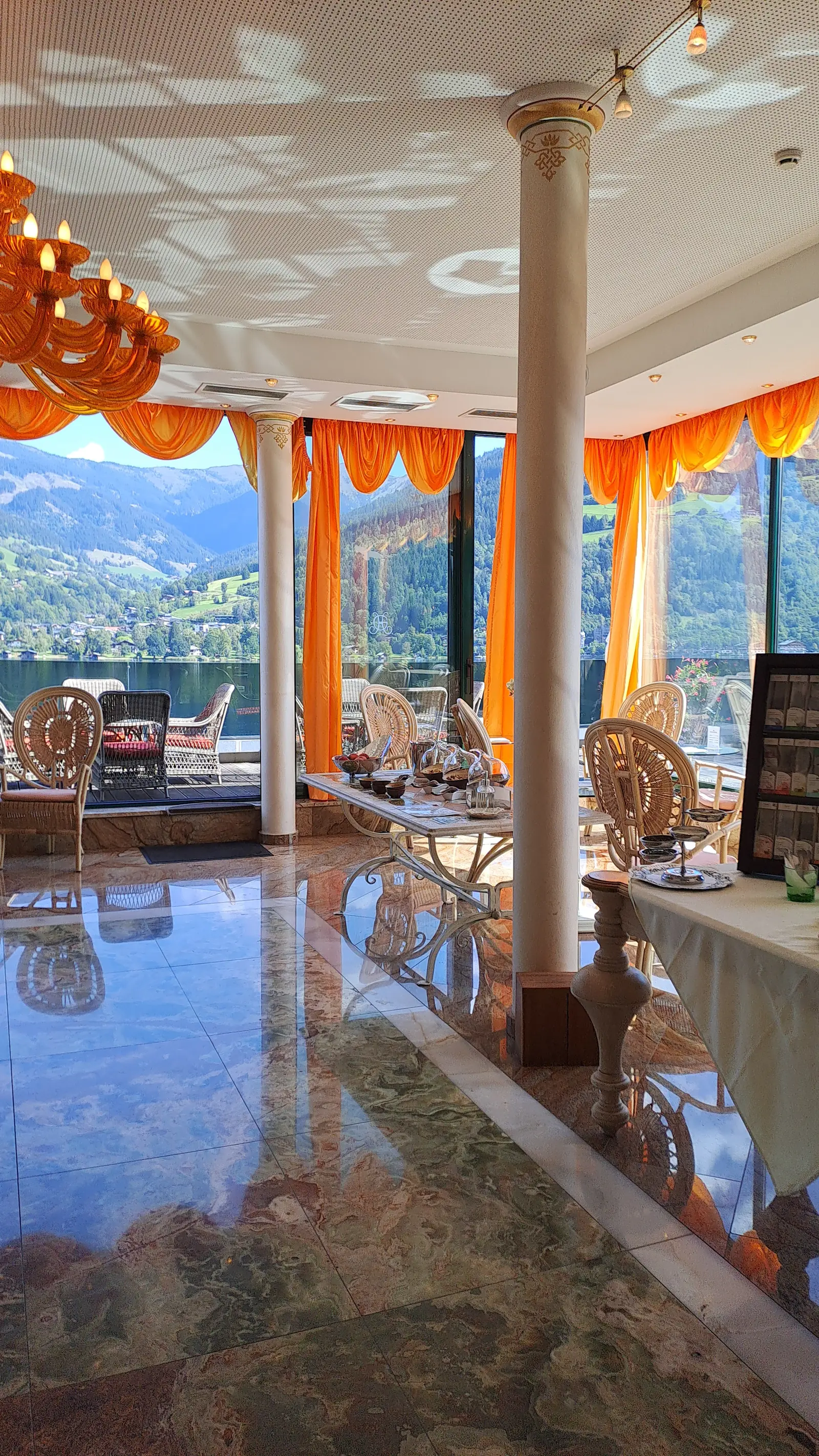
And then they knocked it down
At the end of 1983 the building was demolished to its outer walls. Two Zell architects, Hans Waltl and Wilhelm Holleis, fought it alongside the municipality and lost. Eleven months later it reopened, rebuilt behind the old Ceconi front and sold off as time-share suites. The company went into insolvency proceedings in 1995.
That year the Holleis family, hoteliers in the town, bought the Grand Hotel and the Clima next door and put the two houses back together as one. They have run it since.
So the front is a survivor and the building behind it is not. It is not a protected monument and it would be dishonest to imply otherwise. What has lasted 130 years is a name, a silhouette and a habit of hospitality, which three separate owning families have each had to rescue.
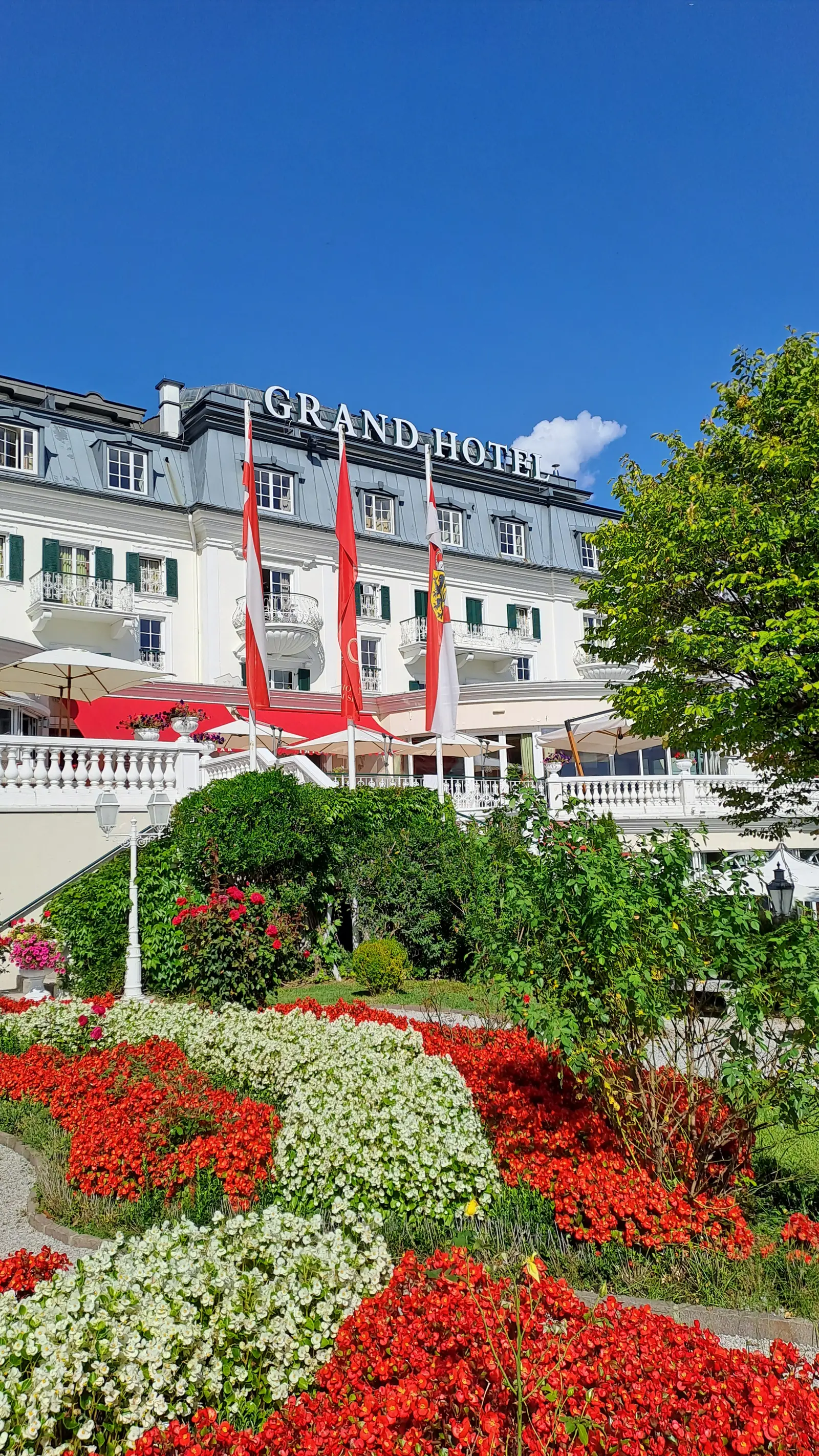
What we actually know
- A hotel has stood on this site since 1876. Carl Böhm bought the bankrupt property in April 1887 and reopened it as the Grandhotel am See on 15 May 1896. The 130 years run from that renaming.
- The architect was Jakob Ceconi, of the Salzburg master-builder family. Baths, a lift, a billiard hall and a telephone were in the house from the outset.
- A guidebook of 1903 records a hundred rooms, thirty-two balconies, a dining room seating 250 under a seven-metre ceiling, a boathouse, and playgrounds with a swing for children.
- Ownership ran Böhm 1887–1918, Pischkittel/Palmer 1918–1941, a Reich-German association from 1941, US military requisition 1945–1955, Franz Gramshammer 1955–1980, a Swedish time-share company 1980–1995, and the Holleis family from 1995.
- The building was demolished to its outer walls at the end of 1983 and rebuilt in eleven months behind the retained façade. It is not on the Bundesdenkmalamt list of protected monuments.
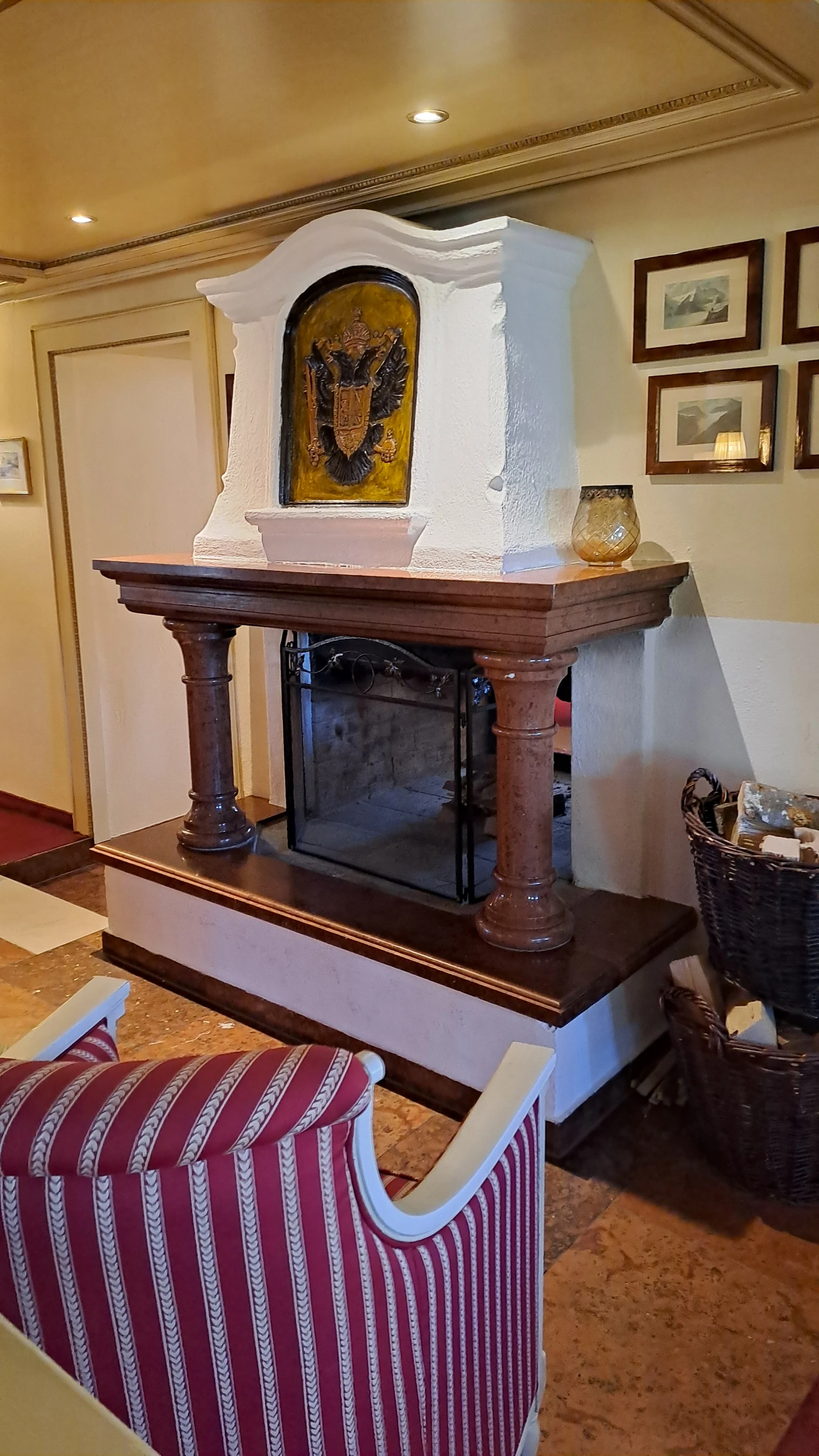
- The Imperial café-bar opened in 1998. The imperial motifs are a decision by the present owners and not a documented connection to the Habsburgs.
- The railway reached Zell am See in 1875 and is what created the resort. The narrow-gauge Pinzgau line opened on 2 January 1898.
The 1941 sale is recorded as a transfer to a Reich-German association, after which the house ceased to operate as a hotel. Nothing in the sources we have seen establishes what lay behind it, and we are not going to characterise it further without archival work.
How this story was made. Photographed on a phone over several days. Nothing here is sponsored, nothing was provided free, and the stay was found, booked and paid for at our own cost. The ownership history comes from the Salzburg regional archive wiki and the hotel’s own jubilee journal, which is identified in the text wherever it is the source. Bernhard Barta’s Zell am See und sein Grand Hotel, published by Böhlau, is the book to read if this interests you.
Independent and self-funded. Atlántis is not sponsored by design: not affiliated, not a paid placement, and nobody we write about knew in advance. Everything on this page was found, booked and paid for at our own cost. The views are our own, judged against the Atlántis values: sustainability, cultural immersion, eco travel, real experiences, family-friendliness, and car-free travel or the deep past, depending on the place.