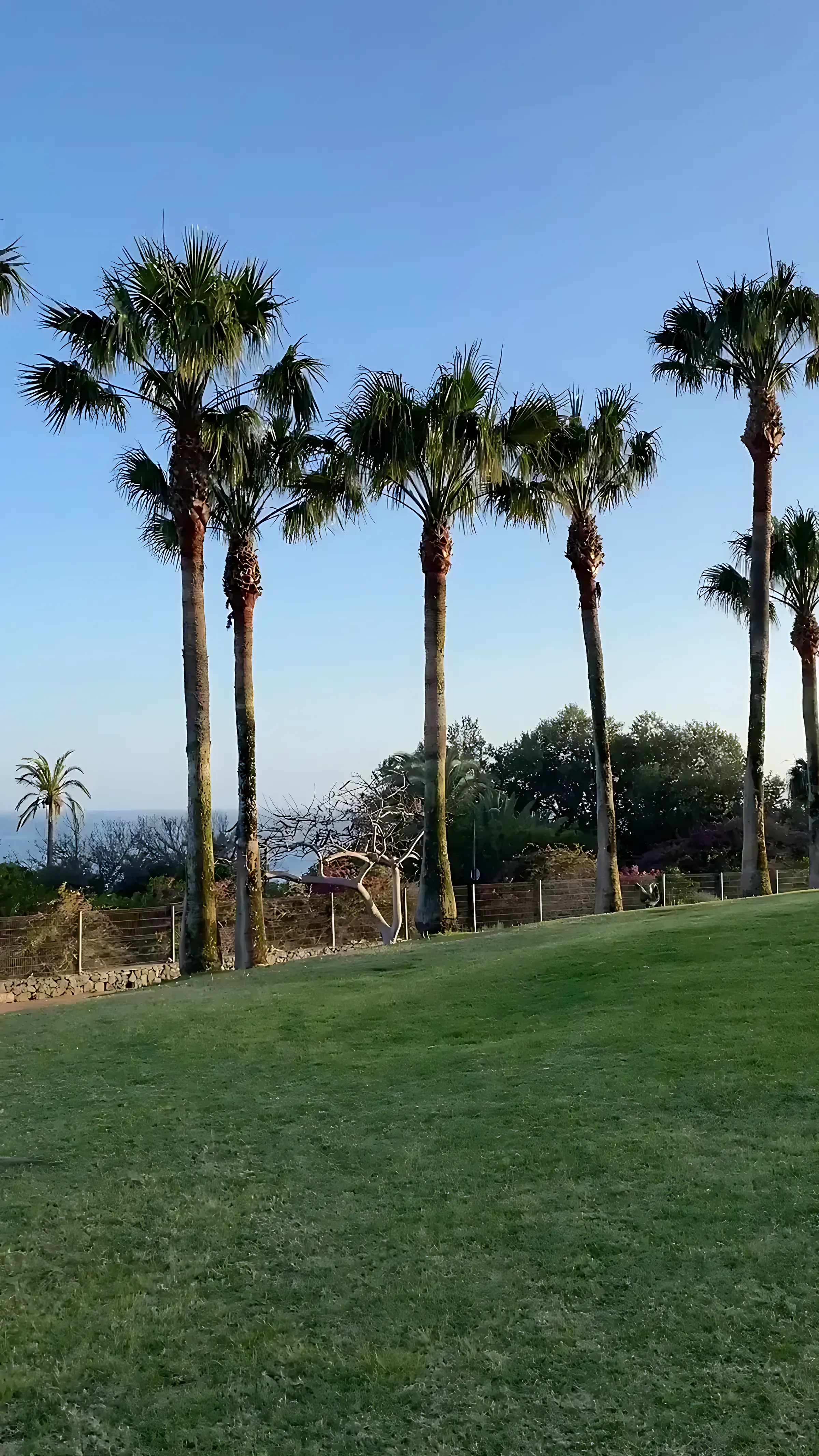
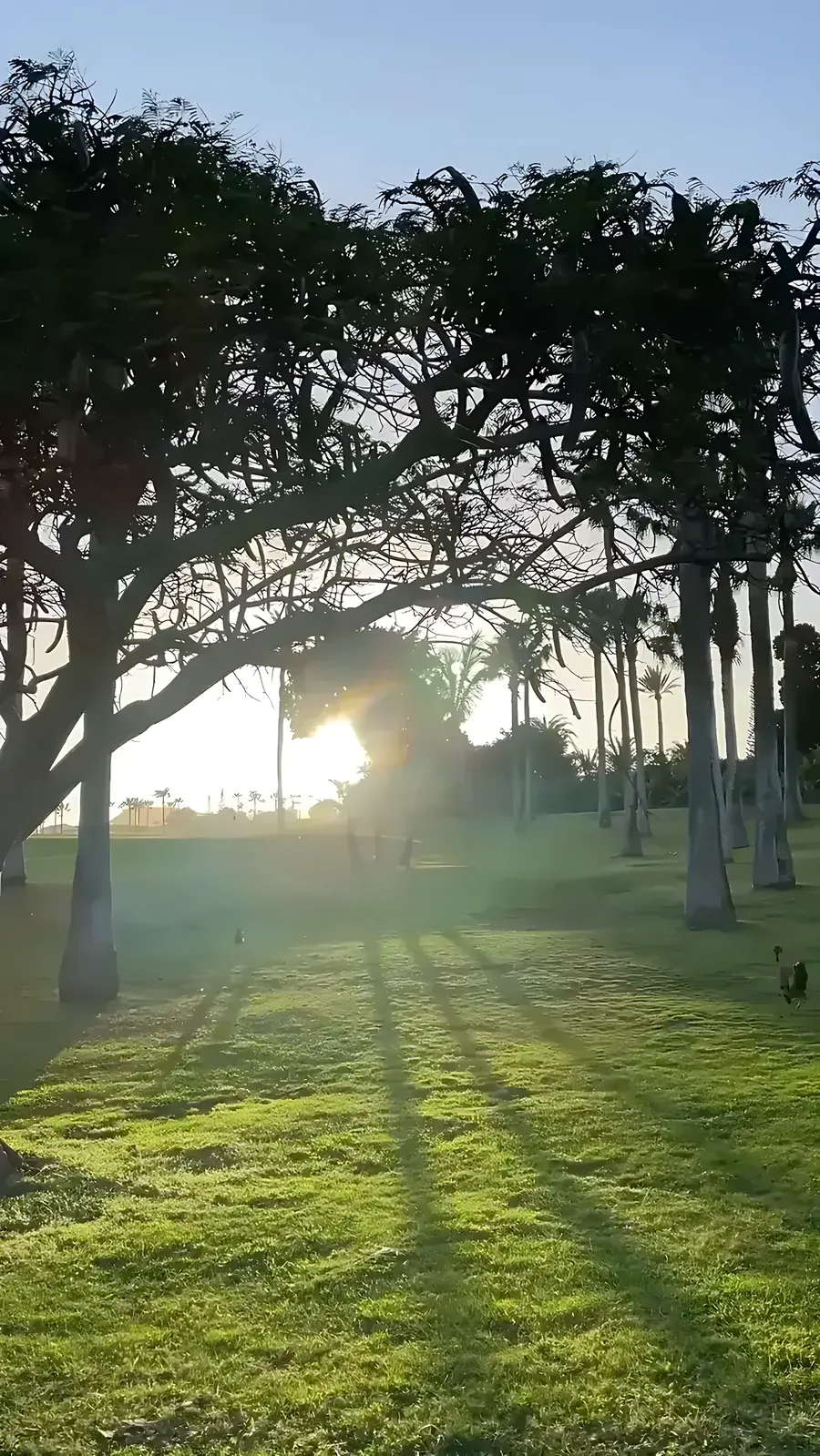
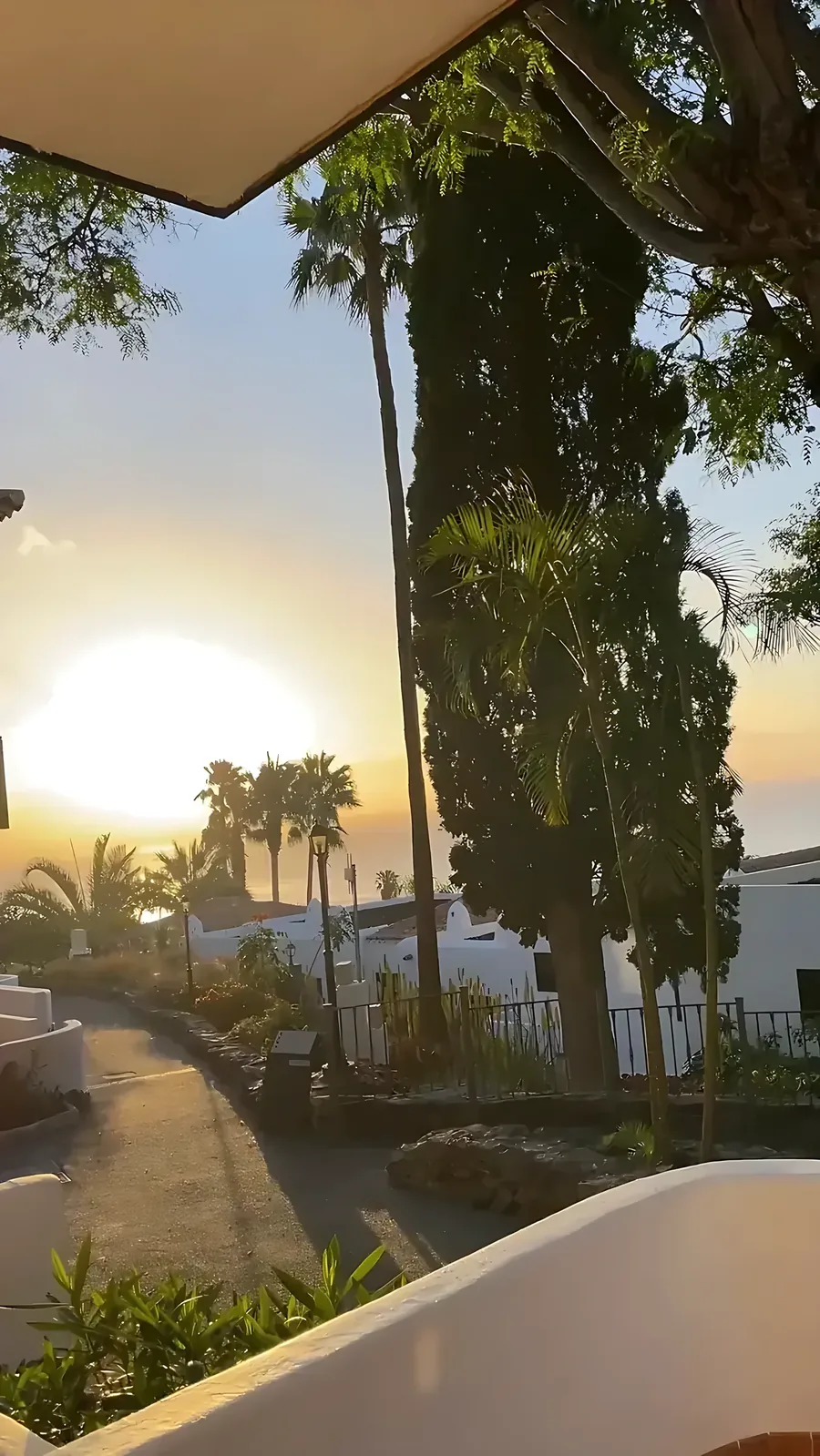
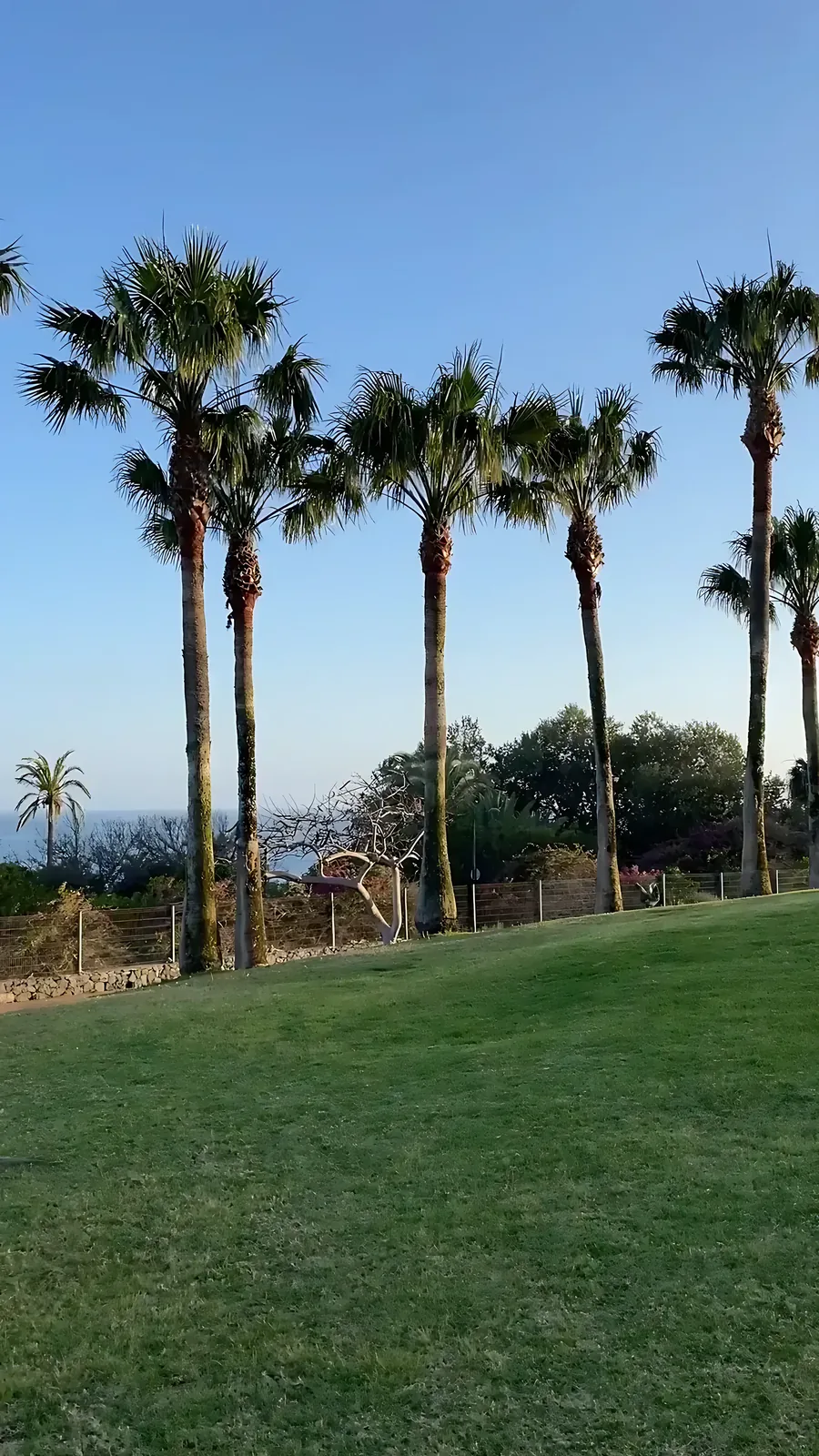
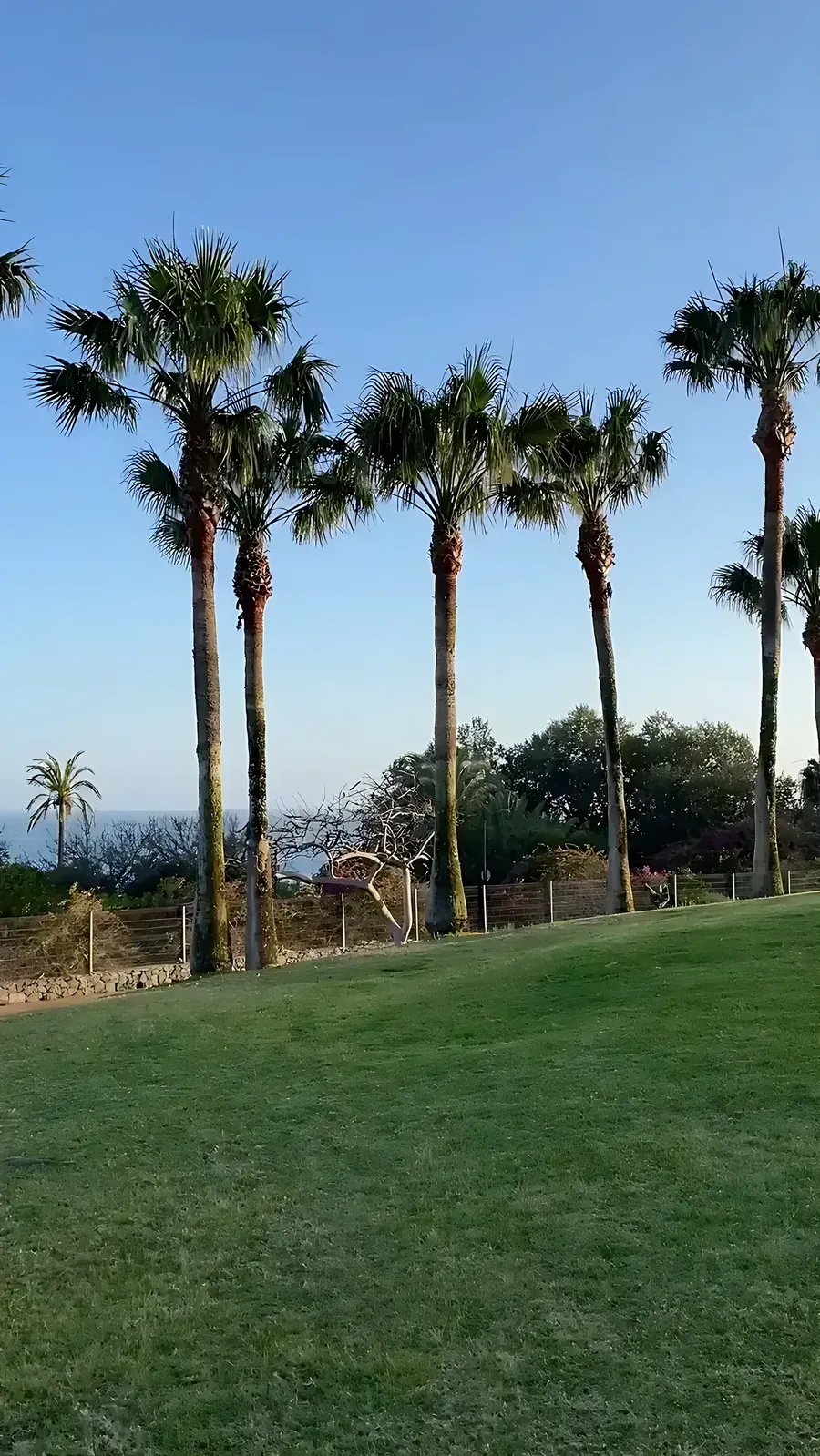
The light goes last across the grass. For twenty minutes before the sun drops into the Atlantic it comes in low under the trees, almost horizontal, and everything it touches is given a shadow four times its own length. The palm trunks. The flamboyant. A watering can somebody left out. Then it goes, quickly, the way it goes at this latitude, and the lawn turns blue.
It is the most ordinary thing a garden does anywhere in the world. What made it worth sitting still for was knowing what this ground was for before it was a lawn.
They came for bananas
In 1904 a Norwegian shipping family arrived on the dry southern coast of La Gomera and began farming it. Not as a retreat and not as a project. They wanted fruit they could put on boats.
With the Spanish firm Rodríguez López they built the Tecina estate into a working farm, with sheds for packing bananas and tomatoes, and a small pier to load them from. The produce went north to Europe. The family was called Olsen, and their ships are still the reason anybody can reach this island without flying.
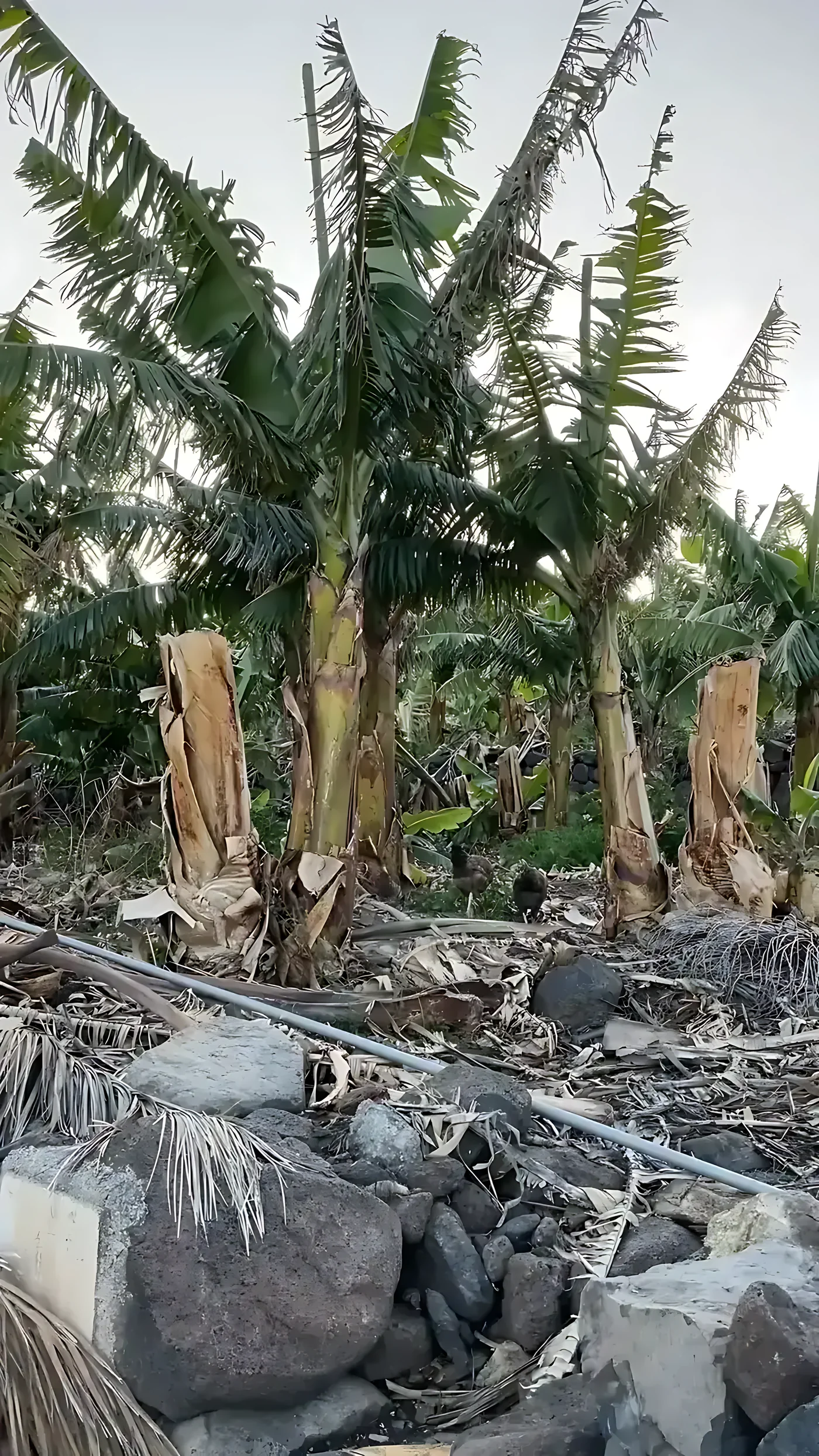
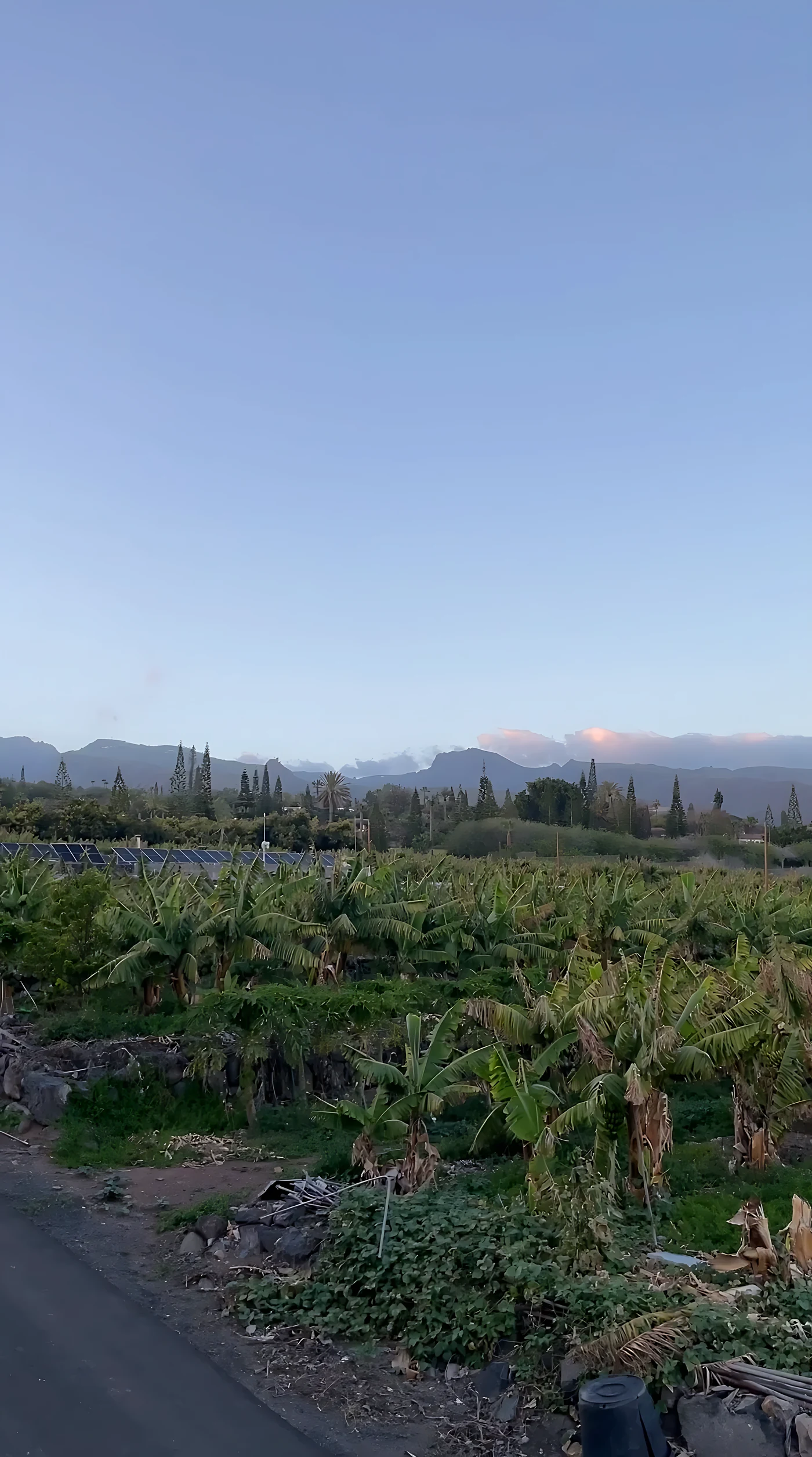
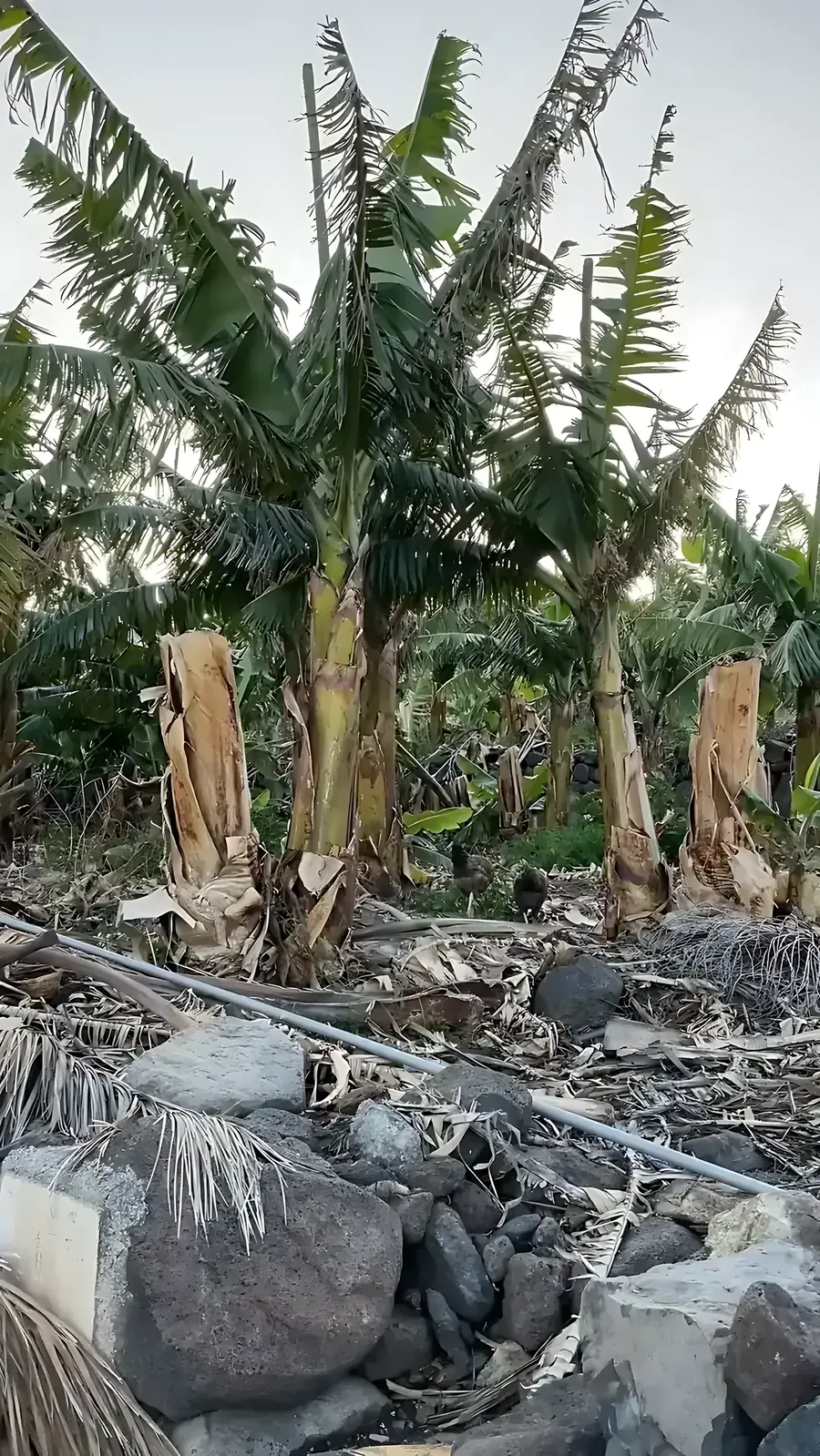
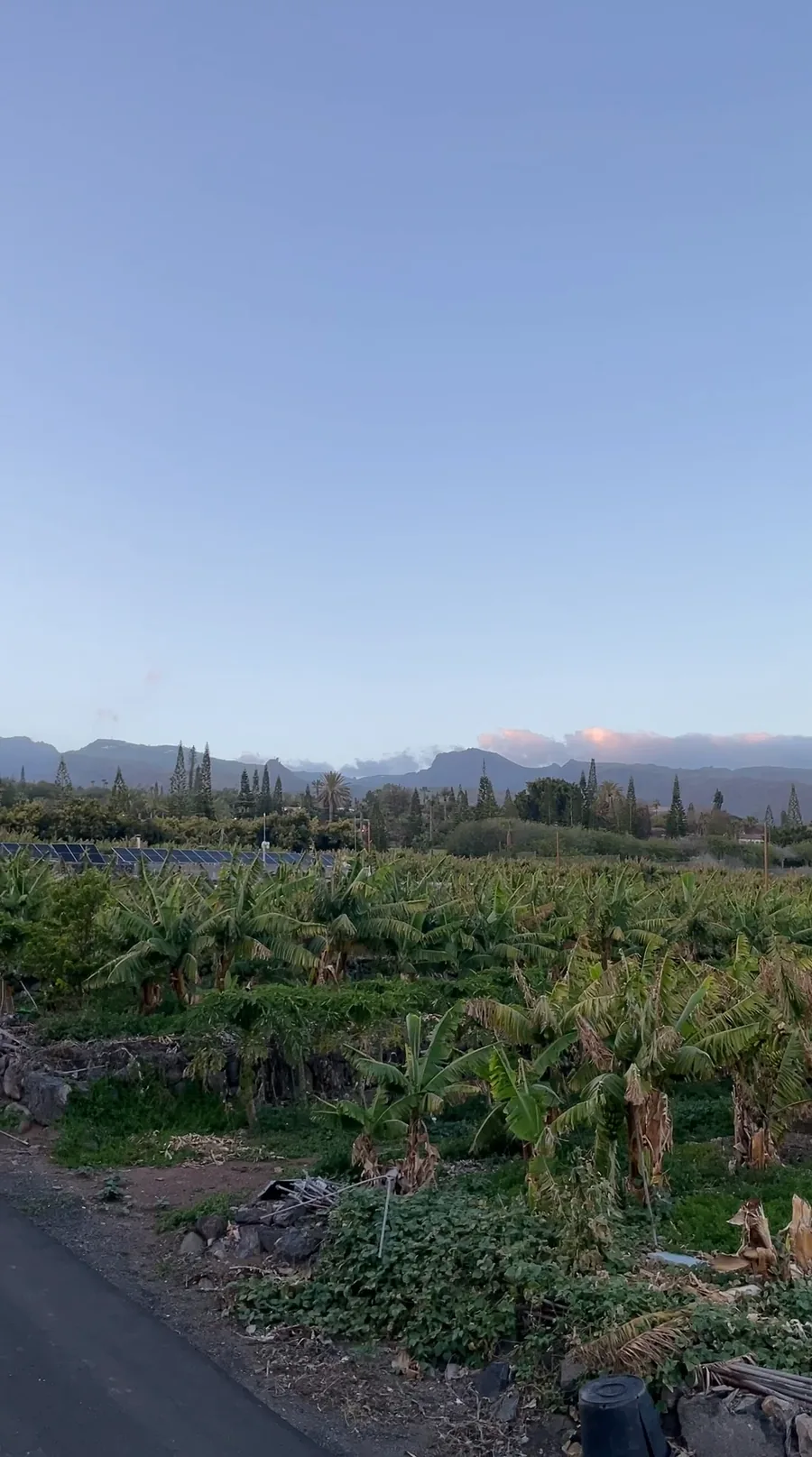
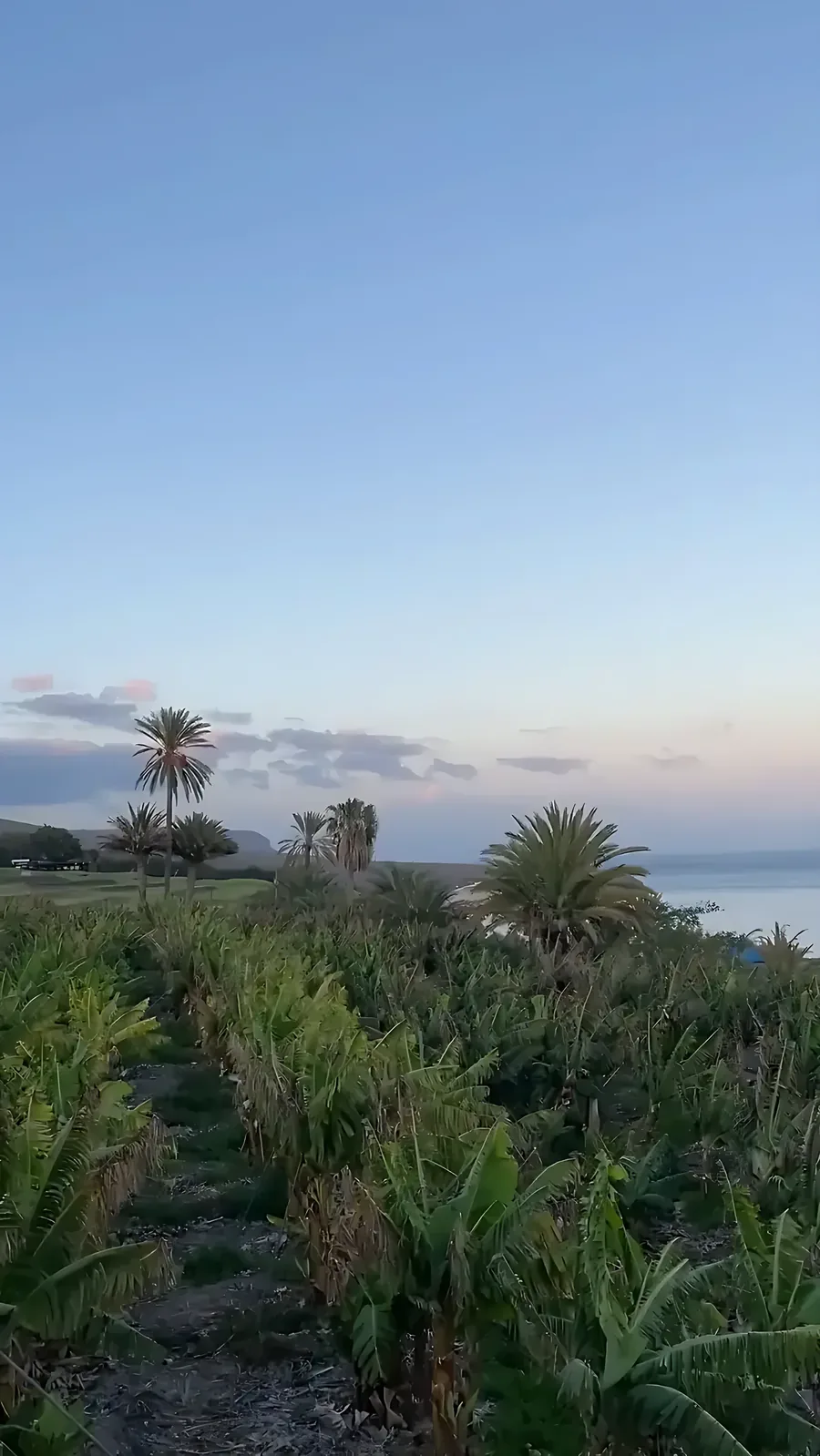
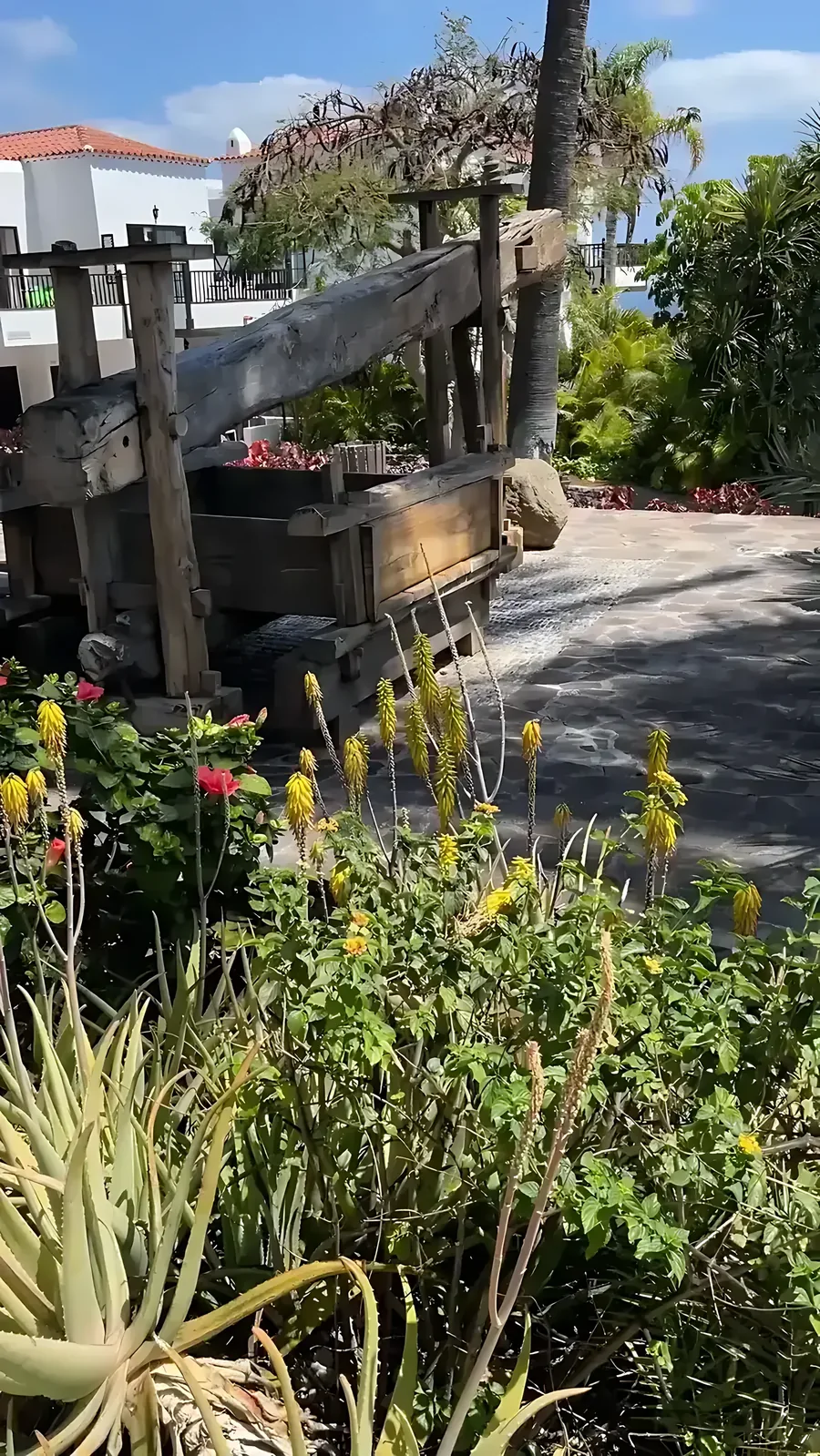
The hotel is named after the farm. Walk down the hill from the lawn and the plantations are still there, terraced into the slope in the way everything is terraced here, banana stems leaning against volcanic stone, cut fronds stacked to dry.
A family came here for fruit and stayed four generations. The lawn is the newest thing on the land.
The village happened because a volcano went off somewhere else
On 18 November 1909 Chinyero erupted on Tenerife, thirty kilometres away across the water. People crossed the strait and settled this coast, and what they did here was fish.
They were good at it. By the 1930s the island supported three canning factories at the same time. Rodríguez López built the last of them, Santa Rosalía, in 1931: roe, mackerel in tomato, tuna, bonito, sardines, and fishmeal from what was left. The fishermen’s wives and daughters worked the lines.
Then the detail that tells you what kind of place this was. During the Civil War the boats bringing coin stopped being reliable, so Playa de Santiago issued its own vouchers, in twenty-five and fifty cent denominations, and for a while people settled accounts in fish.
For a time this was the most modern corner of La Gomera. Electricity before anywhere else on the island. A hospital. A cinema. A five-hundred-metre airstrip cut into the flat ground above the sea.
And then, in the 1960s and 70s, the canneries closed and the export agriculture collapsed, and eleven hundred people had to work out what to do next.
The village is underneath you the whole time
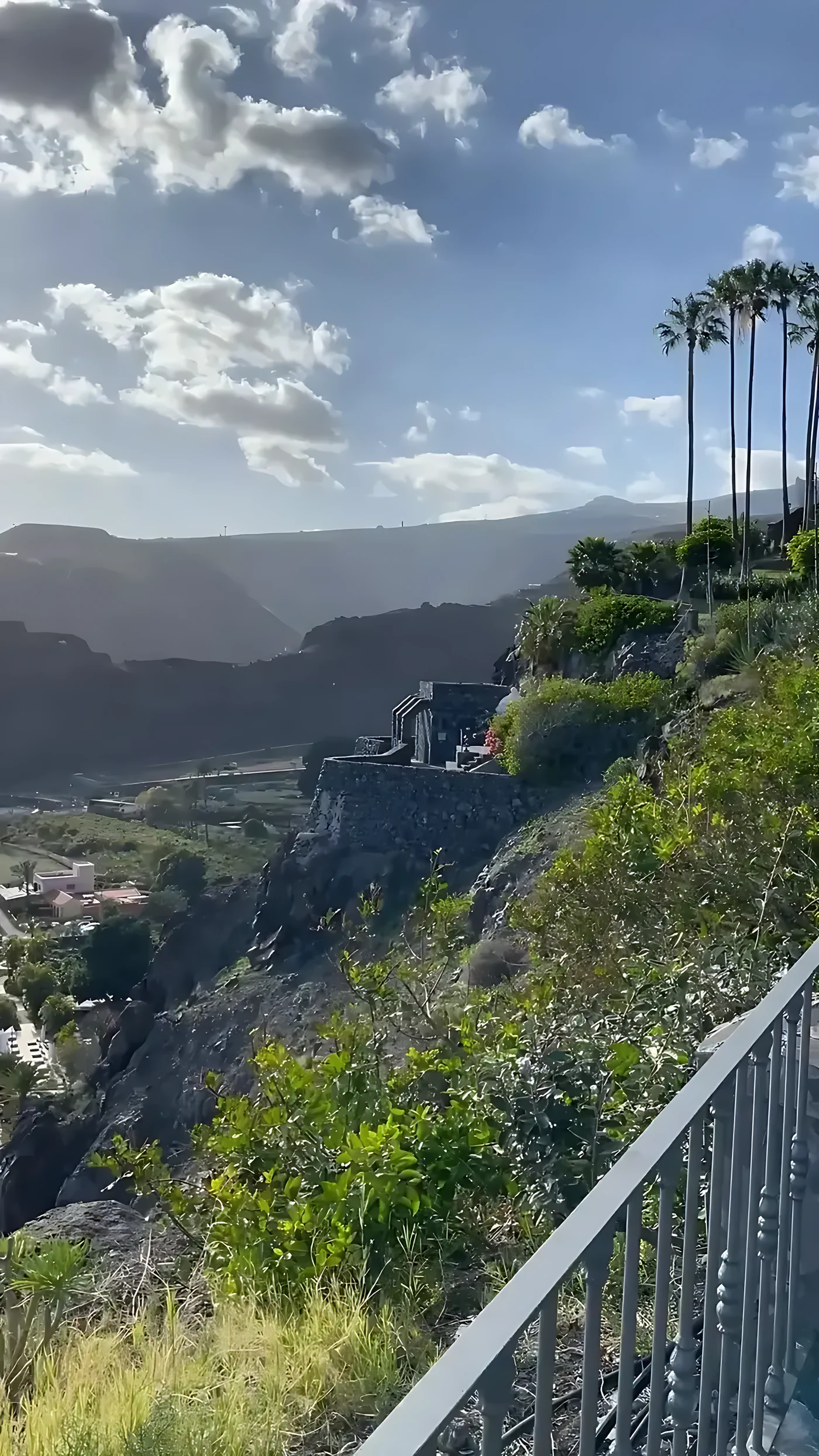
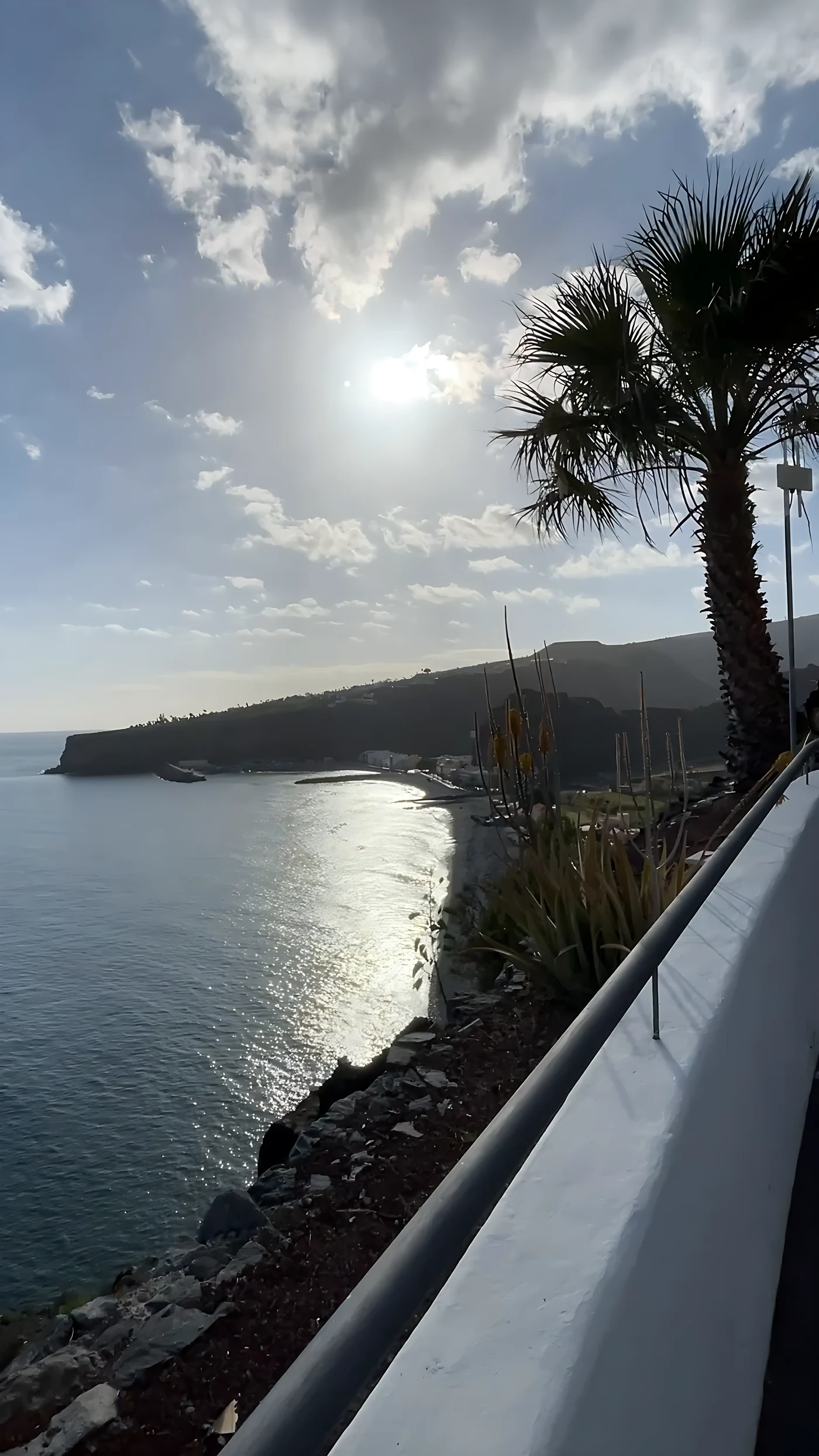
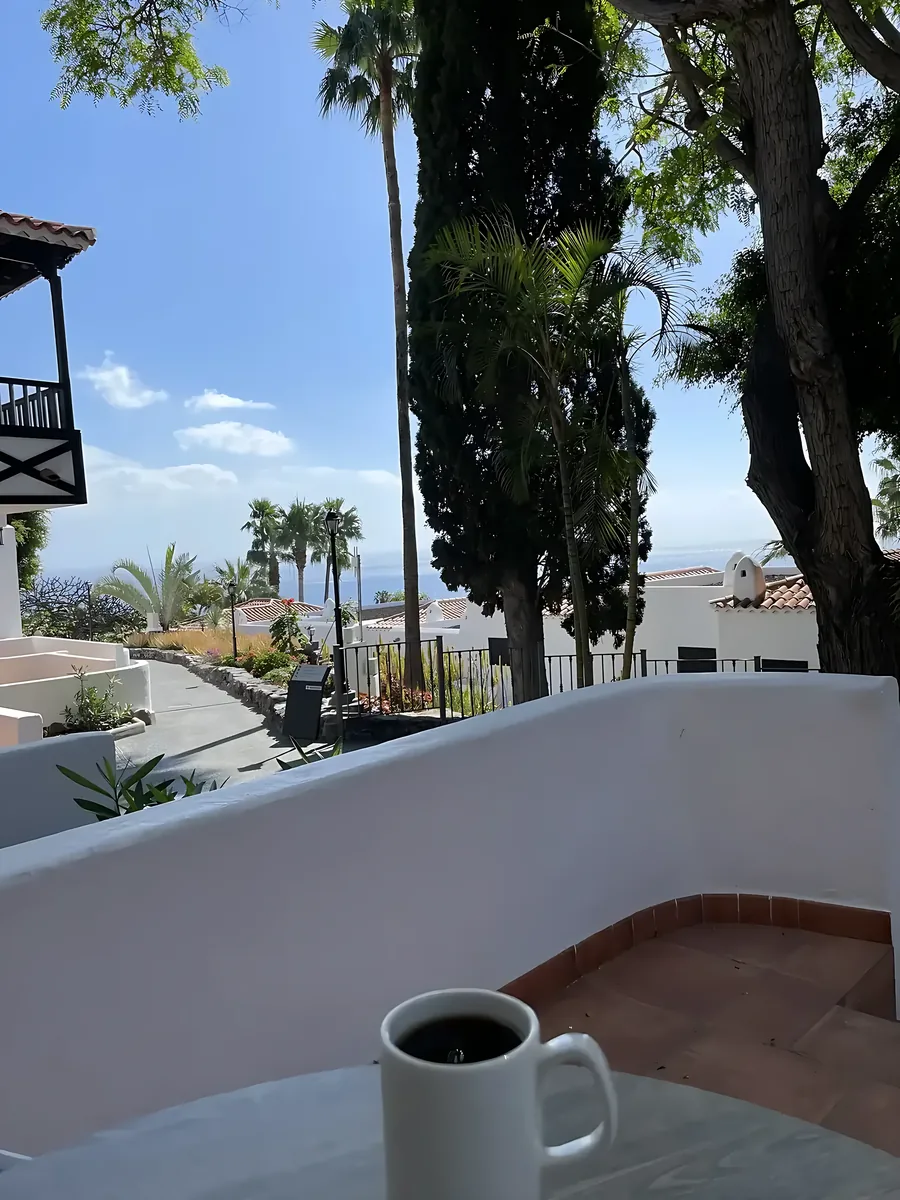
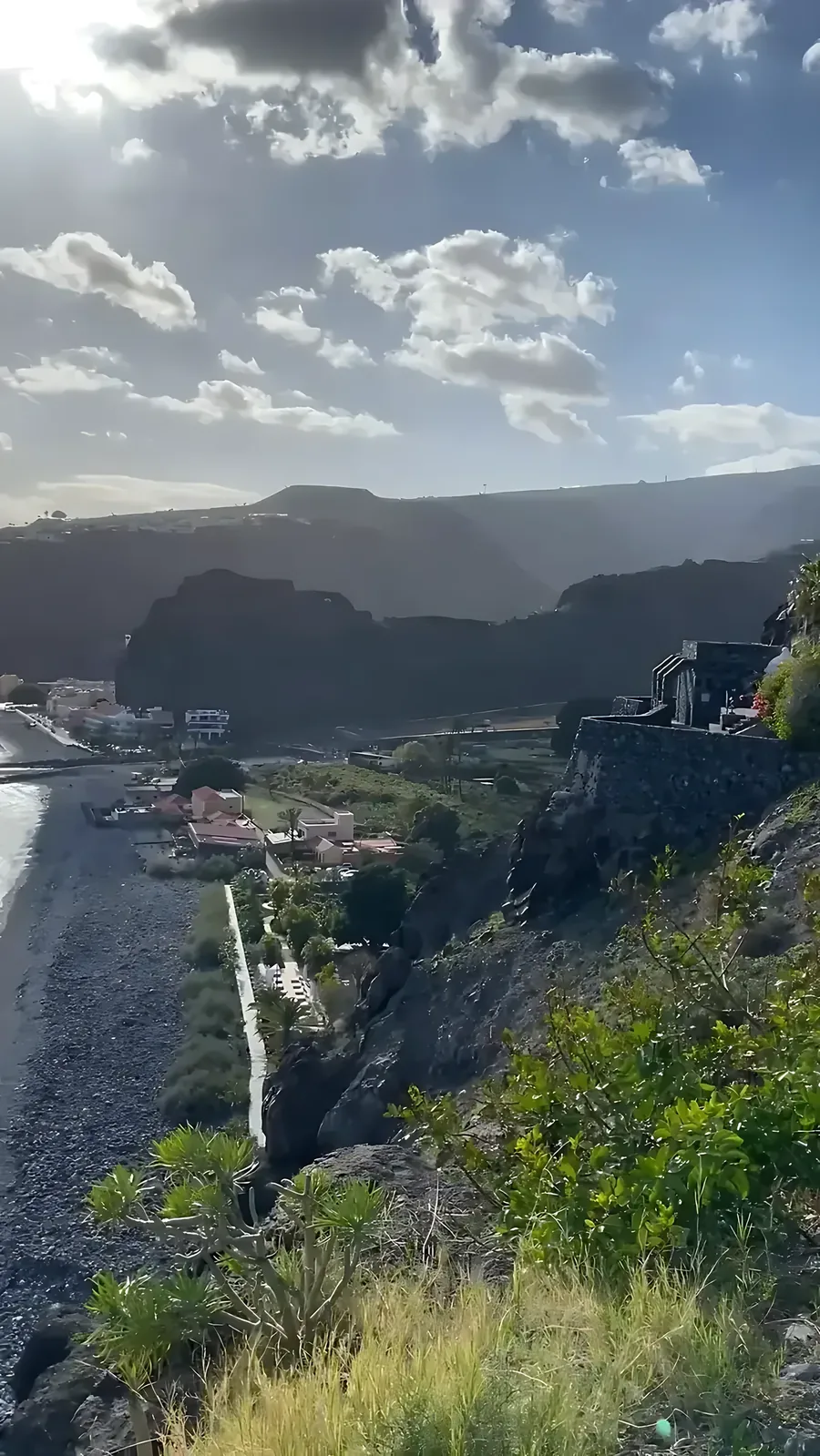
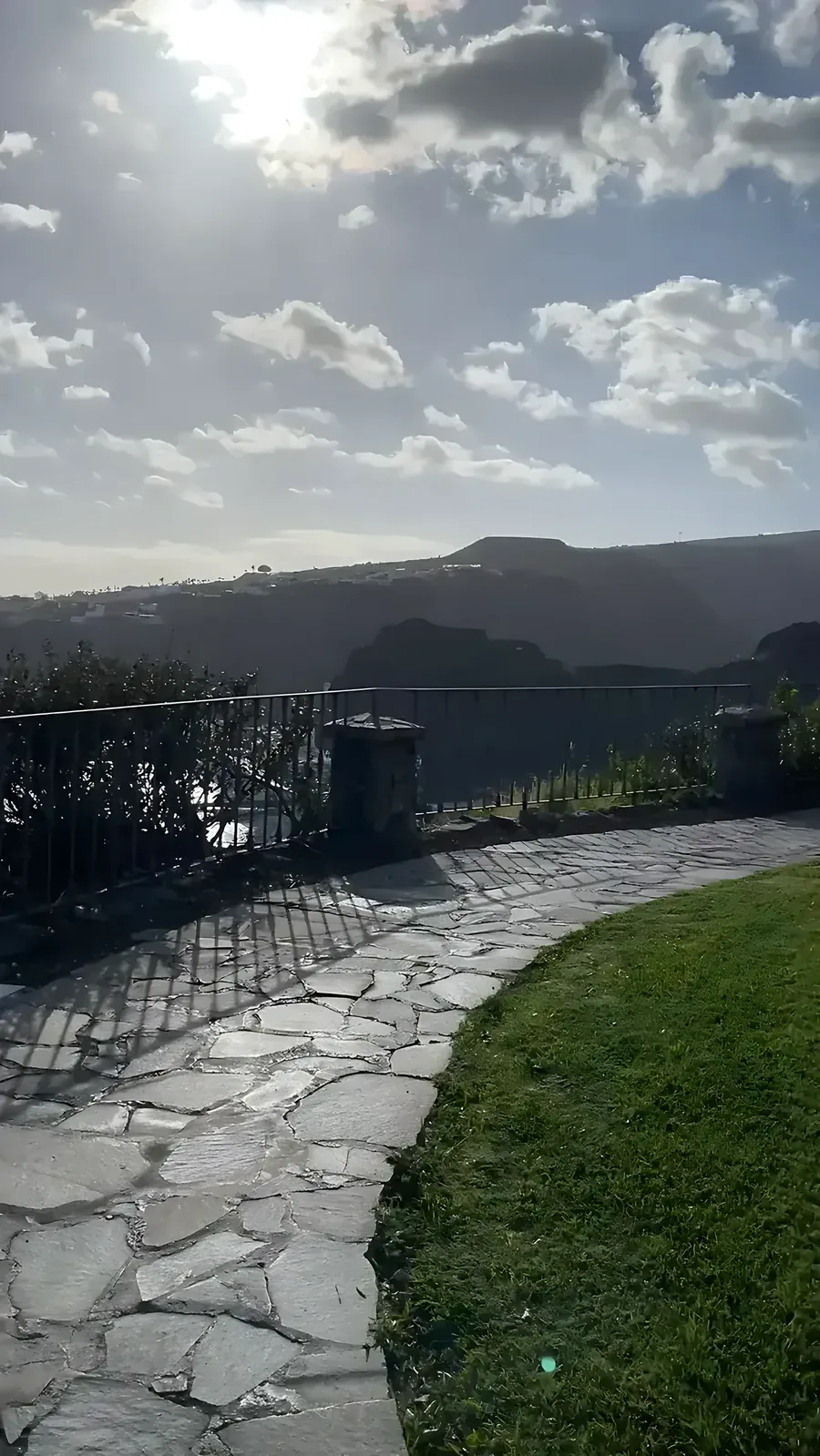
From the lawn you get the sea, the ridge across the ravine, and the place the light lands at seven. You do not get Playa de Santiago. It is directly below, tucked under the lip of the cliff, and the only way to meet it is to go down.
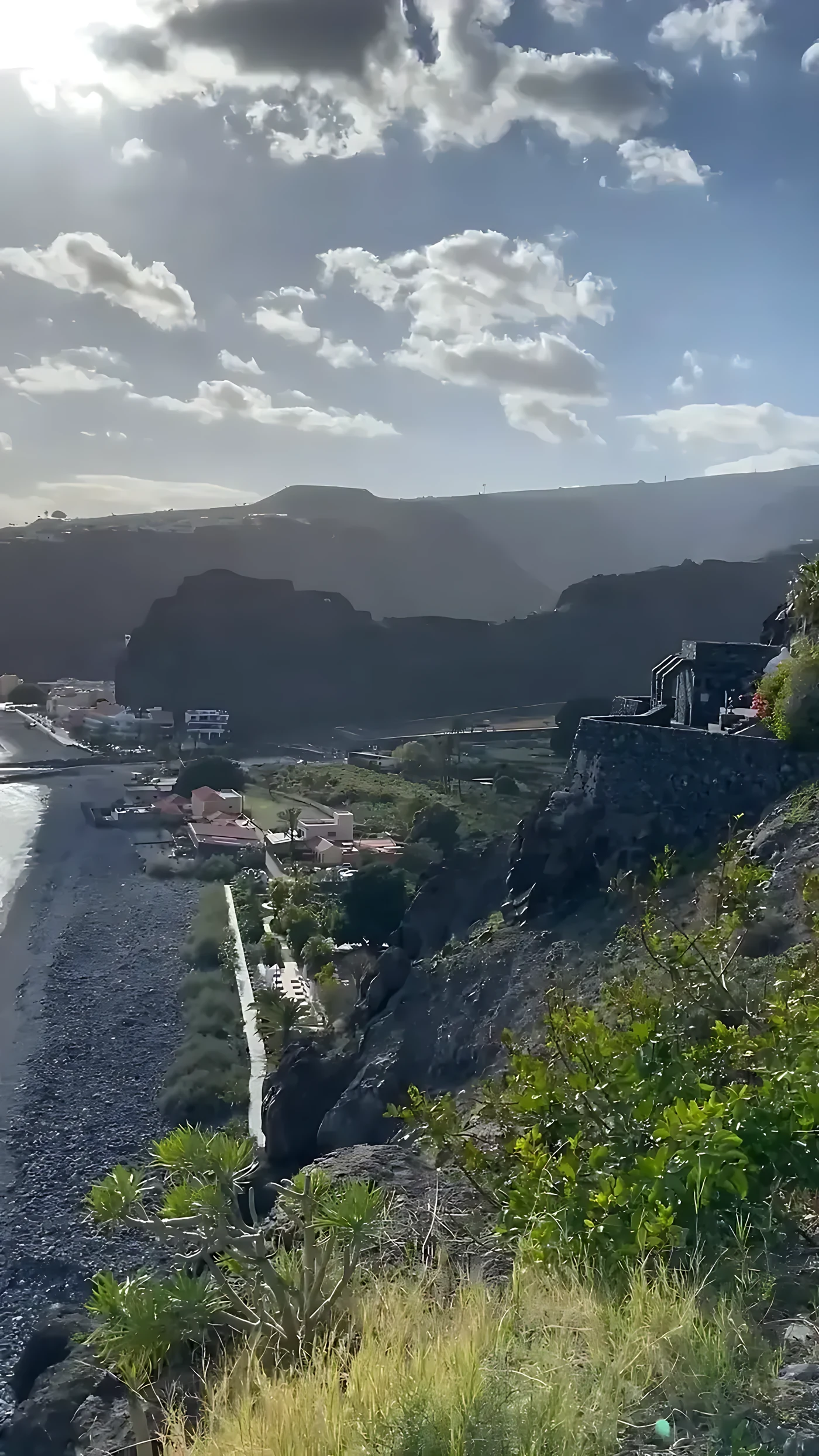
What is down there is not pretty in the way other islands are pretty. The beach is grey-black, pebble rather than sand, and it holds the day’s heat long after the sun has gone off it. The stones roll under the backwash with a sound like distant applause. Behind the beach the village runs along the shore, white and ochre, a few streets deep at most, and then the land stands up and goes almost vertical.
The ravine explains everything else. Every settlement on this coast sits where a barranco reaches the sea, because that is where water came out and where soil collected, and nowhere else would have them. Stand on the beach and look back, and you can read the whole logic of the place in one go: the green strip in the floor of the ravine where things will grow, the terraces stepping up both sides where people made more of it by hand, the pale line of a railed walkway laid along the back of the beach by somebody who decided people should be able to walk there, and then the flat top of the ridge where, eventually, somebody cut an airstrip into the only level ground for miles.
The beach is dark, the cliff is enormous, and the village is exactly as big as the ravine allowed it to be.
It is a working village before it is a view. Fishing boats, a harbour arm, restaurants that open when they open. The eleven hundred people who live here are not the setting for somebody’s holiday; the hotel on the cliff is the largest thing that happened to them after the canneries shut, and both of those sentences are true at the same time, which is the part worth sitting with.
What is actually here
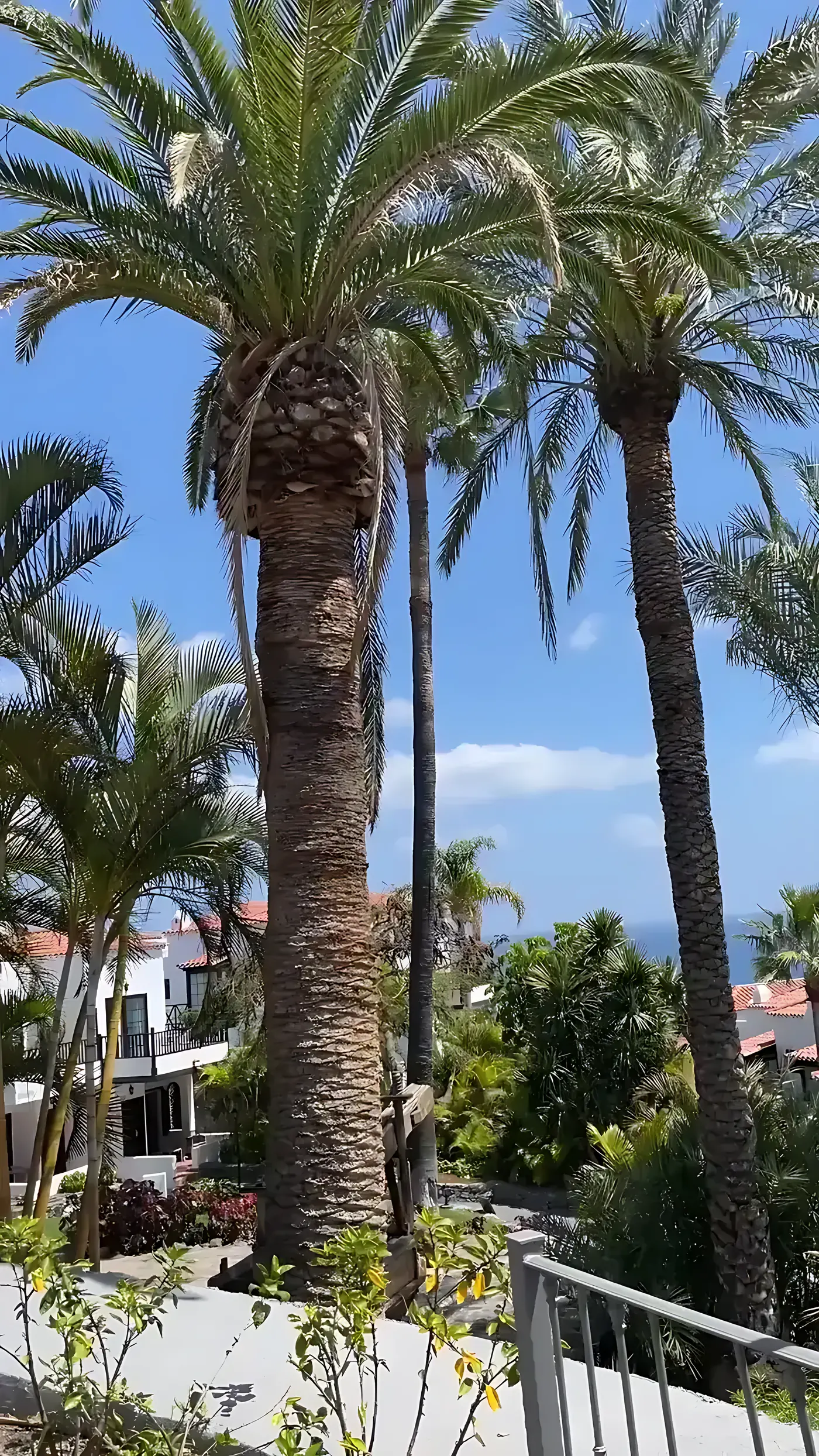
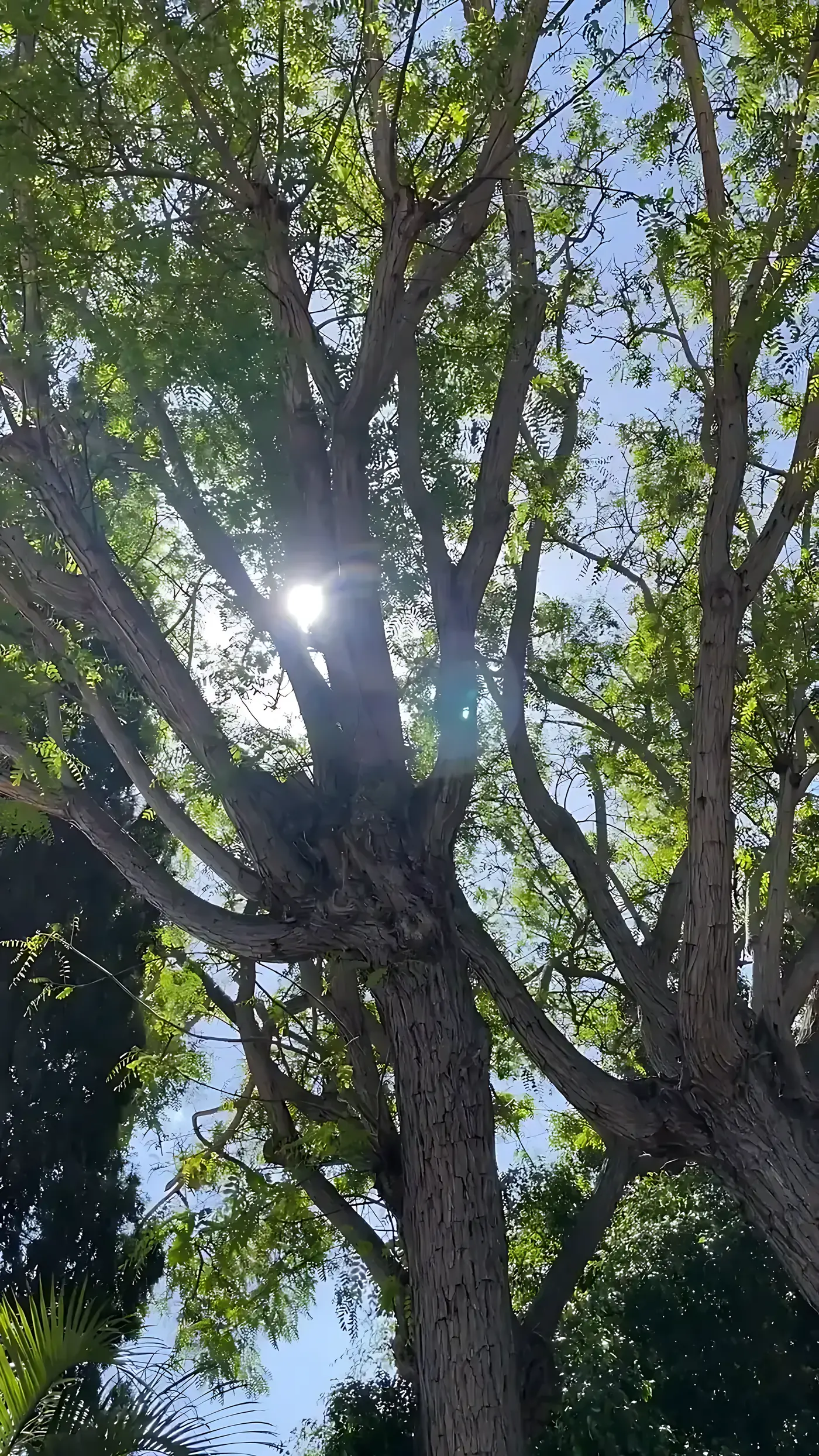
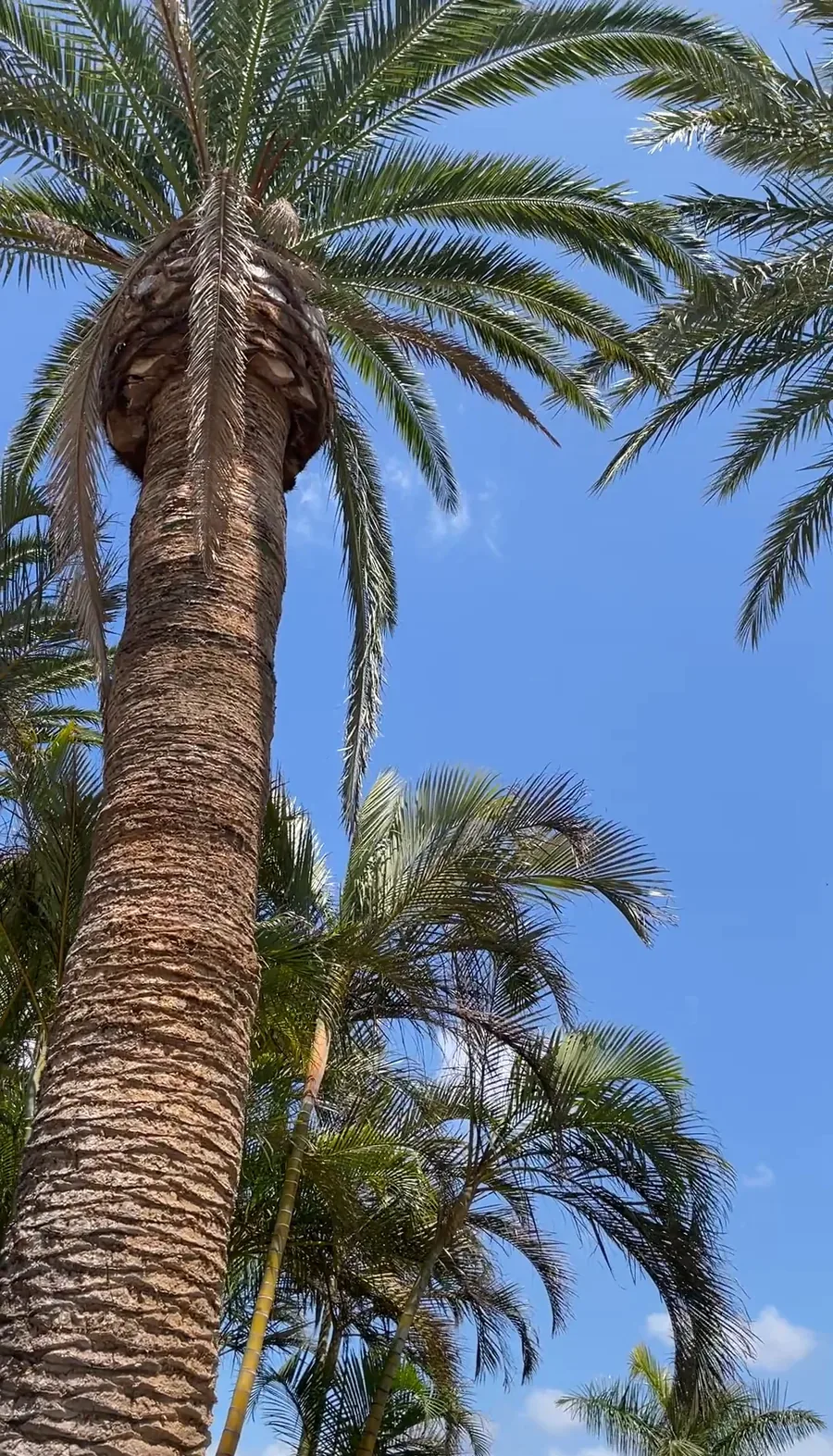
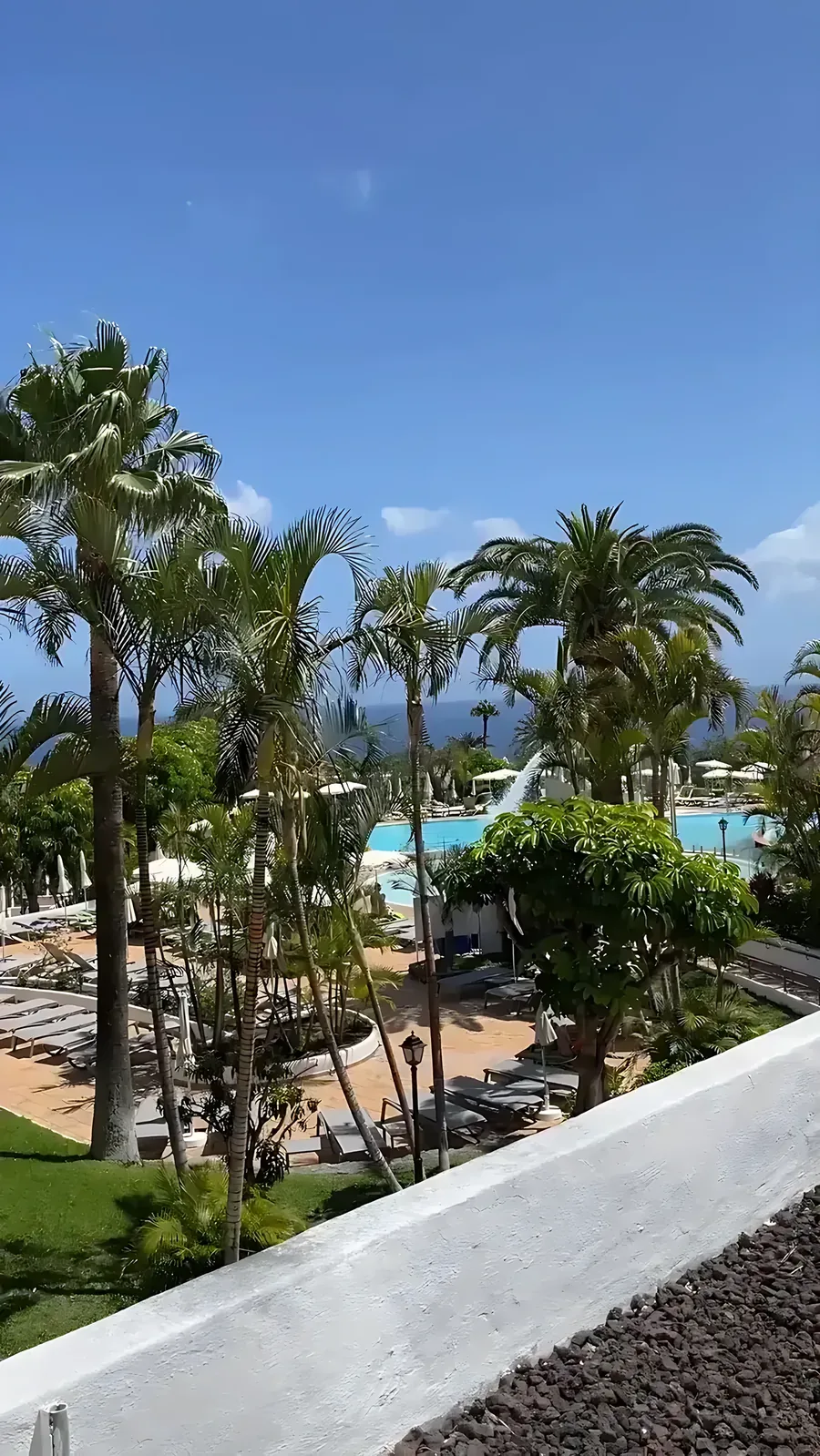
Seventy thousand square metres of ground, half of it planted. Canary palm, which belongs here, and then dozens of species that do not: things from Vietnam, Brazil, India, Australia, collected and put in the soil by somebody who wanted to see what would happen.
That is worth saying plainly rather than calling it botanical. It is a collection, assembled deliberately over decades on a slope that grows very little without help, and walking through it you are walking through somebody’s long argument with an arid climate.
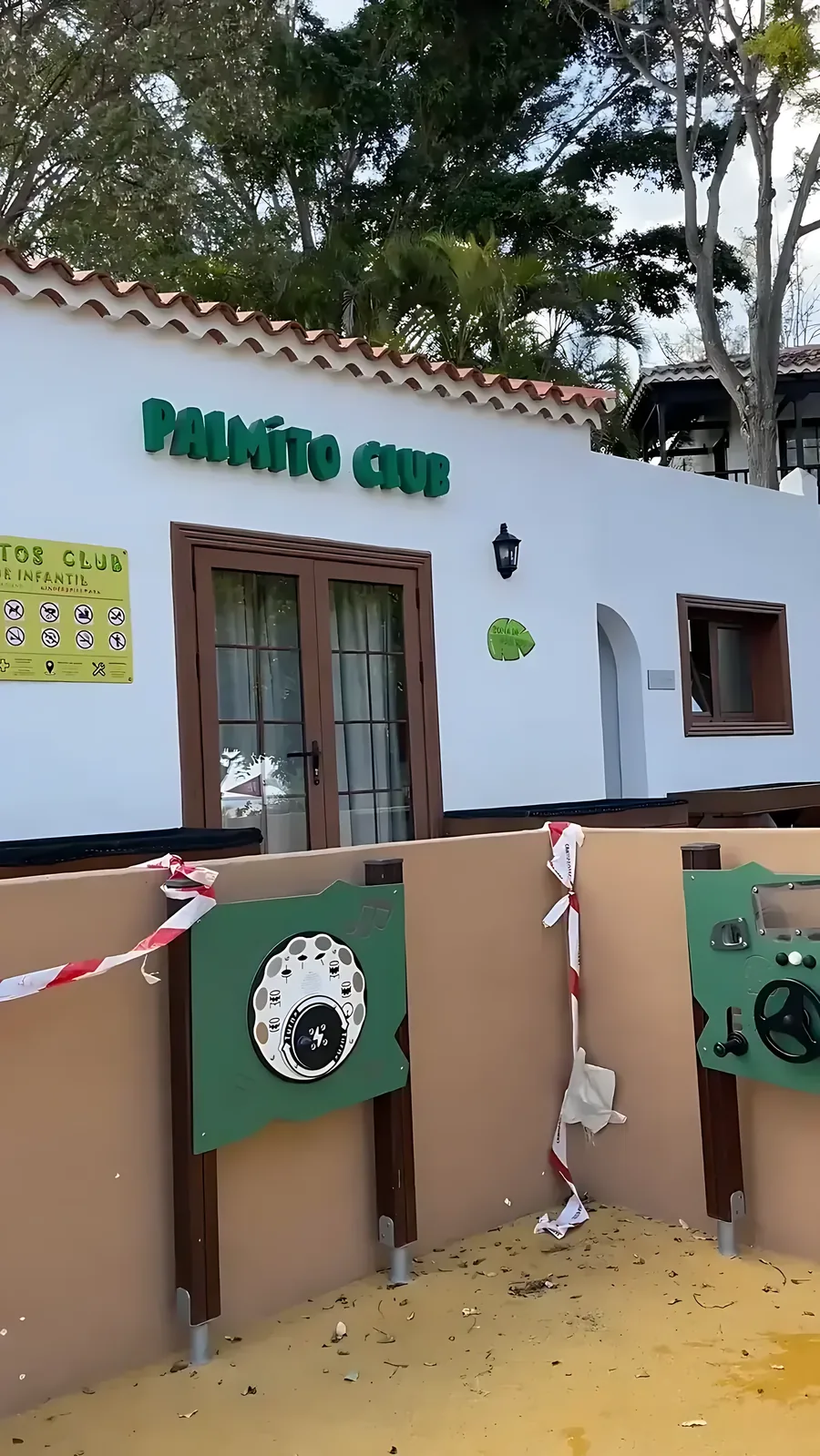
Ten kilometres of path run through it, which is a strange figure for seventy thousand square metres until you stand on the slope and understand that nothing here is flat. The paths are the reason the garden is a place you can walk rather than a thing you look at, and they are also the reason a child can be let loose in it: it is enclosed, it is all one property, and the drop is fenced.
Twenty-four frames
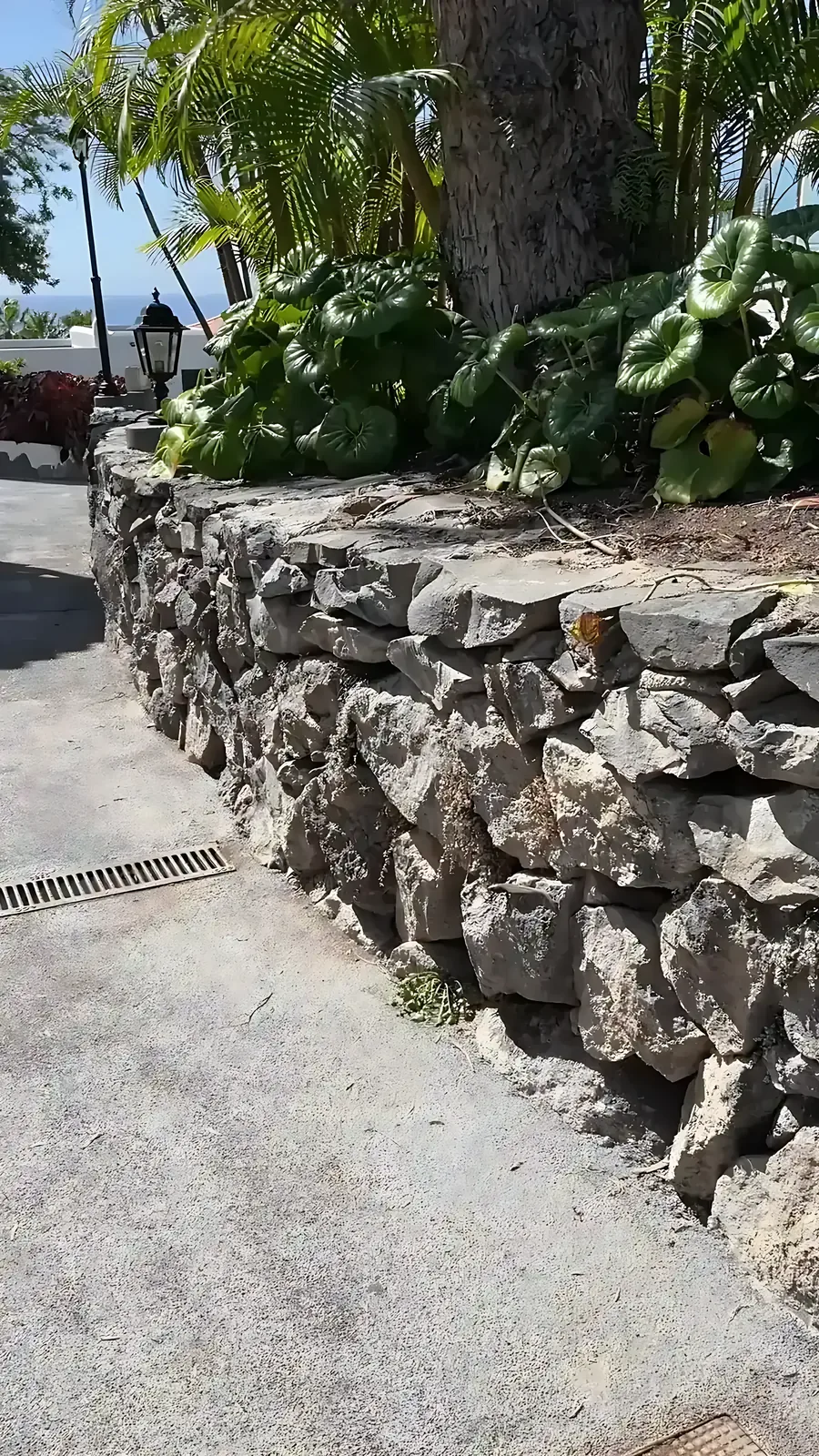
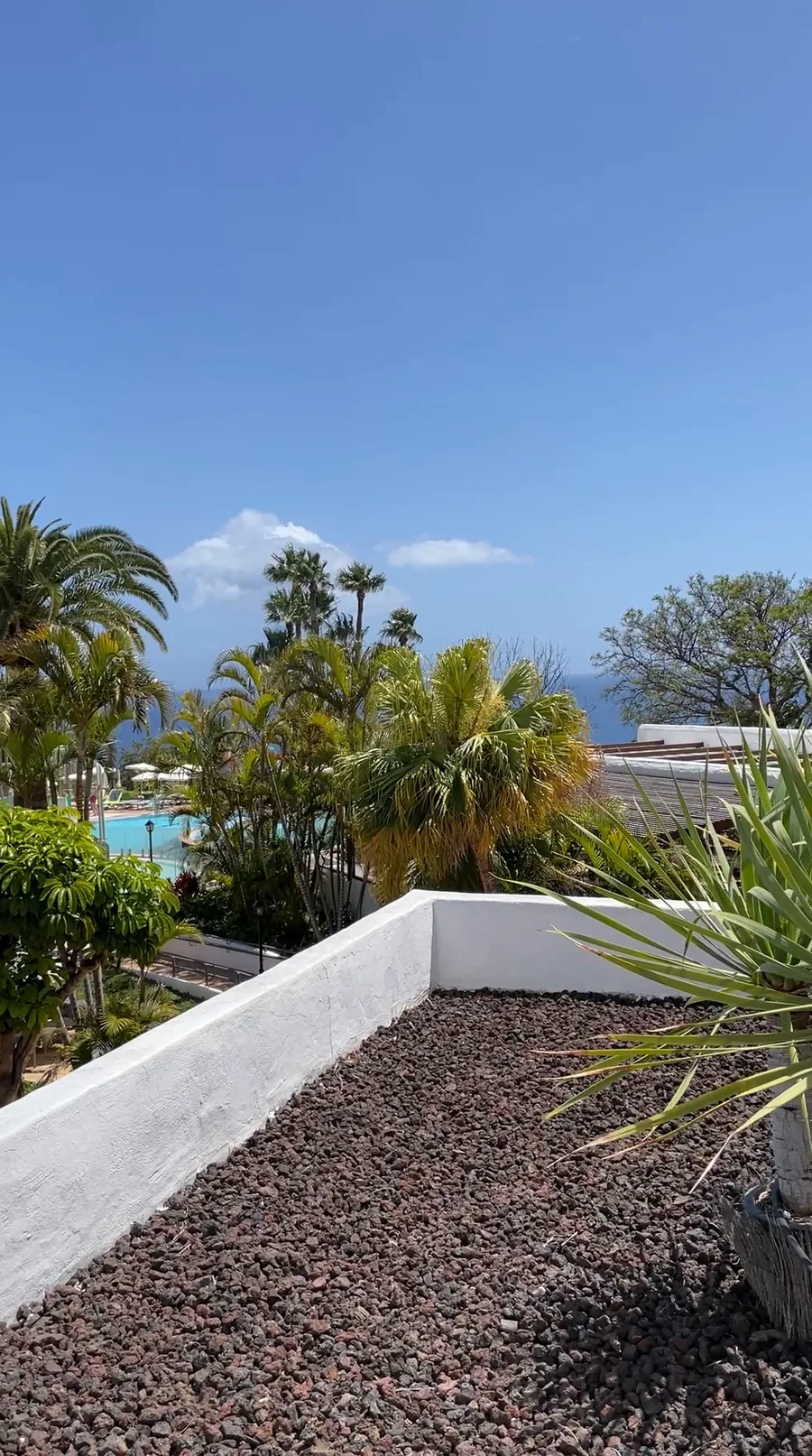
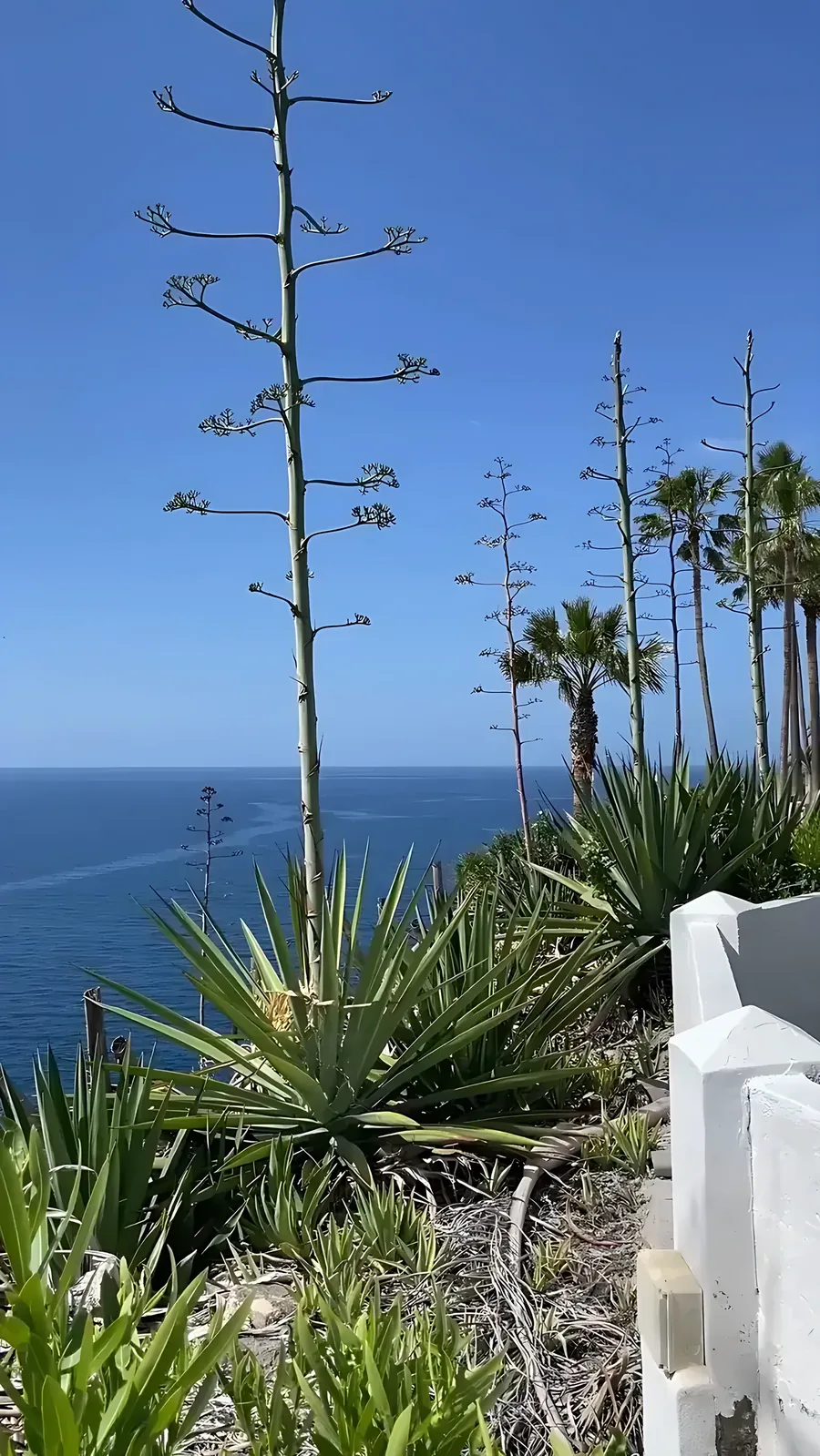
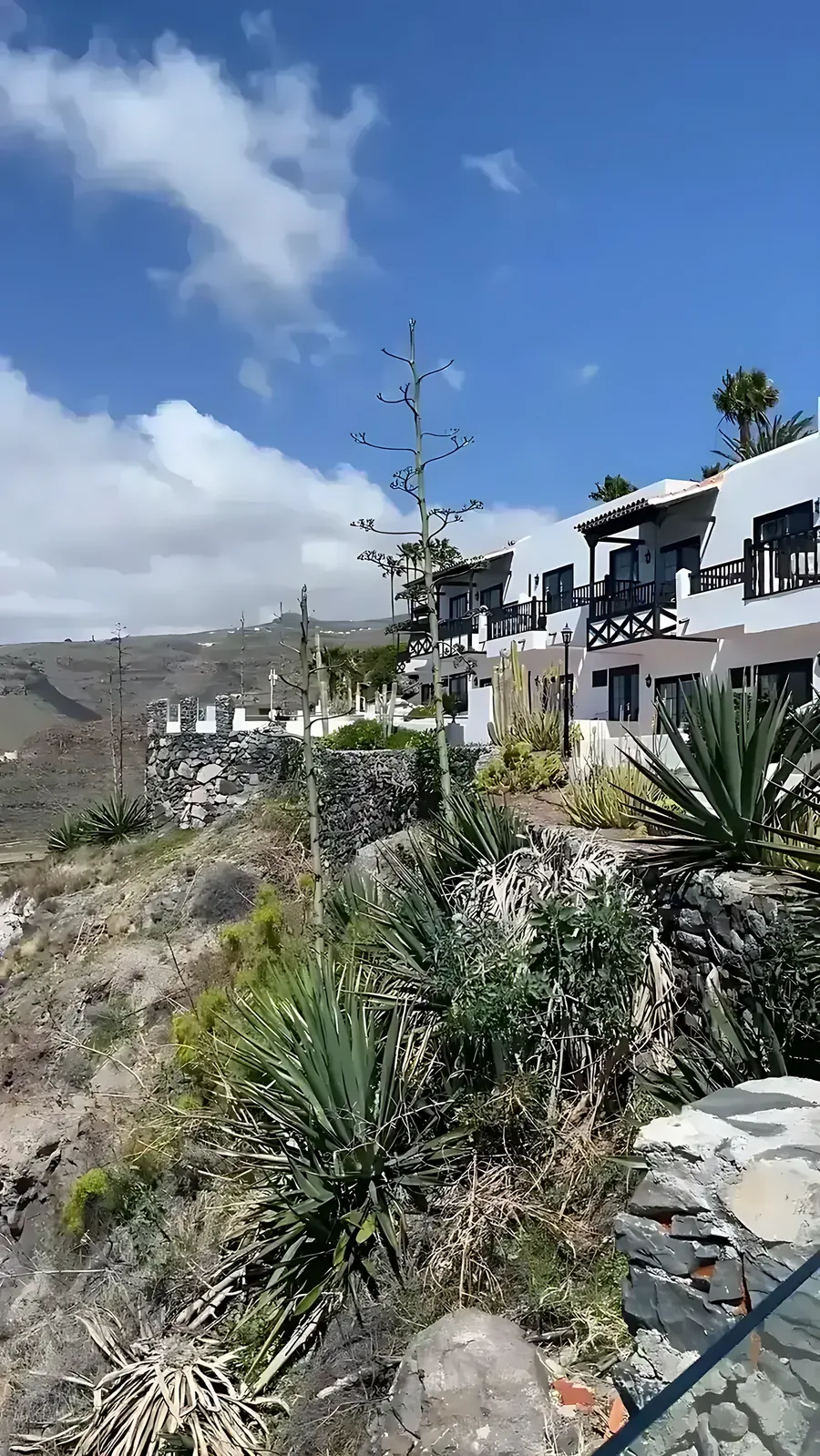
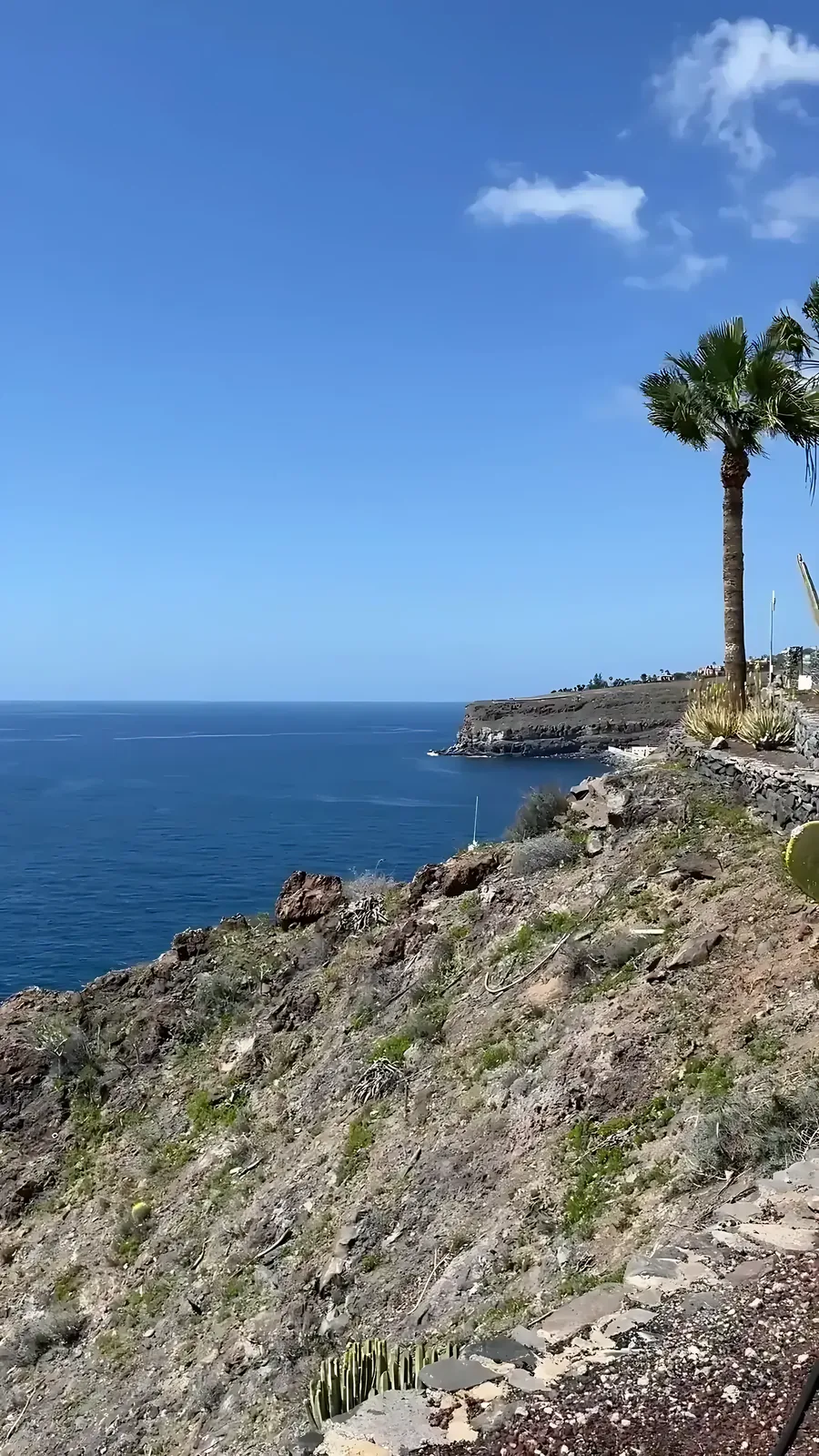
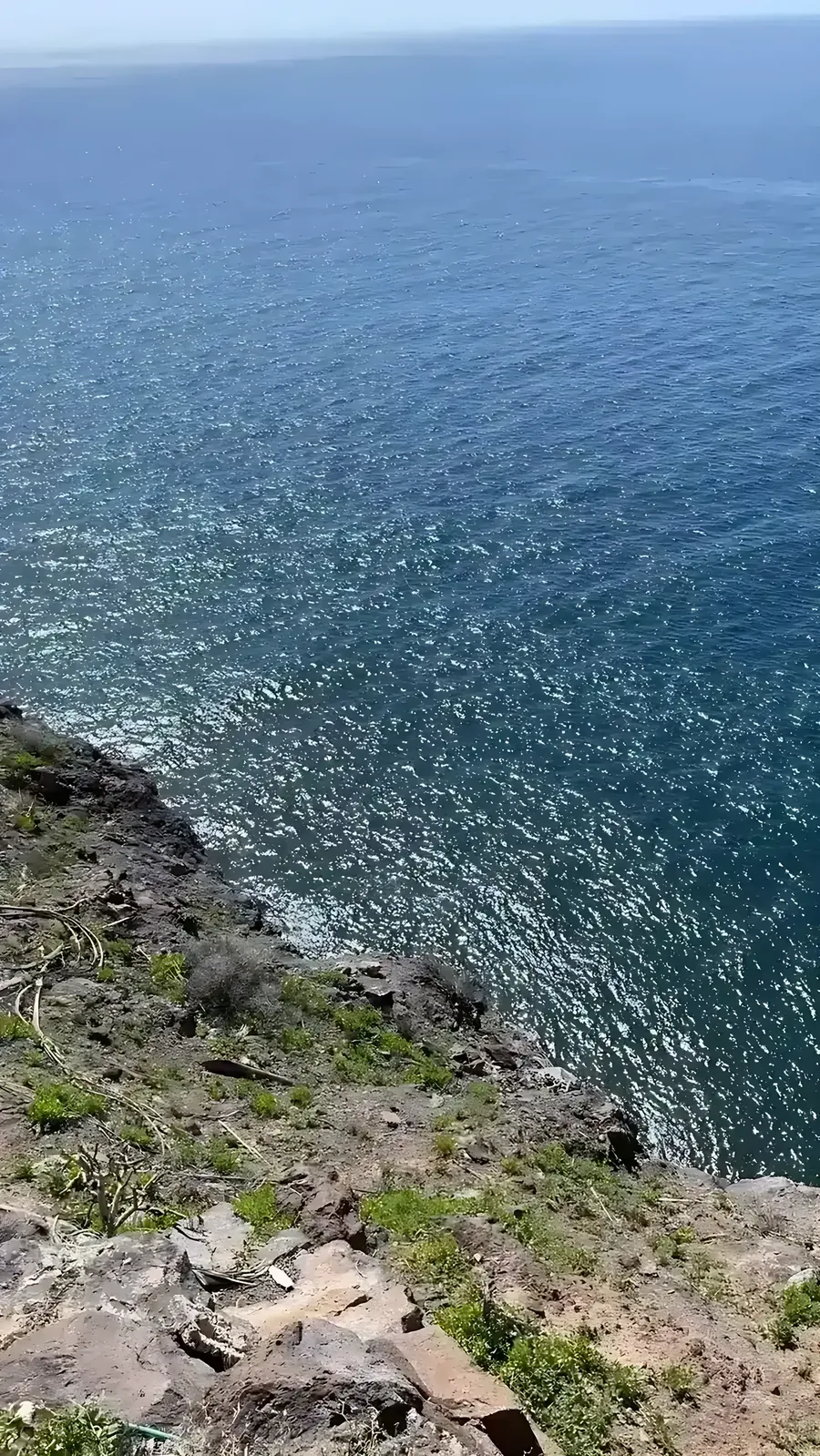
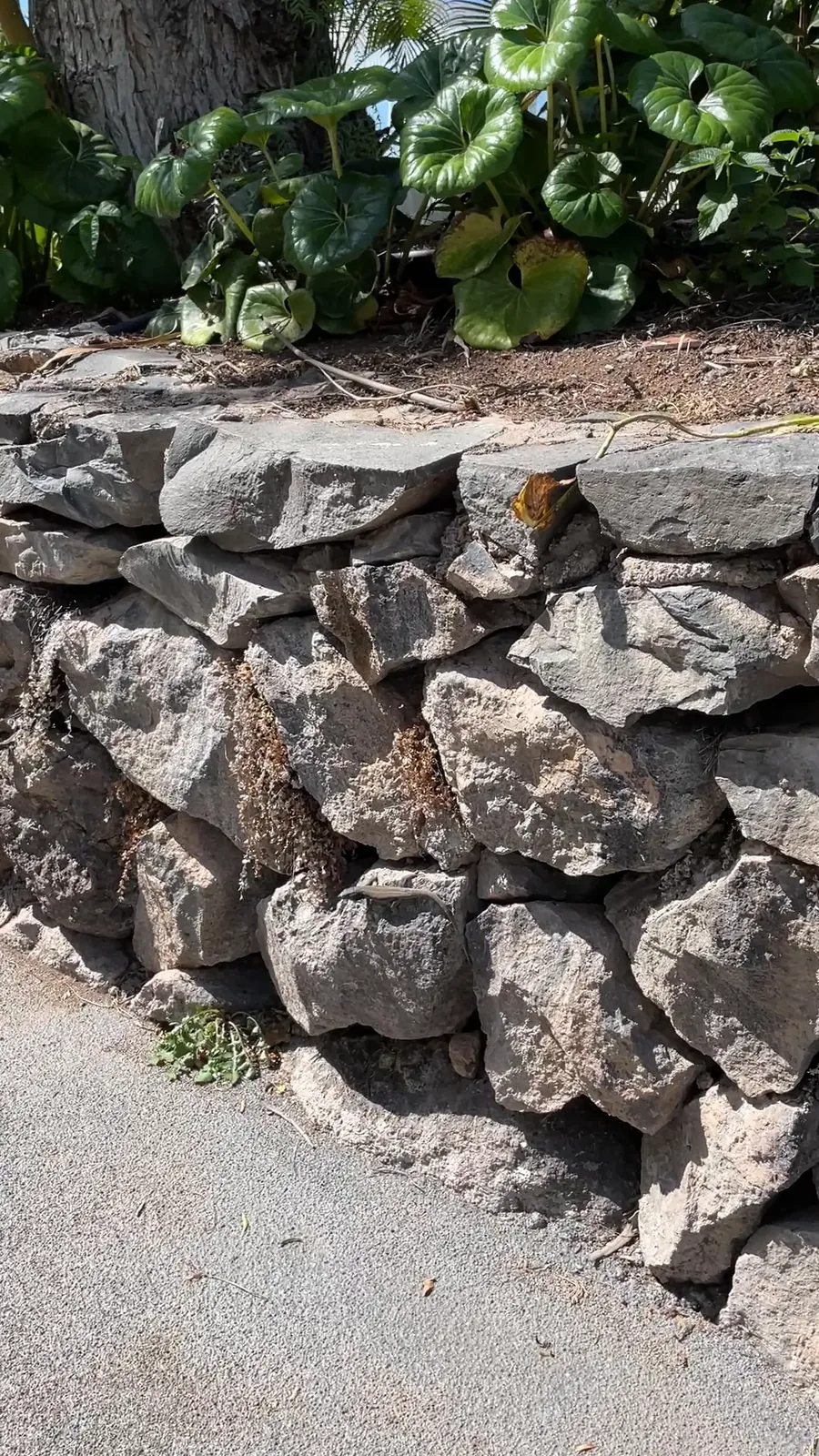
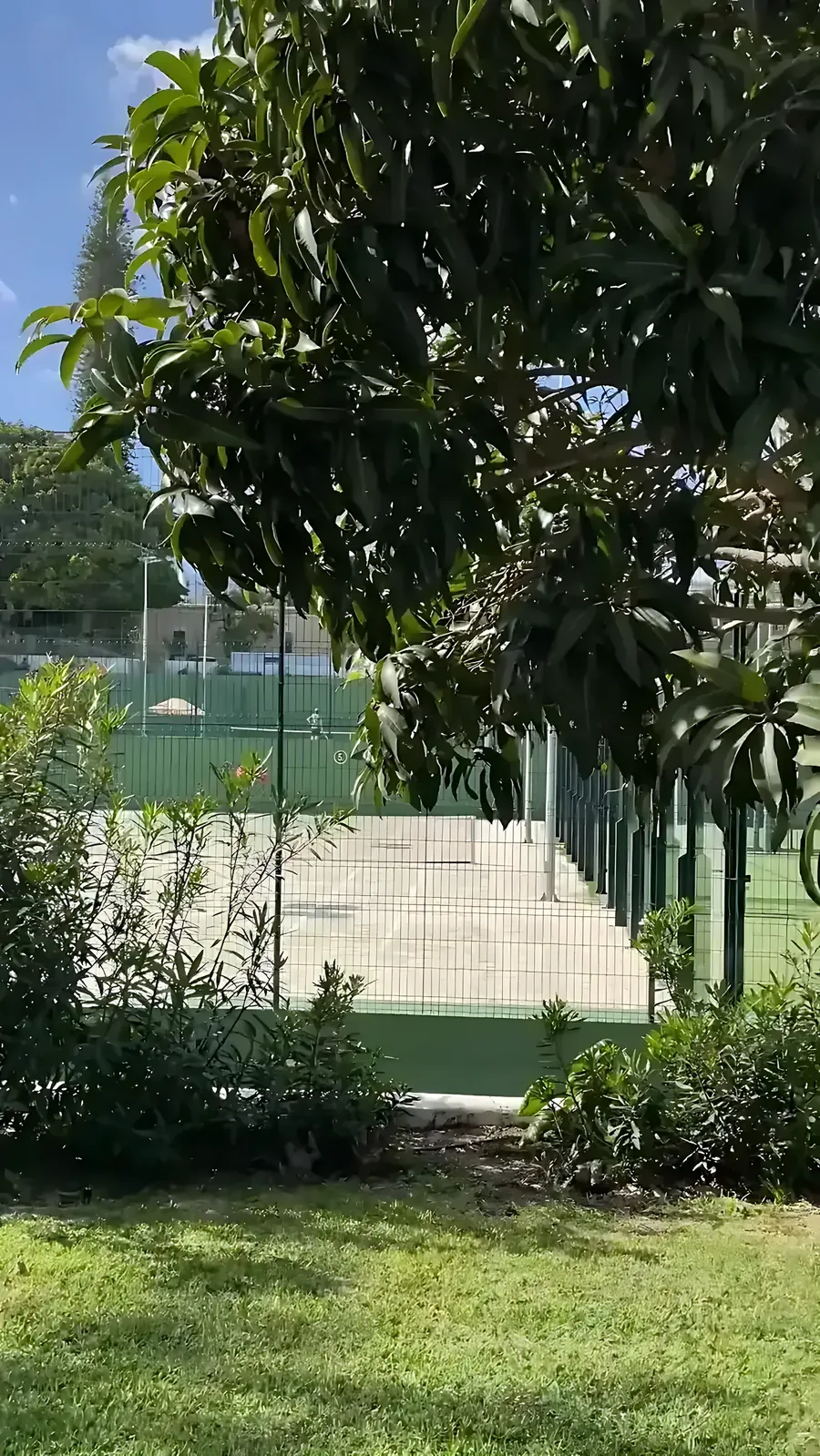
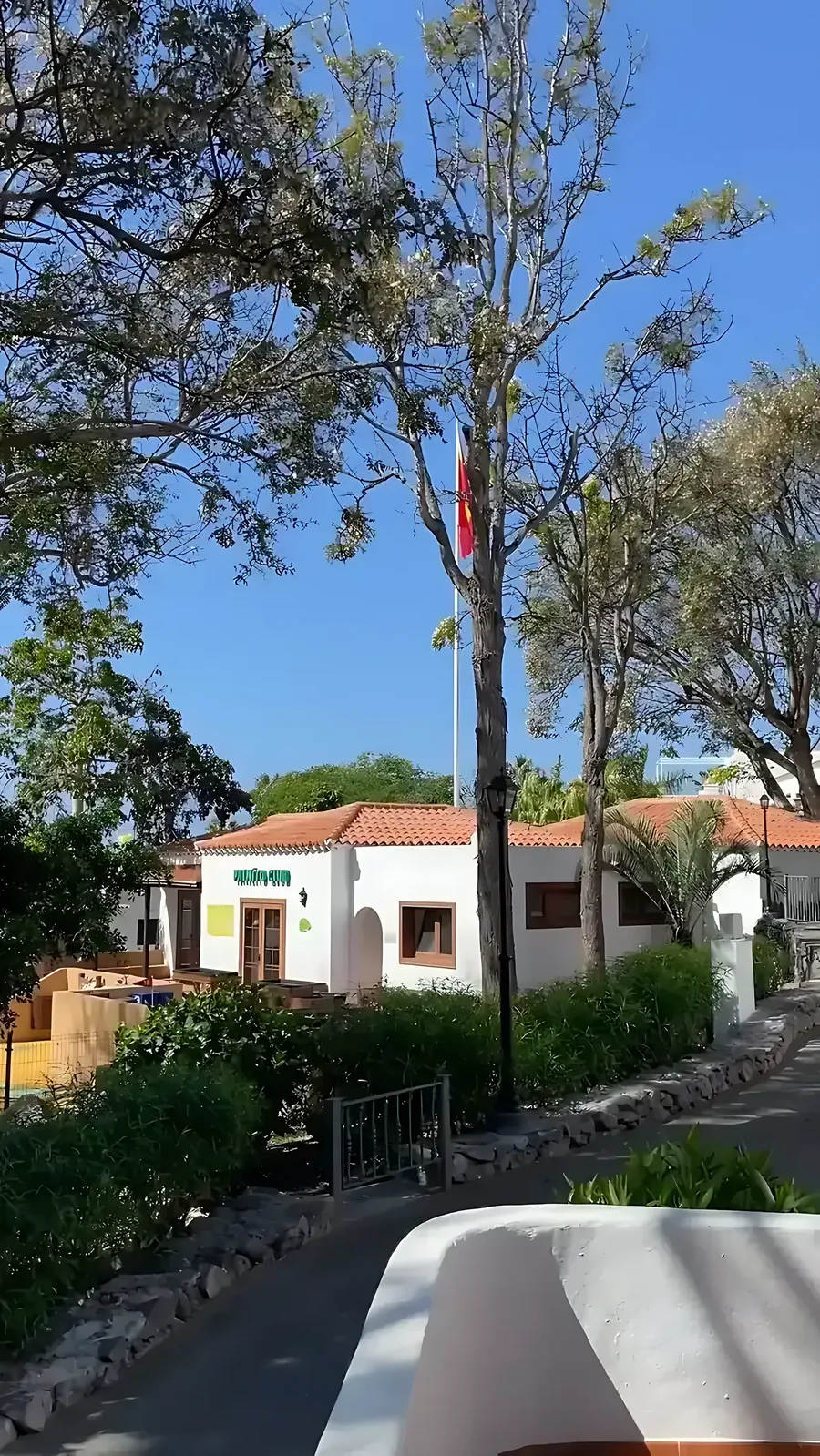
The village, the cliff and the ground the hotel stands on, photographed on foot over several days. Scroll, or use the arrows.
What they have done lately, and what to believe
The hotel reopened on 6 December after a twenty-million-euro renovation: rooms, pools, dining, and ten kilometres of paths cut through the grounds. The group says half its energy now comes from solar, and that a farm on the site, Eco Finca Tecina, supplies the kitchen with seasonal organic fruit and vegetables.
We have had to correct ourselves here. We previously wrote that the hotel held no third-party environmental certification we could verify. That was wrong, and it was wrong because we did not look hard enough. It has been registered under EMAS — the European Union’s eco-management and audit scheme — since 2014, registration ES-IC-000141, its statements verified independently by SGS and, most recently, AENOR. It has held ISO 14001 since the same year, and it holds Travelife Gold, Biosphere and an EarthCheck bronze.
Which makes the solar figure stranger, not safer. The hotel’s own audited environmental statement for July 2023 to June 2024 says that although it has solar panels, consumption of that energy is not yet accounted for and no indicator reflects it, and that the photovoltaic installation was completed during 2024. The newest statement, validated in November 2025, repeats the same sentence. The 100 per cent renewable figure the statement does report comes from a certificate of origin issued by its electricity supplier — a paper instrument about the grid, not a measurement of the roof. The panels are real and new. The fifty per cent is not in the audit.
One more number the audit contains and the leaflet does not: the carbon footprint rose in absolute terms, from 566 tonnes in 2021 to 724 in 2023, and fell only per guest night because occupancy grew faster than emissions.
Here is the number that is not in dispute. More than two hundred people work here. The village has about eleven hundred. On an island of roughly twenty thousand, that is not a detail about a hotel. That is the local economy, in a place that lost its canneries inside a single generation and had to find something else to be.
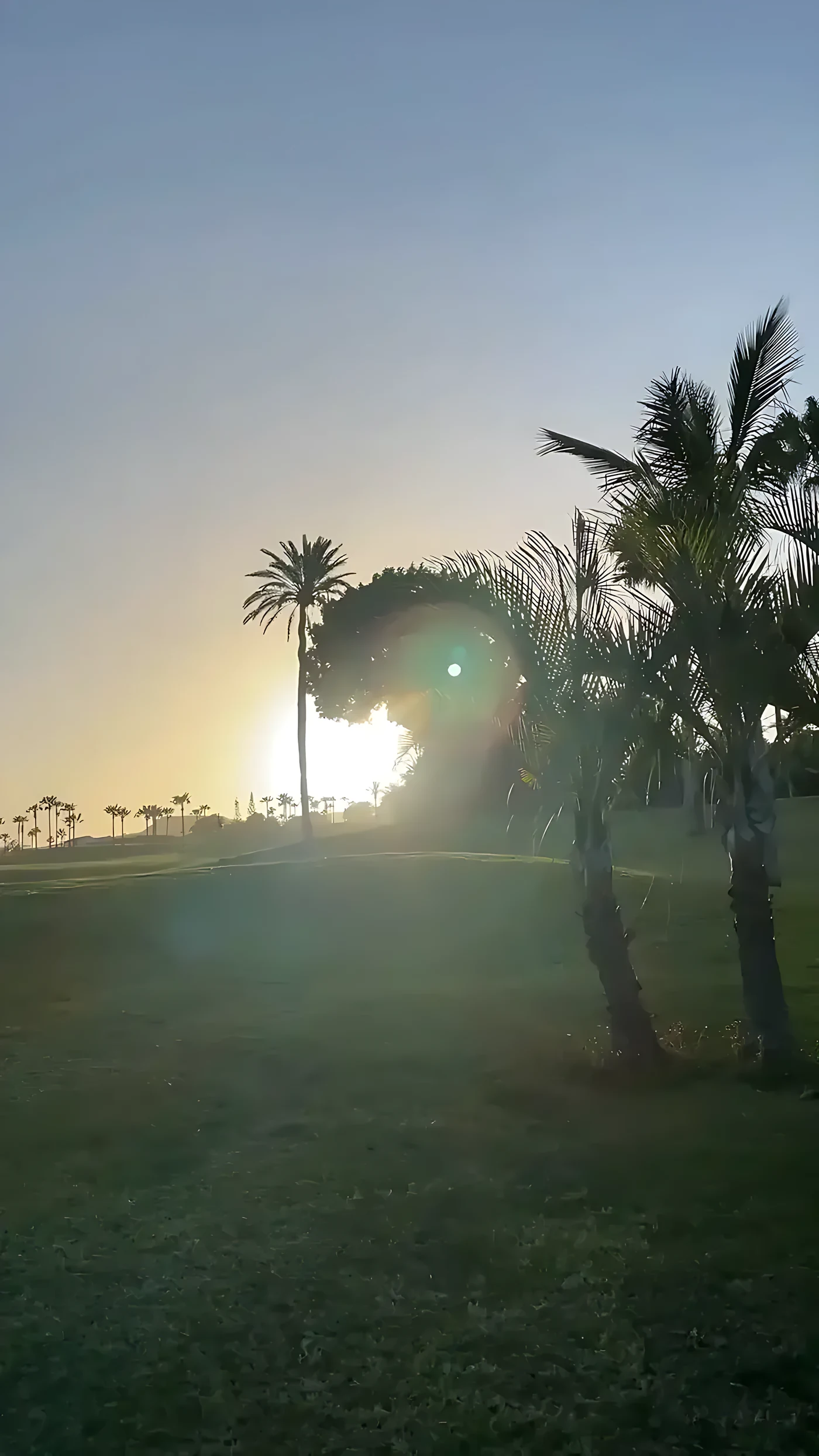
What we have not written down is which bench to sit on for the last of the light. You will find it. Everybody does, and then they come back to it the next evening without discussing it.
What we actually know
- Owned by the Fred. Olsen group. The family has been in southern La Gomera since 1904, originally exporting tomatoes and bananas from the Tecina estate through a small pier.
- Playa de Santiago was settled after the Chinyero eruption on Tenerife on 18 November 1909. By the 1930s the island had three canning factories; Rodríguez López built the last, Santa Rosalía, in 1931.
- During the Civil War the village issued its own vouchers in twenty-five and fifty cent denominations. The canneries and the export agriculture collapsed in the 1960s and 70s.
- The hotel took its first guests on 14 November 1987 and was formally inaugurated in April 1988.
- The site runs to over 70,000 square metres, of which about 35,000 is garden, planted with Canary palm and species from four continents.
- It reopened on 6 December after a €20 million renovation, with ten kilometres of paths. The 50 per cent solar figure and the on-site organic finca are the operator’s claims, not audited.
- An average of 245 employees in 2023, rising to 320 in the first half of 2025, per the hotel’s EMAS statements. Rooms were reduced from 434 to 424 in the renovation. The entire workforce was retained through the eight-month renovation closure. Playa de Santiago has about 1,100 residents, in the municipality of Alajeró.
- Registered under EMAS since 2014 (ES-IC-000141, verified by SGS and later AENOR), ISO 14001 since 2014, Travelife Gold, Biosphere and an EarthCheck bronze. Its marketed 50 per cent solar figure does not appear in its own audited environmental statement, which says solar consumption was not yet being measured.
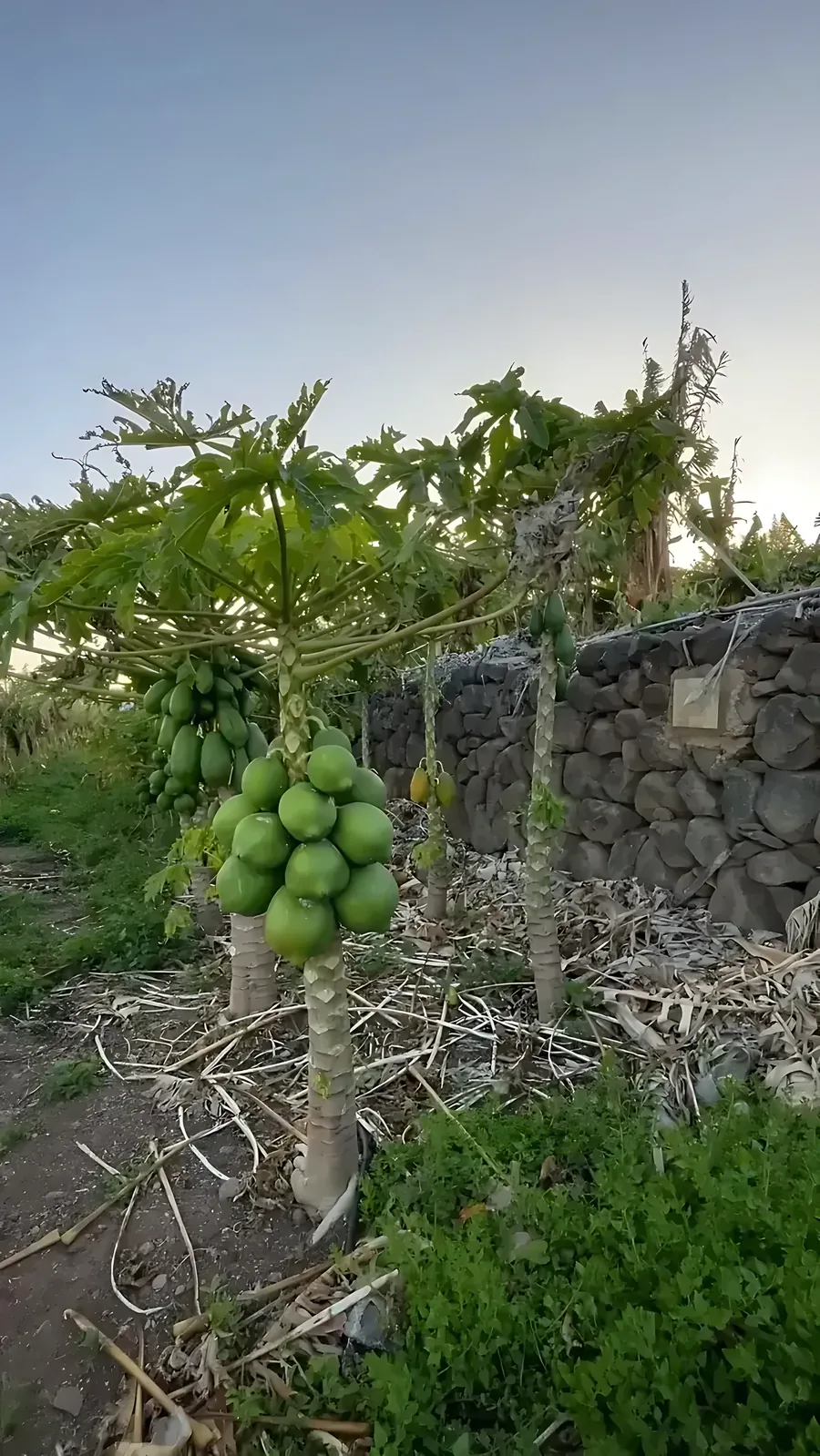
Answered since publication: there is no evidence the estate’s finca grows coffee. Eco Finca Tecina is 9,500 square metres in nineteen parcels, run on permaculture principles, and the crops it publishes are papaya, lettuce, cabbage, aubergine, artichoke, strawberry, squash, avocado, kale, pomegranate, moringa, noni and Canarian bananas. Coffee appears nowhere in the hotel’s own material. La Gomera does grow coffee, but in Valle Gran Rey, on the other side of the island.
How this story was made. Photographed on a phone over several days, on foot. Nothing here is sponsored, nothing was provided free, and the stay was found, booked and paid for at our own cost. Dates and figures come from the operator, the Canarian press and the island council, and are attributed in the text wherever they are somebody’s own claim rather than an established fact.
Independent and self-funded. Atlántis is not sponsored by design: not affiliated, not a paid placement, and nobody we write about knew in advance. Everything on this page was found, booked and paid for at our own cost. The views are our own, judged against the Atlántis values: sustainability, cultural immersion, eco travel, real experiences, family-friendliness, and car-free travel or the deep past, depending on the place.